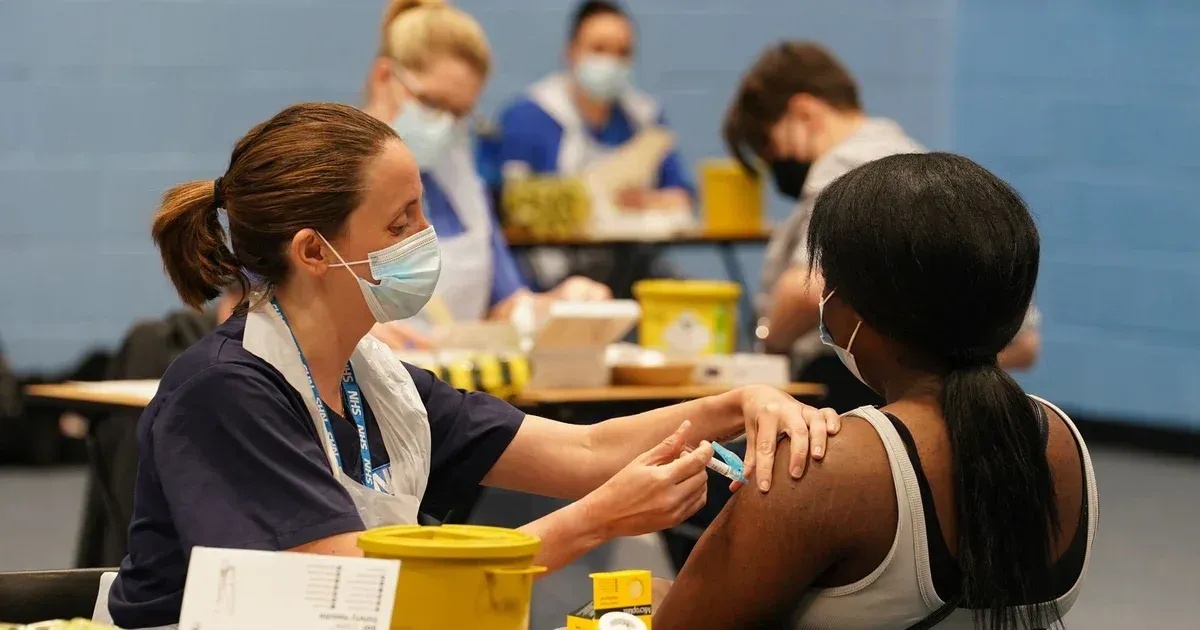
National Health Service officials encountered fresh scrutiny on March 24, 2026, when parents and medical experts demanded a reassessment of the Meningitis B vaccination schedule. Current guidelines exclude thousands of school-age children because of their specific birth dates. Discrepancies in eligibility created a divide where siblings within the same household often possess different levels of protection against the life-threatening infection. Medical records indicate that the routine program only captures children born after May 2015.

But the arbitrary nature of this cutoff left a meaningful cohort of students in Year 6 vulnerable. These children were born in late 2014 or early 2015, just months before the government implemented the Bexsero vaccine into the standard pediatric calendar. While infants now receive the injection at eight weeks, sixteen weeks, and one year, older children must rely on private healthcare for the same defense. Public health data confirms that bacterial meningitis can kill within 24 hours.

Data provided by the Department of Health shows the catch-up program from a decade ago was never extended to those born in the final months of 2014. Aimée Hamblin, a parent who managed this system, expressed her frustration regarding the financial burden of securing basic safety for her eldest son. Many families report spending hundreds of pounds to bypass NHS restrictions that they view as illogical. Laboratory reports suggest that the Meningitis B strain remains the most prevalent cause of bacterial meningitis in the United Kingdom.

Look closer and the policy creates a scenario where a child born in April 2015 receives the vaccine for free, while a child born in March 2015 does not. This discrepancy forces parents to choose between a real financial hit and leaving their child at risk. Financial records from private clinics show that the cost for a full course of the Bexsero vaccine often exceeds £200. Some households cannot afford the expense.

I remember the frustration that I felt on my maternity leave in 2015 when he was not eligible for a MenB vaccine on the NHS like his younger peers, wrote Aimée Hamblin in a letter detailing her experience.

Meningitis B Vaccine Eligibility Disparity

Aimée Hamblin is a growing number of parents who believes the NHS failed a specific generation of children. Her husband and she decided to pay for private vaccination in 2015, a choice she described as completely worthwhile. Still, the underlying anger remains directed at a system that relies on month-of-birth luck. Medical experts argue that the lack of a full catch-up campaign for all primary school students has left a gap in the nation's immunity profile. The Meningitis B bacteria colonizes the back of the throat and spreads through close contact.

Meanwhile, the risk to those outside the infant eligibility window is not purely theoretical. Recent clusters of the disease highlight the danger faced by adolescents and young adults who were never part of the original 2015 rollout. Experts at the Meningitis Research Foundation have frequently noted that the peak incidence of the disease occurs in two groups: infants and teenagers. Current UK policy addresses the former but largely ignores the latter for routine MenB immunization. Most teenagers only receive the MenACWY vaccine, which does not protect against the B strain.

According to the BBC, students and older teenagers are not routinely vaccinated against the specific strain that recently caused an outbreak in Kent. The Kent incident resulted in multiple hospitalizations and sparked localized panic among university students. Public health officials in the region were forced to issue emergency antibiotics to close contacts of the infected individuals. Despite these emergencies, the Joint Committee on Vaccination and Immunisation has not recommended expanding the routine MenB program to older age groups. Their decisions are based primarily on cost-effectiveness models.

Kent Outbreak Fuels Teenage Vaccination Debate

Recent health alerts in Kent serve as a reminder that the bacteria does not respect age-based eligibility windows. Students living in communal dormitories are particularly susceptible to the rapid spread of the pathogen. Local health boards have attempted to manage the fallout through awareness campaigns rather than increased vaccination. That said, the success of these campaigns is limited when the most effective tool for prevention is locked behind a paywall for anyone over the age of nine. Health officials continue to monitor infection rates among university populations.

Families living in lower-income areas are the least likely to have accessed private doses during the 2015 gap or the 2026 outbreaks. Social equity concerns have moved to the forefront of the debate as the NHS maintains its strict adherence to the May 2015 cutoff. Parents in Kent reported waiting weeks for private appointments after the recent local cases. Private clinics in London currently charge more than £200 for a single dose. Supply chains for the vaccine are often focused on for the national infant program, leaving private providers with intermittent shortages.

In a different arena, the clinical progression of Meningitis B makes it one of the most feared pediatric conditions. Symptoms often mimic common flu or viral infections in the early stages, including fever, headache, and neck stiffness. The characteristic purple rash often appears only when the infection has progressed to life-threatening septicemia. Doctors at Great Ormond Street Hospital note that early intervention is critical for survival. Survivors often face long-term complications such as limb amputations, hearing loss, and brain damage. These outcomes carry towering long-term costs for the social care system.

Economic Burden of Private Medical Care

Private healthcare providers have seen a surge in inquiries regarding the Bexsero vaccine following the Kent reports. Many of these inquiries come from parents of children born just before the May 2015 cutoff. The lack of a state-funded catch-up program means these parents must manage a fragmented private market. Costs vary greatly between urban centers and rural areas. Some clinics include consultation fees that push the total price for a two-dose course toward £500. For a family with multiple children in the gap, the cost is prohibitive.

And yet, the government maintains that the current strategy maximizes the impact of limited public health funds. The JCVI argues that vaccinating infants provides the highest return on investment because they are at the highest risk of mortality. Their modeling suggests that the current program has already prevented hundreds of deaths and thousands of hospitalizations since 2015. This statistical success does little to comfort parents of Year 6 students who are currently sitting in classrooms without protection. Policy analysts suggest that a one-time catch-up for the 2014 cohort would cost the NHS approximately £30 million.

Schools in the United Kingdom do not require the Meningitis B vaccine for enrollment, unlike some jurisdictions in the United States. This lack of a mandate contributes to the low uptake among children who fell outside the NHS window. For instance, immunization rates for the B strain in children born in 2014 are estimated to be below 15 percent. By contrast, the uptake for those born after May 2015 is consistently above 92 percent. It creates a patchwork of immunity within the same primary school buildings.

Clinical Arguments for Universal Adolescent Coverage

Clinical researchers point to the rising number of cases in the 15 to 19 age group as a reason for urgent policy reform. The demographic has the second-highest rate of Meningitis B infection. To that end, some medical organizations have proposed a school-based booster program similar to the one used for the HPV vaccine. Implementation of such a program would eliminate the socioeconomic divide currently defining MenB protection. Health Secretary officials have not yet committed to a formal review of the JCVI guidelines. The current vaccine program for teenagers only covers the A, C, W, and Y strains.

Meningitis B remains the most common cause of bacterial meningitis in the United Kingdom. The NHS program has been a triumph for infants, but the 2014 birth cohort is still a forgotten group in the eyes of many parents. Aimée Hamblin and others like her continue to advocate for a system that values all children regardless of the month they were born. Medical science has provided the tool to prevent these deaths. Political and economic considerations are the only remaining barriers. The Kent outbreak is a hard data point in the ongoing debate over vaccine equity.

The Elite Tribune Perspective

Bureaucratic spreadsheets have effectively assigned a monetary value to the survival of a British ten-year-old. By maintaining a rigid May 2015 cutoff, the NHS and the JCVI have signaled that the lives of children born in the preceding months were not worth the procurement cost of a Bexsero dose. It is not a matter of clinical uncertainty; it is a cold calculation of fiscal convenience disguised as public health strategy. The Kent outbreak has laid bare the fallacy of this approach, proving that pathogens do not check birth certificates before they colonize a throat or trigger a cytokine storm.

We are looking at a two-tier health system where protection from a lethal, fast-moving bacteria is a luxury good reserved for those who can spare £200 on a whim. The United Kingdom prides itself on a healthcare system that is free at the point of use, yet for the 2014 birth cohort, that promise is a fiction. If the government can find billions for defense contracts or infrastructure projects, it can certainly afford to close a gap that leaves thousands of school children at risk of amputation or death.

Failing to act now is not just a policy oversight; it is an abdication of the duty of care.