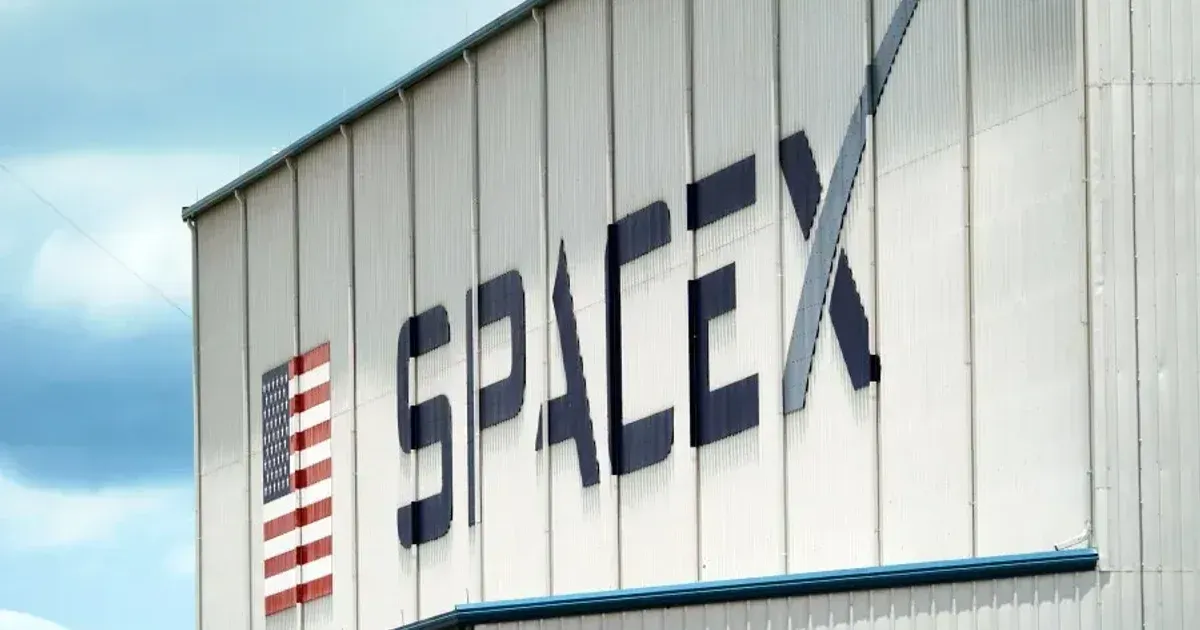
Elon Musk finalized confidential paperwork with the Securities and Exchange Commission to initiate the public offering process for SpaceX. Documents submitted to federal regulators indicate a targeted market debut in June. The April 9, 2026, filing set up a possible June market debut for one of the world's most closely watched private aerospace companies. Bloomberg reports that the Hawthorne, California, aerospace firm opted for a confidential filing to protect sensitive financial data during the initial review phase. This strategy allows the company to iron out regulatory concerns before the broader public sees the internal ledger.
SpaceX Files Confidential IPO with SEC
Confidential filings under the JOBS Act permit companies with less than $1 billion in annual revenue to keep their S-1 statements private, but SpaceX is believed to far exceed that threshold. The use of this mechanism suggests a specific legal arrangement or a desire to minimize public scrutiny of launch costs and satellite margins until the final weeks before the roadshow. Recent funding rounds valued the enterprise near $250 billion. Investors now wait for the SEC to complete its first round of comments on the submission. Public disclosures will likely happen 15 days before the executive team begins meeting with institutional buyers.
Musk previously suggested that a public offering for his space ventures would only occur when cash flows became predictable. Starlink, the satellite internet division, reached that milestone in late 2025 with a subscriber base exceeding 6 million users globally. Internal projections suggest that satellite services now provide the majority of the firm's recurring revenue. Launch services for NASA and commercial satellite operators continue to grow, yet they require heavy capital expenditure for Starship development. Private capital markets provided more than $20 billion in funding since the company's inception.
Starlink transitioned from a capital-intensive beta project into a cash-generating engine within four years. Global demand for low-Earth orbit connectivity surged in 2025 as traditional telecommunications firms struggled to match the latency provided by the SpaceX constellation. Ground terminals now ship to 85 countries. Monthly service fees generate more than $700 million in gross revenue. Analysts at Morgan Stanley estimate that the satellite arm alone justifies a valuation of $150 billion. Launching these satellites on reusable Falcon 9 rockets reduced delivery costs by 40 percent compared to 2022 levels. SpaceX dominates the orbital launch market with a cadence that surpassed 150 successful missions in the previous calendar year. Competitive pressure from Blue Origin and United Launch Alliance has not yet materialized in a way that threatens the current market share. The Falcon 9 remains the primary workhorse for the International Space Station resupply missions. Reliability records show a 99.8 percent success rate for the current Block 5 variant. Defense contracts with the Space Force provide a steady stream of non-commercial income.
Private Market Valuation and Institutional Shifts
Secondary market trades for SpaceX shares have been active among employees and early venture capital backers for years. These private exchanges created a shadow market where the stock price rose steadily even during broader tech downturns. Fidelity and Sequoia Capital hold substantial positions in the venture. Large pension funds often seek access to these shares but find limited availability in the private space. A public listing solves this liquidity problem for long-term holders. Goldman Sachs will reportedly lead the underwriting syndicate for the June event.
“We will probably IPO Starlink, but only several years in the future when revenue growth is smooth and predictable,” Musk said.
Musk’s decision to take the entire entity public, rather than spinning off Starlink, surprised some market observers who expected a bifurcated structure. Combining the high-growth satellite business with the heavy-lift rocket division offers a more diversified balance sheet. Starship testing in South Texas progressed to orbital refueling demonstrations in early 2026. Successfully landing the largest rocket in history proved that the Mars-colonization architecture is technically viable. Flight data from recent tests showed the Raptor engines met all performance targets for deep-space transit.
Regulatory Hurdles and Financial Transparency Requirements
The SEC review process will likely focus on the valuation of internal transfers between the Starlink and Launch divisions. Regulators require clear accounting to ensure that one side of the business is not artificially subsidizing the other to inflate growth figures. Transparency regarding Musk’s involvement in other companies, including X and Tesla, will also be a point of interest for the commission. Corporate governance at SpaceX has historically been stable under President Gwynne Shotwell. Her role is expected to expand as the company transitions to a public reporting entity. Federal filings must disclose all potential risks related to Starship launch failures.
SpaceX must also navigate the complex world of international traffic in arms regulations while operating as a public company. Export controls limit the amount of technical data that can be shared with foreign investors. The company maintains a strict policy of only hiring U.S. citizens for core engineering roles to comply with these federal mandates. Public shareholders will have to accept that they cannot access detailed blueprints or propulsion chemistry. Annual reports will instead focus on mission success rates and subscriber churn. The June listing will offer the first audited look at the cost per kilogram of the Starship platform.
Institutional appetite for the offering is expected to break records for the aerospace sector. Exchange-traded funds focused on space exploration have already begun reweighting their portfolios in anticipation of the ticker symbol. Retail interest on platforms like Robinhood has surged since the confidential filing news broke. Market volatility in the broader tech sector stays low, providing a stable window for the debut. SpaceX will list on the New York Stock Exchange under a yet-to-be-disclosed four-letter symbol. Initial price targets suggest a per-share value of $165.
Public markets offer a trade-off for visionaries who prefer absolute control. Elon Musk has spent more than two decades insulating his rocket company from the whims of day traders and the parasitic demands of quarterly earnings calls. Moving toward a June IPO is not a victory lap; it is a concession to the enormous capital requirements of a multi-planetary species. Developing a fleet of Starships and a Mars base is a trillion-dollar effort that even the world’s richest man cannot fund through private equity alone. He is trading autonomy for an endless supply of public capital.
SpaceX is now the apex predator of the aerospace world.
Investors should view this listing with healthy skepticism regarding the timeline for Mars. Musk is a master of selling the future to fund the present. While the Starlink revenue is real and large, the core mission of SpaceX is a non-commercial venture that may never turn a profit in our lifetime. By packaging the utility-like Starlink with the speculative Starship, Musk is forcing the market to subsidize his personal obsession with the Red Planet. Shareholders are not buying a communications company. They are buying a ticket on a voyage that has no return flight and no guaranteed destination.
This is the ultimate speculative asset. The June listing will prove whether the public is ready to bet on the colonization of the solar system or if they are simply chasing the latest Musk-branded high.