Donald Trump announced an unstable two-week ceasefire intended to halt the rapid escalation of hostilities between Washington and Tehran. The announcement gave diplomats a narrow window to test whether battlefield restraint could become a wider peace framework. Pakistan enabled the agreement, acting as a primary mediator to bridge the diplomatic chasm that deepened after military exchanges intensified earlier this spring. White House officials framed the April 8, 2026, pause as a necessary window for broader negotiations to stabilize energy markets and prevent a wider regional fire. This diplomatic effort followed weeks of intense aerial combat and naval skirmishes that threatened global shipping lanes in the Persian Gulf.
Regional Drone Attacks Target Gulf Infrastructure
Minutes after the ceasefire declaration, reports of hostile drone activity began emerging from neighboring Gulf states. Saudi Arabian defense units intercepted and destroyed nine unmanned aerial vehicles in the early hours of Wednesday morning. These drones appeared to be targeting logistical hubs along the eastern coast, though Riyadh confirmed that no significant damage occurred during the engagement. Defense networks remain on high alert across the peninsula as the truce remains fragile under the weight of persistent localized violence. Iranian state media signaled Tehran could again restrict access to the Strait of Hormuz if fighting in Lebanon continues. Across the Persian Gulf, the United Arab Emirates faced a larger barrage of 17 ballistic missiles and 35 drones. Emirati military officials confirmed the successful neutralization of these threats, which coincided with the supposed commencement of the cooling-off period. Authorities did not specify the origin of the launches, but the trajectory and technology used were consistent with previous strikes attributed to regional proxies. The coordinated nature of the attack suggests that the ceasefire command has yet to reach all operational cells in the theater.
Kuwaiti military leaders reported the largest volume of incursions, with 42 drones and four ballistic missiles intercepted since the start of Wednesday. Several of these projectiles targeted power stations and oil refineries, which are critical to the global energy supply. Military spokesmen in Kuwait City confirmed that their defense systems prevented any direct hits on these essential installations. Despite the lack of structural damage, the scale of the attempt indicates a continued willingness to pressure Western allies through economic sabotage.
Bahrain reported injuries and residential damage after debris from an intercepted Iranian drone fell into a populated area. Emergency services arrived on the scene to treat civilians, marking the first confirmed casualties since the ceasefire was announced. Local officials characterized the incident as a collateral result of necessary defense measures rather than a targeted strike on non-combatants. Debris recovery teams are now analyzing the wreckage to identify the specific manufacturing batch of the drone.
Pentagon Budget Details Enormous Munitions Request
Launch sirens echoed across major Israeli cities, including Tel Aviv and Jerusalem, in the hours surrounding the announcement. The Israel Defense Forces confirmed multiple launches from Iranian territory, requiring the activation of long-range interceptor batteries. These exchanges occurred just as the Pakistani-led mediation reached its final stages. Military analysts suggest the flurry of launches was a final show of force before the diplomatic window opened.
Israel launched its largest strike to date on Hezbollah targets in Lebanon shortly after the Washington announcement, clarifying that the ceasefire does not extend to the Lebanese theater.
"The Iran-U.S. ceasefire terms are clear and explicit: the U.S. must choose, ceasefire or continued war via Israel. It cannot have both," Iranian Foreign Minister Abbas Araghchi said in a statement.
Pentagon officials submitted a $1.5 trillion budget request this week to address shifting threats across the globe.
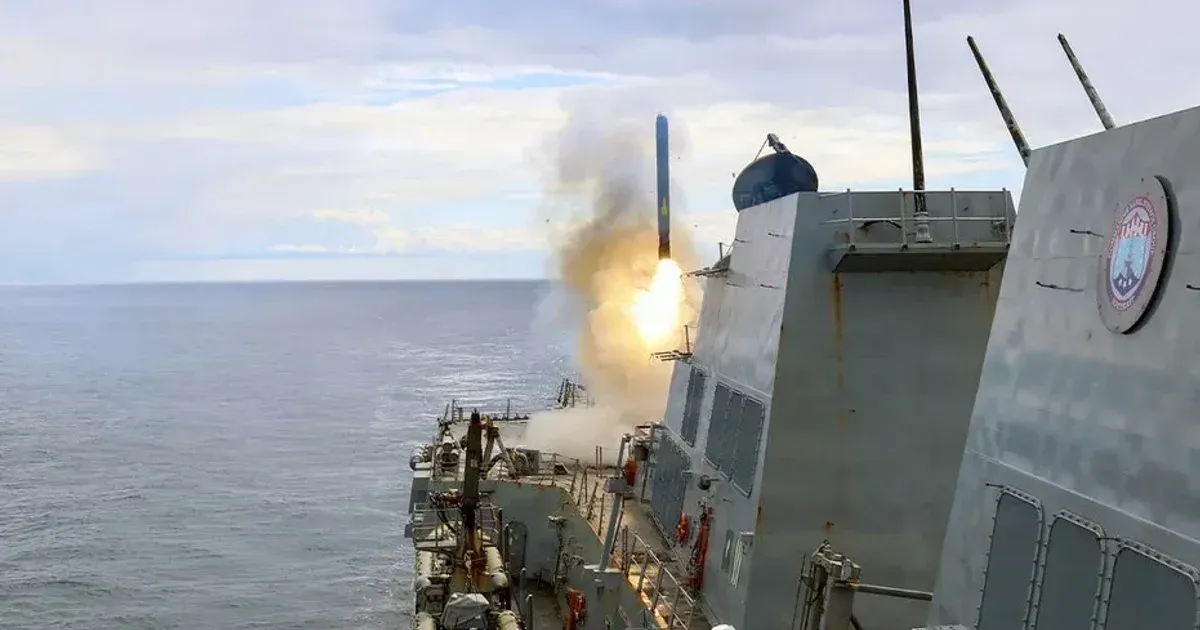
Budgetary documents for the 2027 fiscal year include a request for $3 billion to specifically replenish the U.S. Navy inventory of Tomahawk missiles. This request is a 1,200 percent increase in production compared to the previous year, highlighting the large expenditure of munitions during the recent conflict. Washington fired at least 850 Tomahawk missiles since the war began on February 28. Current stockpiles have reached levels that military leaders describe as a significant vulnerability to national readiness.
Congress originally approved the purchase of only 58 missiles for $257 million during the last budget cycle. This new request would finance the production of 785 missiles to restore the naval strike capacity. The Department of War is seeking $1.1 trillion in base discretionary funding, with an additional $350 billion in mandatory resources to expand the domestic defense industrial base. The large infusion of capital is designed to modernize manufacturing lines that have struggled to keep pace with wartime demand.
Lebanese Conflict Threatens Diplomatic Stability
This request also includes funding for the Golden Dome missile defense system, a layered homeland security project. Modernized interceptors and sensory arrays are the primary focus of this multibillion-dollar initiative. Defense officials insist that strengthening domestic defenses is as critical as replenishing offensive stockpiles. The plan emphasizes the need for a resilient manufacturing sector capable of rapid surge production during prolonged engagements.
Maritime Strategy and Shipbuilding Expansion
Shipbuilding remains a central foundation of the new defense strategy, with $65.8 billion allocated for vessel procurement. The Navy intends to purchase 18 battle force ships and 16 non-battle force vessels to maintain its presence in contested waters. Planners are also repurposing older assets, such as the A-10 Warthog, for new maritime roles targeting small boat swarms in the Persian Gulf. These adjustments reflect a transition toward littoral combat scenarios and maritime interdiction. Expanding the fleet is a long-term project that requires years of sustained investment in shipyard capacity.
These budget priorities signal a commitment to a high-intensity military posture despite the current pause in active combat. Defense officials argue that the only way to maintain the ceasefire is to demonstrate an overwhelming capacity for escalation. Munitions production facilities in several states are already preparing for the transition to 24-hour operations if the budget is approved. Restoring the arsenal is a requirement for any credible deterrence strategy in the Middle East.
Iranian diplomats insist that the U.S. must control Israeli military actions to keep the ceasefire intact. Araghchi's statement via social media was intended to place the burden of stability on Washington. Tehran views the continued strikes in Lebanon as a violation of the spirit of the truce, even if Hezbollah is not a formal party to the agreement. The tension between these competing interpretations of the ceasefire terms creates a high risk of accidental escalation.
Stability in the region continues to be elusive as various factions test the boundaries of the two-week pause. The ceasefire allows for the temporary movement of humanitarian aid but does not resolve the underlying territorial and ideological disputes. Military commanders on both sides are likely using this time to reposition assets and reassess their tactical vulnerabilities. The lull in major missile exchanges provides a deceptive sense of calm while the underlying machinery of war continues to rearm.
Can a two-week pause survive a regional firestorm fueled by contradictory alliances? History suggests that ceasefires brokered under the duress of depleted munitions are rarely precursors to peace and are instead logistical breathing spaces for rearmament. Donald Trump has secured a temporary headline victory, yet the internal contradictions of this deal are terminal. By excluding the Lebanese theater, the agreement allows Israel to dismantle Iranian proxies while Tehran is expected to remain passive. It is an unsustainable geopolitical imbalance that Araghchi has already identified as a deal-breaker.
Trump appears to be gambling that the sheer scale of the $1.5 trillion budget request will act as a secondary deterrent, signaling to Tehran that the American industrial machine is finally waking up. Diplomacy is being used here as a cloak for an enormous industrial surge. The 1,200 percent increase in Tomahawk production is not the behavior of a nation seeking a permanent exit from conflict. It is the behavior of a superpower preparing for the next, more violent phase of a regional reset. The ceasefire is a strategic pause, not a solution. Hollow peace deal.