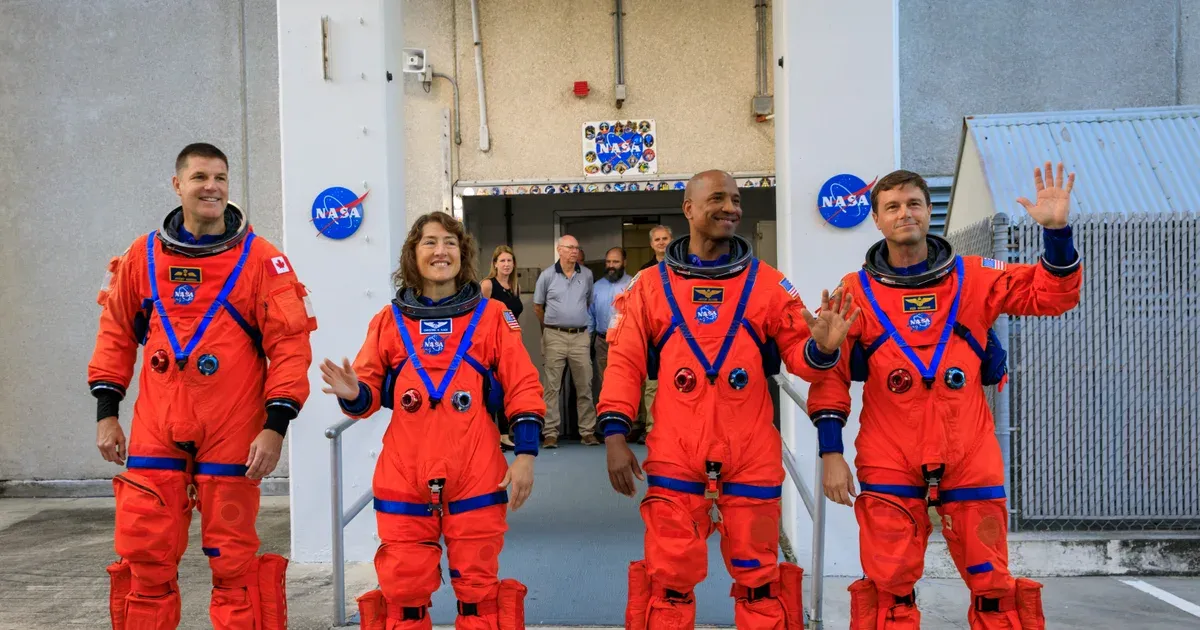
NASA is moving the Artemis 2 mission toward an April 1 launch window after engineers completed another round of integrated checks on the Space Launch System rocket and Orion spacecraft. Artemis 2 will not attempt a landing. Its job is more fundamental: prove that Orion can carry people safely through deep space, loop around the far side of the Moon and return through a high-energy re-entry corridor. The update came on March 26, 2026, as teams at Kennedy Space Center continued reviewing propulsion seals, communications links, crew displays and abort procedures before committing four astronauts to the first crewed lunar flight in more than half a century.
Why This Flight Is Different
The mission sits between symbolic history and practical engineering. Apollo already proved that humans can reach the Moon, but Artemis has to prove that a modern lunar architecture can operate with today's safety standards, contractors, budgets and political scrutiny. That makes the flight both a technical rehearsal and a public test of confidence. A clean mission would give NASA stronger footing for later landing plans, while another major delay would intensify questions about the cost and pace of the program. The most sensitive sequence remains the move from Earth orbit toward the Moon. The crew must first verify Orion systems in a high-altitude orbit before the trans-lunar injection burn commits the spacecraft to the outbound leg.
Engineering Pressure Before Launch
Ground crews have been especially cautious with liquid hydrogen systems after earlier SLS campaigns showed how small leaks can force long scrubs. Those details sound routine, but they matter because the vehicle cannot rely on quick roadside-style fixes once the countdown reaches its final hours. NASA also has to demonstrate that Orion's life support, thermal control and communications systems can perform beyond low Earth orbit. The spacecraft must support human respiration, cabin pressure, navigation and emergency planning in an environment where rescue options are limited. The four-person crew will operate as test pilots as much as passengers. Their observations about cockpit workload, visibility, procedure timing and system behavior will feed directly into the next Artemis missions.
Moon Program Stakes
The launch target carries policy weight because Artemis is no longer only a science program. It is tied to US industrial planning, international partnerships and the broader competition with China over who builds durable infrastructure near the Moon. The expensive part of Artemis remains the tradeoff. The Space Launch System cost structure gives NASA unmatched heavy-lift capacity, but it also limits how often the agency can fly. That tension will follow every successful countdown. If Artemis 2 performs as planned, NASA can argue that the program is moving from paperwork to operations. If it slips again, the debate will shift back toward whether lunar exploration can be sustained with expendable rockets and fragile political patience.
Launch Readiness Timeline
A successful flyby would clear the way for more detailed landing preparations, including surface systems, spacesuits and mission rules for later crews. It would also give international partners a clearer timeline for their own contributions.
The lunar flyby also gives NASA a rare chance to test public expectations against operational reality. Artemis has been sold as the beginning of sustained exploration, but sustained exploration requires more than a dramatic launch. It requires repeatable procedures, dependable hardware and a budget that can survive changing administrations.
International partners will watch the mission closely because their own commitments depend on NASA proving that the core transportation system works. Gateway planning, surface logistics and future science payloads all become easier to defend if Artemis 2 turns from a schedule promise into flight data.
The astronauts will also test how mission control handles delayed communications, crew health monitoring and decision-making outside the familiar rhythms of low Earth orbit. Those lessons are less cinematic than a launch, but they are exactly what future lunar crews will need.
Budget and Reliability Test
The hardest question is whether the program can become routine enough to matter. A one-time success would restore momentum, but the crew safety margin and flight cadence will decide whether Artemis becomes infrastructure or remains a sequence of rare national events.
A further concern is the recovery profile after splashdown. NASA needs the crew to return with medical data, spacecraft performance notes and enough operational confidence to support a faster path toward the next mission. The agency also has to show that contractors can close small problems without creating long schedule slides. That discipline is what separates a sustainable lunar program from a successful demonstration flight.
Program Timing
The schedule also matters because Artemis is trying to link a single crewed flyby to a larger sequence of surface missions, Gateway planning and commercial support work. A delay in one flight does more than move a launch date; it can force contractors, international partners and congressional overseers to recalculate the rest of the lunar timeline. NASA therefore has to balance caution with momentum. A scrub caused by a questionable seal would be frustrating but defensible. A launch that ignores a warning sign would be far more damaging because Artemis 2 is designed to prove that the agency can manage human risk beyond low Earth orbit again. The mission will also generate data about crew workload during long-duration operations outside the protective routines of the space station. That information will help planners decide how much autonomy future lunar crews need when communications delays, limited rescue options and mission fatigue become part of the operating environment.
For the public, the difference between a flyby and a landing may seem modest. For engineers, it is a decisive step because Orion must demonstrate navigation, environmental control, radiation monitoring and re-entry performance with people aboard before NASA can credibly talk about regular lunar surface work.
The mission therefore functions as a referendum on execution. NASA does not need Artemis 2 to be spectacular; it needs it to be disciplined, boring in the right places and convincing enough to make the next step feel earned.