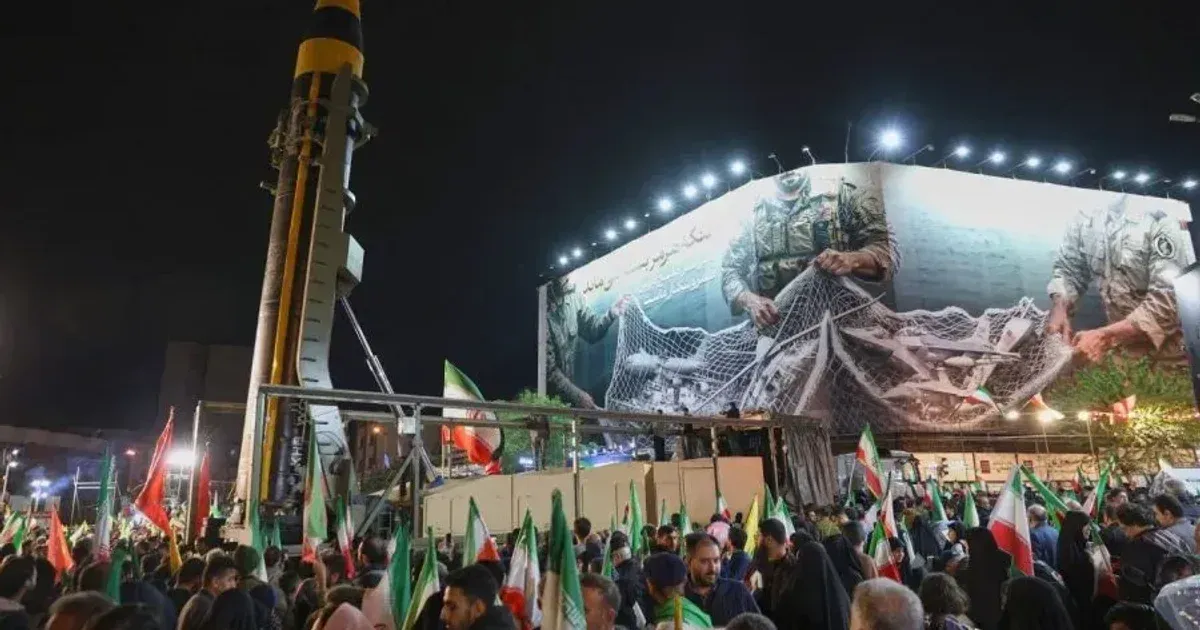
Iranian naval forces on April 25, 2026, intensified their presence in the Persian Gulf as Tehran officials declared the Strait of Hormuz a hunting ground for foreign vessels. Large banners now hang over Enqelab Square in central Tehran, broadcasting a blunt message that the waterway will remain closed to international traffic. This maritime chokepoint, which enables the passage of approximately 20% of the world’s oil supply, is now the center of a high-stakes military confrontation between the Islamic Republic and a coalition led by the United States. Tactical movements on the water suggest a rapidly closing window for a diplomatic resolution as both sides harden their positions.
Naval Blockade Realities in the Gulf
Washington on April 25, 2026, maintained its aggressive posture by enforcing a naval blockade on all primary Iranian ports. President Donald Trump issued warnings to the Iranian leadership, stating that any attempt to further disrupt commercial shipping would meet direct military consequences. Iranian forces responded by seeding the narrow channel with underwater mines, effectively halting the movement of large tankers and commercial freighters. Interceptions of civilian vessels have become common, with reports indicating several commercial ships came under direct fire over the last seventy-two hours.
Intelligence reports from the Strait of Hormuz confirm that Iranian Revolutionary Guard Corps units are using small, fast-attack craft to harass Western vessels. These units operate from hidden bases along the rugged coastline, making them difficult to track via traditional satellite surveillance. Iran has explicitly linked any de-escalation to the immediate lifting of the American blockade, a condition the White House has rejected. Security guarantees and the total reopening of the strait must come first, according to the latest statements from the State Department.
Tension in the region continues to climb as tankers sit idle in the Gulf of Oman, waiting for safe passage that may not arrive for weeks. Global energy markets reacted with volatility, though the full extent of the supply shock depends on the duration of the current deadlock. Iranian state media portrays the closure as a legitimate defensive measure against foreign aggression.
Unmanned Systems and Mine Warfare Shift
Pentagon officials are now testing a new doctrine of mine-clearing that relies heavily on technology rather than traditional sailors. The Navy retired its four Bahrain-based minesweepers last year, ending a decades-long era of having specialized ships stationed permanently in the Middle East. Transitioning to a fleet of unmanned systems, the military now utilizes underwater drones to identify and neutralize Iranian explosives. These systems are designed to operate in high-risk environments without putting human divers at risk. Current operations are unfolding in the middle of an active standoff, complicating the logistical efforts required to keep the drones functional.
Military analysts point to the retirement of the Avenger-class minesweepers as a potential vulnerability in the current maritime strategy. While drones offer precision, they currently lack the heavy clearing capacity of the legacy ships they replaced. Relying on a limited mix of older vessels and experimental unmanned technology creates a bottleneck in the reopening process. Defense contractors are working to accelerate the deployment of additional drone units to the Fifth Fleet to compensate for the hardware deficit.
Operational data from the latest sweeps suggests that Iranian mines are more sophisticated than those encountered in previous decades. Some devices feature sensors that can distinguish between a small drone and a large hull, staying dormant until a high-value target passes overhead. One senior military official noted that clearing a single square mile of the channel takes three times longer with the current drone configuration than with traditional ships.
Tehran Tactical Leverage and Internal Messaging
Internal politics in Iran play a major role in the current escalation. Propaganda efforts within the capital emphasize the nation's ability to dictate terms in the Persian Gulf, using the strait as a primary point of leverage. The banner in Enqelab Square serves to remind the domestic population of the regime's control over the world's most critical energy artery. Political observers in Tehran suggest that the leadership sees the maritime conflict as a way to unite the public against a common external enemy.
“The Strait of Hormuz will remain closed; the entire Persian Gulf is our hunting ground.”
Iranian commanders have integrated land-based missile batteries with their naval mining operations to create a layered defense system. This strategy ensures that any American attempt to clear the mines will be met with fire from the shoreline. Pete Hegseth commented on the geopolitical shifts resulting from these aggressive tactics, noting that some Iranian allies appear to be drifting toward the American orbit. Chaotic retaliation from Tehran has alienated regional partners who depend on the stability of the shipping lanes.
Commercial shipping companies have begun rerouting vessels around the Cape of Good Hope, a move that adds thousands of miles and steep costs to every journey. Insurance premiums for any vessel attempting to enter the Persian Gulf have spiked to prohibitive levels. $11 billion in daily trade value is currently at risk or diverted because of the hostilities.
Projections from maritime industry experts indicate that even if a ceasefire is reached tomorrow, the process of clearing the channel would take months. Every mine must be accounted for to ensure the safety of the large supertankers that carry global fuel supplies. The presence of unmapped minefields remains the primary obstacle to restoring consumer confidence in the region. Iranian officials have not released a timeline for when they might stop the deployment of new explosives.
Drone Dependence Exposes a Dangerous Mine-Clearing Gap
Is the United States military gambling too heavily on unmanned technology at a time when raw physical presence is required to secure global trade? The decision to retire the Bahrain-based minesweepers before the drone fleet reached full operational maturity looks increasingly like a bureaucratic blunder. Washington has traded the proven reliability of legacy steel for the promise of Silicon Valley innovation, yet the mines in the Strait of Hormuz do not care about the sophistication of a software patch. Tehran has successfully identified this transition as a moment of tactical weakness.
Geopolitical power in the Persian Gulf is not defined by who has the most advanced sensors, but by who controls the water. By seeding the strait with mines, Iran has forced the world's most powerful navy into a slow, reactive posture. The blockade of Iranian ports was intended to starve the regime into submission, but it has instead provoked a response that threatens the global energy grid. This is the reality of modern asymmetrical warfare.
Washington must decide if it is willing to escalate to a full-scale kinetic conflict to clear the channel. A few dozen drones cannot win a war of attrition against a regime that views the Persian Gulf as its personal hunting ground. The current deadlock suggests that the era of uncontested American maritime dominance is over. Power dictates terms.