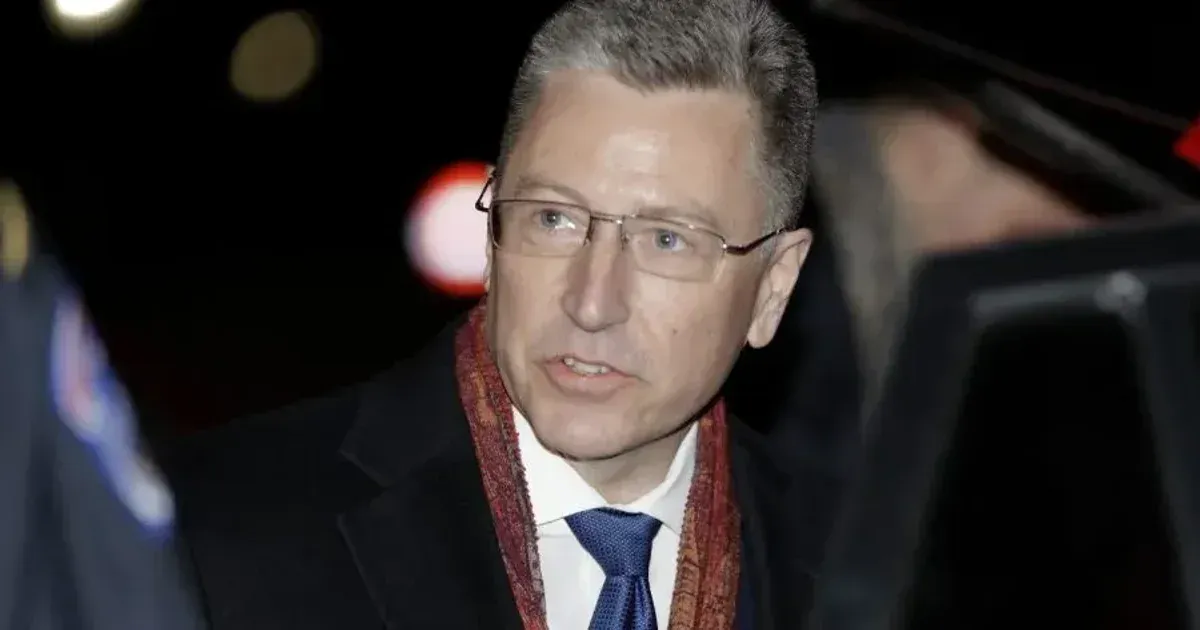
Kurt Volker, the former United States ambassador to NATO, urged European allies on April 25, 2026, to suppress public opposition to the administration’s military maneuvers against Iran. Speaking during an appearance on the Politico podcast “EU Confidential,” the career diplomat suggested that vocal dissent from Brussels undermines the collective security framework of the West. He argued that public fracturing between Washington and its continental partners provides a strategic advantage to Tehran, regardless of the merits of the underlying American policy. Such public rebukes, in his view, jeopardize the unified front required to maintain regional deterrence in the Persian Gulf.
Volker addressed the growing friction within the transatlantic alliance during a period of heightened kinetic activity involving American forces and Iranian assets. He acknowledged that many European capitals view the current trajectory as fundamentally flawed or dangerous to global stability. Despite these internal disagreements, his message centered on the necessity of diplomatic discretion. Publicly labeling American actions as a mistake creates a perception of weakness that Iranian leadership can exploit to drive a wedge between Western nations. Internal debate must not translate into external condemnation if the alliance hopes to retain its influence.
“You might think that this is a huge folly and going to have terrible consequences, but you don’t have to say it,” Volker said on the Friday episode of Politico’s “EU Confidential” podcast.
European leaders have frequently distanced themselves from the White House since the 2018 withdrawal from the Joint Comprehensive Plan of Action. These governments often emphasize the importance of de-escalation and multilateralism, contrasting sharply with the unilateral “Maximum Pressure” campaign favored by Donald Trump. Volker’s comments highlight a specific concern that European rhetoric has crossed a line from healthy policy debate into active obstruction. The former ambassador maintains that the survival of the NATO security umbrella depends on a public show of solidarity, even when private consultations are full of tension.
Diplomatic Fallout and NATO Solidarity
Volker was the permanent representative to NATO from 2008 to 2009 and later served as a special representative for Ukraine negotiations, giving his words substantial weight in diplomatic circles. He cautioned that the “terrible consequences” he envisions extend beyond rhetoric and involve a breakdown in intelligence sharing and joint planning. European allies, particularly France and Germany, have historically sought a more conciliatory path with Iran to preserve economic interests and regional trade. Washington, by contrast, has prioritized the dismantlement of Iran’s nuclear ambitions and its network of regional proxies through direct military pressure. This discrepancy has led to frequent public clashes between the State Department and the European External Action Service.
Brussels has attempted to maintain the remnants of the nuclear deal despite American sanctions that target any entity trading with the Iranian central bank. European diplomats argue that their public criticism is a necessary tool to prevent a full-scale regional war that would inevitably displace millions and destabilize the Mediterranean. Volker rejects this logic, suggesting that public criticism actually increases the likelihood of conflict by making the U.S. feel isolated and more likely to act impulsively. He insists that a quiet, unified front provides the best chance for a negotiated settlement that satisfies all parties. Silence is a tactical necessity in the current geopolitical climate.
Recent military operations in the region have included drone strikes on proxy militia commanders and the interception of naval vessels in the Strait of Hormuz. These actions have drawn sharp rebukes from European capitals, where officials worry about the legal justification and the potential for unintended escalation. Volker’s warning suggests that these public statements are viewed by the Trump administration as a betrayal of the foundational principles of the North Atlantic Treaty. He believes that the credibility of the alliance rests on the assumption that an attack on one is an attack on all, a concept that becomes murky when members publicly denounce the military actions of the lead partner. Trump’s “Maximum Pressure” campaign has also fueled tensions over Hormuz tolls and NATO tariffs.
Strategic Silence as a Security Mandate
National interests often diverge within the 2026 political landscape, yet Volker argues that the Iranian threat requires a suspension of public grievances. He pointed to historical instances where Western unity forced adversaries to the bargaining table, contrasting with periods of public bickering that led to stalemate. Critics of Volker’s position argue that he is asking sovereign European nations to abandon their foreign policy independence. They contend that silence equals complicity in a strategy they believe is destined for failure. Volker counters that the alternative, a fractured West, is a far greater threat to European soil than any specific American military misstep in the Middle East.
The podcast interview also touched on the internal dynamics of the State Department and how it interacts with the European Union. Volker suggested that when European leaders speak out, they empower domestic critics of the alliance within the United States. This domestic pressure can lead to calls for reduced American funding or troop presence in Europe, a development that would leave the continent vulnerable to other regional powers. He emphasized that European safety is closely linked to American military dominance. Direct criticism of that power, especially during active operations, creates a feedback loop that harms everyone involved.
Volker’s phrasing of “huge folly” was particularly pointed, as it mirrored the private language used by many European diplomats in 2026. By adopting their vocabulary, he demonstrated an understanding of their concerns while simultaneously dismissing their method of expression. He suggested that if European nations truly believe the policy is a folly, they should work through private channels to influence American decision-makers. Public proclamations do not change Donald Trump’s mind; they only harden his resolve and alienate him from his traditional partners. The efficacy of private diplomacy far outweighs the theatrical value of a press release.
Iran Policy Divergence and Transatlantic Strains
Tehran has historically used divisions within the United Nations Security Council to bypass sanctions and seek diplomatic relief. When European nations criticize the U.S., they provide Iranian negotiators with leverage to claim that Washington is an international pariah. Volker warned that this dynamic makes it nearly impossible to achieve a thorough new deal that addresses ballistic missiles and regional interference. He believes that the only way to bring Iran back to the table is to show that there is no gap between American and European positions. Any visible daylight between the two sides is a gift to the Islamic Revolutionary Guard Corps.
Ambiguity serves a purpose in international relations, yet Volker argues that it should be reserved for adversaries rather than allies. The current trend of public condemnation is a departure from the traditional “no-surprise” rule that governed transatlantic relations for decades. Volker’s intervention is a plea for a return to that standard, where disagreements are handled behind closed doors in Brussels or Washington. He maintains that the current global order cannot withstand a permanent rift between its most powerful democratic members. The stability of the international financial and security systems relies on the perception of a unified Western bloc.
Security analysts in London and Paris have noted that the U.S. has increasingly acted without consulting its allies on specific strike targets. This lack of coordination is often the primary driver of European frustration, leading to the very public criticism Volker deplores. If the U.S. expects silence, some argue it must offer a seat at the decision-making table. Volker did not explicitly address the lack of consultation but focused entirely on the response to it. He remains a proponent of the idea that the U.S. must lead and allies must follow, at least in the public eye.
The alternative is a disorganized retreat from the Middle East that leaves a power vacuum for Russia or China to fill.
Demanding European Silence Turns NATO Unity Into a Gag Order
Can an alliance survive when its strongest member demands silence from its peers? Kurt Volker’s advice to European nations is more than a diplomatic suggestion; it is a demand for total alignment that ignores the democratic realities of sovereign states. By suggesting that European leaders should suppress their concerns about a “huge folly,” Volker is advocating for a facade of unity that masks a decaying foundation. The approach treats the transatlantic alliance as a hierarchy instead of a partnership of equals. If European governments cannot voice the concerns of their voters regarding a potential war in the Persian Gulf, the very concept of a “democratic” alliance becomes an empty slogan.
Volker’s warning about “terrible consequences” is a thinly veiled threat of American abandonment. He correctly identifies that public dissent fuels isolationist sentiment in the U.S. Yet he fails to acknowledge that American unilateralism is what creates the dissent in the first place. You cannot expect allies to stand in silent solidarity when they are consistently blindsided by major military operations that directly affect their own security interests. The demand for silence is a symptom of a broader breakdown in communication that cannot be fixed by simply keeping quiet. It requires a fundamental return to genuine consultation, a practice that the current administration has largely discarded in favor of “Maximum Pressure.”
The era of a unified Western front is rapidly concluding, replaced by a transactional reality where silence must be bought with influence. Volker is right that a fractured West is a gift to Tehran, but he is wrong to place the burden of repair solely on the shoulders of European diplomats. If the U.S. continues to treat its allies as subordinates who should be seen but not heard, it will eventually find itself standing alone. Real leadership requires building a consensus that can withstand public scrutiny, not demanding a gag order on those who share the consequences of your mistakes. Silence will not save this alliance.