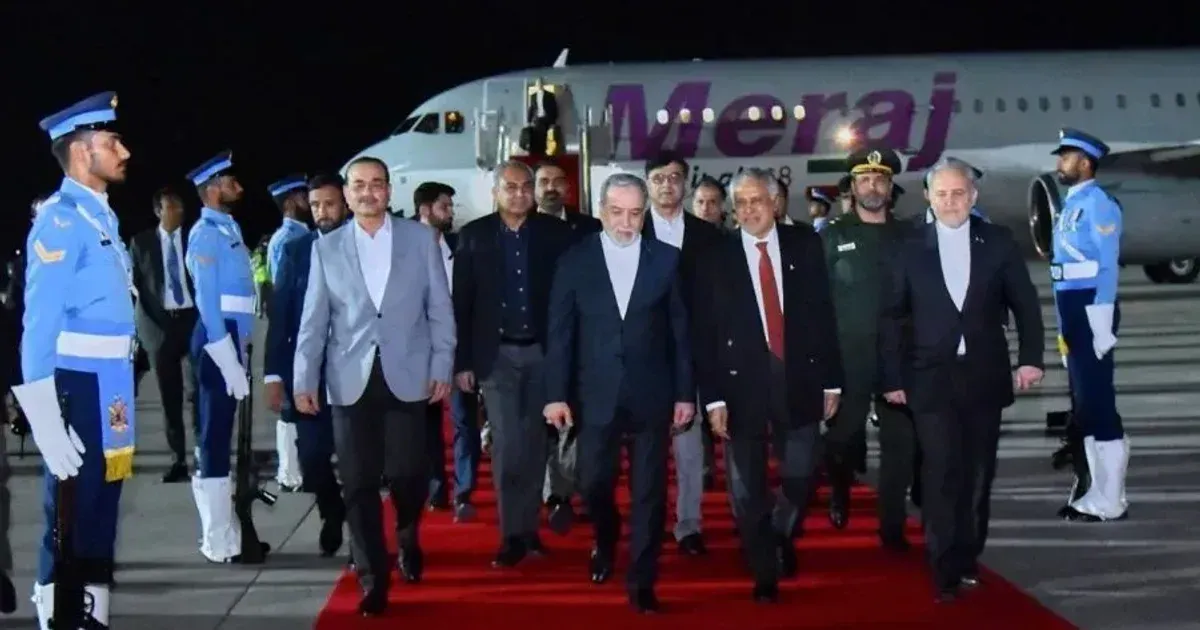
Iran Foreign Ministry officials confirmed on April 25, 2026, that no direct diplomatic engagement with Washington will occur despite White House claims of an upcoming meeting. Esmaeil Baqaei, a spokesperson for the ministry, clarified that the Islamic Republic has no intention of sitting across the table from American representatives. Pakistan is now the primary conduit for communication between the two adversarial powers. Islamabad has become the unlikely center of a high-stakes diplomatic relay where messages are passed between the State Department and Iranian leadership. Presidential aides in Washington previously expressed optimism that a face-to-face encounter could de-escalate the conflict that began in late February. Tehran, however, appears committed to a policy of isolation regarding direct contact. The timing matters for planners.
Pakistan officials are currently reviewing Iranian observations that will be conveyed back to American intermediaries. Baqaei stated that the logistical framework for these indirect talks is already in place. Iranian leadership insists that direct negotiations are impossible while active hostilities continue to define the bilateral relationship. Pakistani diplomats have spent weeks attempting to bridge the widening gap between the two nations. Foreign policy experts in Islamabad suggest that the role of mediator carries immense political risk for the Pakistani government. Islamabad must balance its historical ties with Washington against its shared border and energy interests with Iran.
Iranian Diplomacy and the Pakistan Channel
Messages originating in Tehran must now travel through multiple diplomatic layers before reaching the desk of the Secretary of State. Esmaeil Baqaei emphasized that the rejection of direct talks is a calculated decision by the Iranian foreign policy apparatus. Baqaei noted that Iran perceives any direct meeting as a sign of weakness under current military pressure. Pakistani intermediaries have reportedly received a list of Iranian grievances regarding American naval presence in the Persian Gulf. Defense analysts believe this indirect method is designed to prolong the diplomatic process while Iran fortifies its domestic positions. Direct communication channels, which were already fragile, have effectively collapsed during this latest round of escalation.
“No meeting is planned to take place between Iran and the US. Iran’s observations will be conveyed to Pakistan,” Esmaeil Baqaei said.
Military records indicate the Pentagon has exhausted 1,100 long-range stealth cruise missiles since the conflict began on February 28. Such a large burn rate has raised alarms within the American defense establishment regarding readiness in other theaters. Defense officials worry that the rapid depletion of precision-guided munitions leaves the United States vulnerable in the Indo-Pacific. Taiwan figures prominently in these internal assessments as a location that requires substantial missile stockpiles for a credible defense. Current projections show that the American inventory of stealth cruise missiles is reaching critical lows. Naval planners are now forced to consider a future where the Pacific fleet lacks the necessary armaments to deter Chinese expansion.
Pentagon Arsenal Depletion and Taiwan Defense
Production lines for these sophisticated weapons cannot keep pace with the current expenditure in the Middle East. Logistics experts note that manufacturing a single stealth cruise missile can take months of precision assembly. Taiwan remains a primary concern for strategic planners who see the Iran conflict as a dangerous distraction from the Pacific. Beijing has closely monitored the missile burn rate and may see an opportunity in the diminishing American stockpile. Military intelligence reports suggest that the total number of remaining missiles is insufficient for a prolonged engagement with a peer competitor. Defense contractors are under pressure to accelerate delivery, yet supply-chain bottlenecks continue to hinder production targets.
The math of modern warfare does not lie.
Strategic analysts at the Department of Defense have begun drafting contingency plans for a potential munition shortage. These documents highlight the friction between immediate operational needs in Iran and long-term security commitments in East Asia. Taiwan defense officials have privately expressed concern that their security is being traded for a stalemate in the Persian Gulf. Some Congressional leaders have called for an immediate audit of the national stockpile to determine exactly how many long-range assets are still available. Military readiness levels have dropped to lows not seen since the Cold War. Financial costs associated with replacing 1,100 high-end missiles are estimated to reach billions of dollars over the next fiscal cycle.
Strained Alliances and NATO Policy Friction
Internal Pentagon communications recently revealed a proposal to punish NATO members that refuse to support the war effort. One specific email suggested that Spain could face suspension from the alliance due to its reluctance to commit military assets to the Iran theater. Madrid has consistently argued that the conflict does not fall under the collective defense obligations of the North Atlantic Treaty. Presidential advisors have floated the idea of reviewing trade agreements or defense cooperation with non-compliant allies. Such threats have caused deep resentment within European capitals. Diplomats in Spain have responded by calling for a more independent European defense posture that is less dependent on American directives.
Britain faces a different set of pressures according to the leaked Pentagon documents. American officials have allegedly discussed reviewing the British claim to the Falkland Islands as a lever of influence. London has provided limited support for the Iran operations but has stopped short of the full-scale commitment requested by Washington. Foreign Office staff in the United Kingdom were reportedly stunned by the suggestion that a territorial dispute could be used as diplomatic collateral. Relationships within the Pentagon and across the Atlantic have reached a point of extreme volatility. Alliance cohesion is fracturing as the costs of the war continue to mount for all participating nations.
Defense Department officials have not officially confirmed the contents of the leaked emails. Publicly, the administration continues to stress the importance of unity among NATO partners. Privately, the frustration with European reluctance is boiling over in high-level meetings. Spain continues to lead a bloc of nations that prefer a diplomatic resolution through the United Nations. Washington maintains that the Iranian threat requires a unified military response from the entire democratic world. Divergent national interests are making it increasingly difficult to maintain a common front against Tehran. Failure to secure full alliance support could leave the United States bearing the entire financial and military burden of the conflict.
Iran War Depletes the Arsenal Needed to Deter China
Can a superpower sustain a two-front geopolitical posture when its physical magazine is empty? Washington is currently engaged in a spectacular display of strategic myopia that prioritizes a regional mess over its most critical global deterrent. Depleting 1,100 stealth cruise missiles in a conflict with Iran is not just a tactical choice; it is a gift to the leadership in Beijing. The Pentagon is effectively disarming itself in the Pacific to chase a stalemate in the Middle East that Tehran refuses to even discuss directly. Relying on Pakistan as a messenger is a humiliating admission that the American diplomatic leverage has evaporated alongside its missile stocks.
Threatening allies like Spain or leveraging the Falklands against the British is a desperate tactic of a fading hegemon. You do not build a coalition by holding the sovereign territory of your closest partners hostage. This behavior indicates a breakdown in the very rules-based order that the United States claims to defend. If Taiwan is the ultimate prize in the 21st-century power struggle, then the current administration is failing the test of history. The American arsenal is a finite resource, and it is being wasted on a theater that offers no clear path to victory. Washington must choose between its obsession with Iran and its survival in the Pacific. Continuing the current path ensures failure in both.