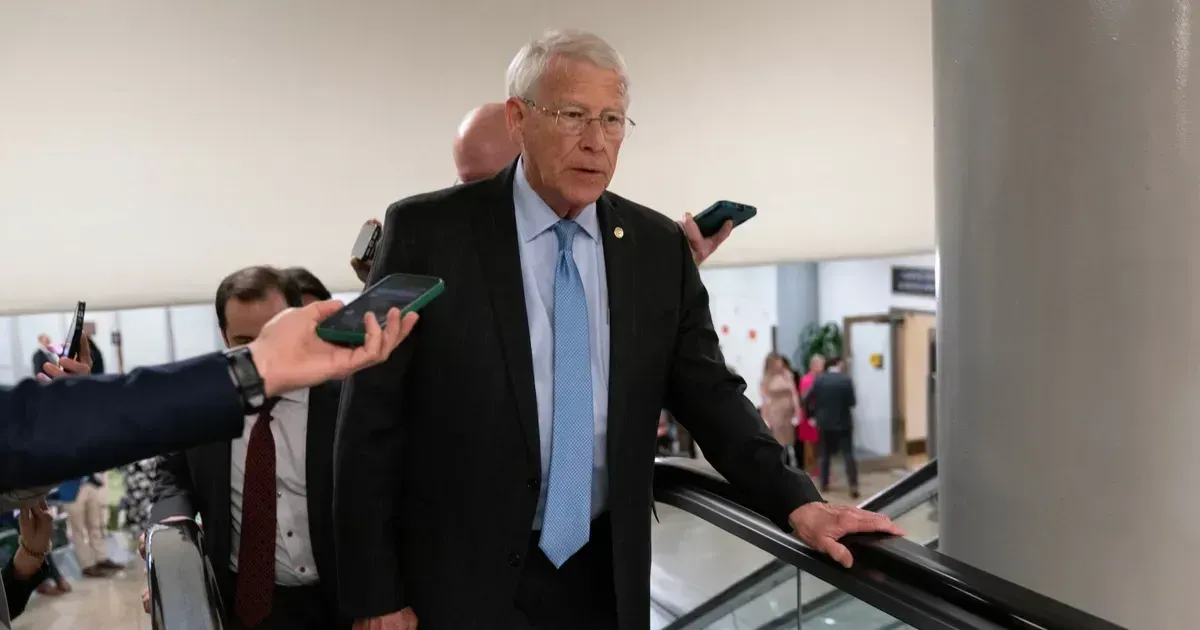
Roger Wicker declared on April 24, 2026, that diplomatic efforts to secure the Strait of Hormuz have failed. Mississippi's senior senator signaled a total break with previous efforts to find a negotiated settlement with the clerical leadership in Tehran. Republican leadership on the Senate Armed Services Committee now views military force as the only mechanism to restore international shipping lanes. Wicker insisted that the window for conversation closed when Iran repeatedly violated terms regarding maritime security and nuclear development. Successors to Supreme Leader Ayatollah Ali Khamenei have demonstrated zero intent to de-escalate, according to committee intelligence briefings. Peace deals require willing partners, and Wicker believes those partners no longer exist within the current Iranian administration.
Republican senators have shifted their focus toward a total dismantling of Iranian defensive and offensive structures. Senator Wicker argued that limited strikes in the past failed to produce the necessary behavioral changes in the Islamic Revolutionary Guard Corps. The failure to bomb Iran into submission has only emboldened the regime to pursue deeper nuclear concessions while holding the global oil supply hostage. Internal assessments show that Tehran believes its strategic position is strengthening rather than weakening. Hardline elements in the Iranian government perceive American hesitation as a sign of permanent decline. Wicker wants Donald Trump to authorize a campaign that goes beyond symbolic deterrence.
"The time is over for negotiations with Iran’s regime. The radical successors of Khamenei can never be trusted to keep any promises regarding the Strait of Hormuz or their nuclear ambitions. We must finish destroying Iran’s conventional military capabilities to ensure they cannot threaten the global economy or our allies ever again," Roger Wicker stated.
Pentagon officials received a clear directive from the Senate Armed Services Committee to prepare detailed strike packages targeting conventional assets. These lists include coastal missile batteries, fast-attack naval vessels, and integrated air defense systems. Roger Wicker pointed to the persistent harassment of commercial tankers as justification for a wider campaign. Previous military actions focused on specific proxy leaders or drone manufacturing sites. Wicker’s new proposal demands the systematic destruction of the entire Iranian naval infrastructure along the Persian Gulf. Defense analysts suggest such an operation would require a multi-carrier strike group presence for several months. Wicker’s office confirmed he has already discussed these requirements with the White House.
Senate Armed Services Committee Moves Toward War
Senate hawks are coalescing around a strategy of absolute military superiority to solve the regional crisis. Wicker believes Donald Trump has the constitutional authority to act without a new congressional declaration given the immediate threat to American economic interests. Legal advisors for the committee cite the War Powers Resolution and existing authorizations for the use of military force. Critics of the move point to the risk of a broader regional conflict involving Hezbollah or other regional militias. Wicker dismissed these concerns by stating that the current stalemate is more expensive than a decisive engagement.
The Senate Armed Services Committee plans to increase funding for munitions procurement to support a potential air campaign. Intelligence reports indicate that Iranian missile stocks are at their highest levels in five years.
Military planners are currently reviewing the effectiveness of the $11 billion spent on regional defense over the last two years. Roger Wicker stated that this defensive posture is no longer sustainable. Iran has developed sophisticated methods to bypass sanctions, allowing for the continuous upgrade of its ballistic missile program. These advancements make a conventional strike more difficult than it would have been five years ago. Wicker noted that the longer the United States waits, the more lethal the Iranian response will be. The senator’s comments reflect a growing consensus that containment has reached its logical limit. Donald Trump is reportedly reviewing options that include both cyber and kinetic operations against the Iranian Ministry of Defense.
Strait of Hormuz Deadlock Fuels Military Pressure
Tehran maintains a stranglehold on the most critical oil transit point in the world. Approximately 20% of global petroleum consumption passes through this narrow waterway. Iranian officials have threatened to close the strait entirely if the United States continues its maximum pressure campaign. Roger Wicker argued that the threat alone is enough to justify pre-emptive action. Market volatility increased as traders reacted to the possibility of a total naval blockade. Shipping insurance rates for vessels operating in the Persian Gulf have tripled since the beginning of the year.
Wicker’s rhetoric suggests that the economic cost of inaction now outweighs the risks of a localized war. The Senate Armed Services Committee is currently drafting legislation to speed up weapon transfers to regional partners like Saudi Arabia.
Negotiators from the State Department have been sidelined by the aggressive posture of the legislative branch. Wicker’s declaration that time is over for talks effectively ends any back-channel communication regarding maritime safety. Diplomatic sources in Europe expressed concern that the United States is moving toward an unprovoked escalation. Wicker countered by highlighting the dozens of attacks on merchant ships over the last six months. Iran continues to deny responsibility for these incidents, blaming them on local instability or false flag operations. The Senate Armed Services Committee holds satellite evidence linking the Revolutionary Guard to specific mine-laying activities. Wicker shared these findings with Donald Trump during a closed-door briefing at the end of March.
Iranian Defiance Limits Diplomatic Options
Tehran senses that the geopolitical environment favors its persistence. Chinese and Russian support has provided a financial lifeline that makes US sanctions less effective than in previous decades. Iranian state media has portrayed Wicker’s comments as proof of American warmongering. Iran insists its military buildup is purely defensive and intended to protect its sovereignty. This defiant tone has made it politically impossible for Republican leaders to advocate for anything short of a military solution. Wicker noted that the new generation of Iranian leaders is even more ideologically rigid than the previous one.
The Senate Armed Services Committee has concluded that no diplomatic breakthrough is possible with the current personnel in the Iranian Foreign Ministry. Donald Trump has publicly echoed this sentiment in recent press conferences.
National security advisors are divided on the scope of the proposed military action. Some favor a surgical approach targeting only nuclear-related facilities. Roger Wicker strongly disagrees, insisting that the conventional military must be the primary target. He argues that taking out the navy and air force would leave Iran unable to project power in the region. This strategy aims to create a power vacuum that internal opposition groups might fill. Defense contractors have already seen an uptick in requests for bunker-busting munitions and electronic warfare kits. Wicker’s committee controls the specific line items in the defense budget that would fund such an escalation. The Senate Armed Services Committee will vote on a new appropriations bill early next week.
Pentagon Strategy Targeting Conventional Force Assets
Commanders at US Central Command have updated their operational plans to align with Wicker’s demands. The focus has shifted from counter-terrorism to high-intensity conventional conflict. Iran possesses one of the largest missile arsenals in the Middle East, making any strike a high-risk effort. Wicker maintains that the United States possesses the technological edge to neutralize these threats before they can launch. Aircraft carriers are already moving into position in the North Arabian Sea. Donald Trump has not yet given the final order to start strikes, but the rhetoric suggests a countdown has begun.
Wicker emphasized that the goal is not regime change but the total removal of the Iranian military threat. The Senate Armed Services Committee is monitoring the deployment of additional F-35 squadrons to the region.
Oil prices rose 4% immediately after the transcript of Wicker’s speech became public. Analysts at Goldman Sachs predict a jump to $120 per barrel if hostilities break out. Roger Wicker acknowledged the potential for short-term economic pain. He believes the long-term security of the Strait of Hormuz justifies the immediate volatility. Iran has responded by placing its coastal defense units on high alert. Satellite imagery shows increased activity at the Bandar Abbas naval base. Wicker’s push for strikes is the most consequential move toward war since the 2020 escalation. The Senate Armed Services Committee will remain in session through the weekend to handle emergency defense authorizations. Donald Trump continues to coordinate with Wicker on the timing of the next move.
Wicker’s Strike Plan Would Replace Failed Diplomacy With Open-Ended War
Can a nation bomb its way to a diplomatic vacuum? Roger Wicker seems to think so, but his calculus ignores the inevitable law of unintended consequences that has plagued American adventures in the Middle East for three decades. By declaring the era of diplomacy over, the Senate Armed Services Committee chair is not just signaling a policy shift; he is actively dismantling the very tools that prevent total regional fire. Wicker’s demand to destroy the conventional military of Iran assumes that a neutered Tehran would simply fade into the background. History suggests otherwise. A cornered regime with nothing left to lose but its paramilitary proxies will export chaos in ways that a conventional navy never could.
Donald Trump finds himself at a crossroads where his instinct for isolationism clashes with his desire to appear as the ultimate strongman. If he follows the Wicker plan, he commits the United States to a conflict that will likely outlast his second term and drain the treasury. Wicker’s focus on the Strait of Hormuz is a convenient economic justification for a long-held neoconservative dream of crushing the Islamic Republic. The Senate Armed Services Committee is betting the global economy on the hope that Iran will fold after the first wave of Tomahawks. This is a gamble of stunning proportions. War is the ultimate failure of statesmanship.