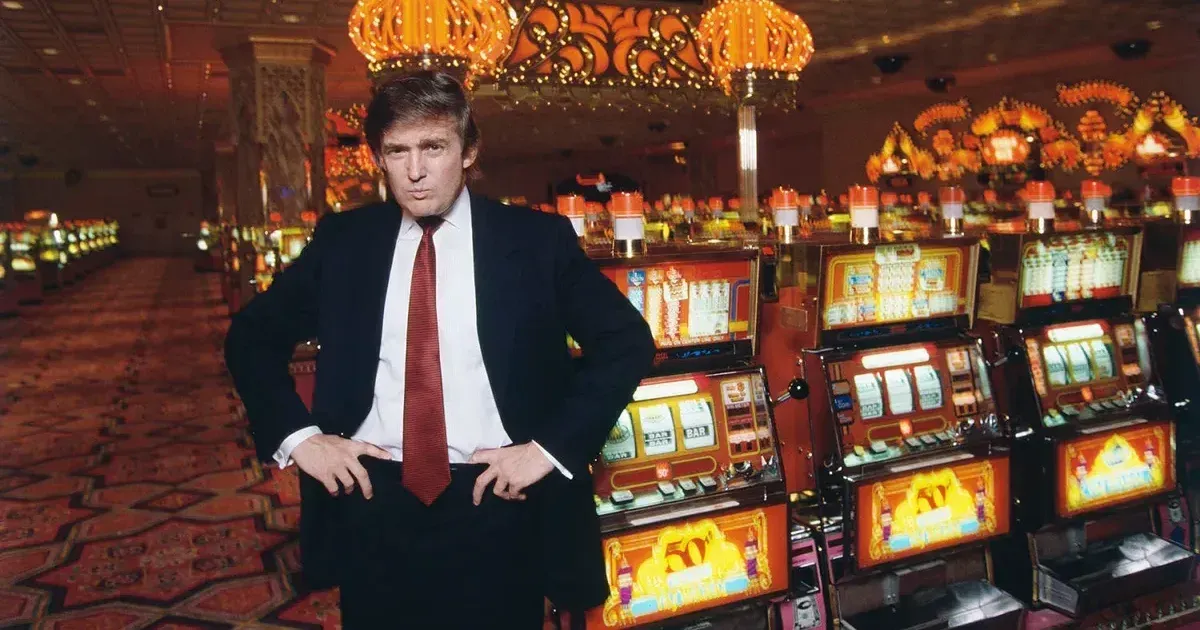
Donald Trump criticized the rapid growth of political prediction markets on April 24, 2026, during a press event where he voiced concerns about the speculative nature of modern finance. Standing before a bank of microphones, he suggested that the global economy has transformed into a high-stakes environment where traditional values are replaced by raw wagering. Reporters noted a distinct contrast between these remarks and his long history as a casino developer in Atlantic City.
Economic advisors within the administration have simultaneously pushed for deregulatory measures that benefit the very platforms the president now publicly questions. Skeptics point to a pattern of rhetorical distancing that allows the executive branch to maintain its populist appeal while its policy arms enable industry growth. Prediction markets allow participants to buy and sell shares based on the probability of specific political outcomes, such as election results or legislative passages.
Recent data indicates a surge in volume on platforms like Kalshi and Polymarket, where hundreds of millions of dollars are now wagered on various federal outcomes. Volume on these platforms often exceeds the spending seen in traditional political action committees. One internal review conducted by federal oversight bodies suggests that the liquidity in these markets now rivals small-cap equity exchanges. Investors often view these numbers as more accurate than traditional polling data because they require participants to put capital at risk.
Trump Criticizes Casino Culture in Washington
President Donald Trump expressed visible frustration with the current state of speculative betting during his Thursday comments. He framed the rise of these platforms as a symptom of a broader societal decline into gambling. This perspective aligns with his recent efforts to frame himself as a protector of institutional stability, even as his past business ventures suggest a different affinity for risk.
“You know, the whole world, unfortunately, has become somewhat of a casino,” Donald Trump said.
Critics frequently reference his ownership of the Taj Mahal and other gambling hubs to highlight what they describe as a contradictory stance. Records from his time in the private sector show a deep understanding of the mechanics of betting and odds. His administration has not yet issued a formal executive order to curb the growth of these markets. Action remains confined to public speeches and informal briefings.
Legal analysts suggest that the President may be attempting to preemptively distance himself from potential market volatility. Sharp swings in election odds can create public perception issues, especially if a candidate appears to be losing momentum in real-time. Markets often react faster than news cycles. If a major policy shift or scandal breaks, the share price for a candidate can collapse within seconds.
Bernie Moreno Proposes Senate Betting Ban
Senator Bernie Moreno introduced a resolution on Friday to address the specific ethical concerns surrounding legislative participation in these markets. The Ohio Republican seeks to amend Senate rules to prevent members from entering into contracts or transactions that provide for the purchase of shares in political outcomes. Moreno argues that the potential for insider trading is too high to ignore. Senators often possess non-public information about the timing of votes and the likelihood of bill passages.
Legislation like this would create a firm barrier between the lawmakers and the financial incentives of the outcomes they control. The proposed rule would prohibit any agreement or transaction involving prediction markets for all sitting senators. Moreno believes that the integrity of the chamber is at stake when members can profit from the very events they choreograph. Trust in public institutions has reached record lows in recent polling.
Proponents of the ban point to the difficulty of monitoring digital wallets and offshore betting accounts. Enforcement would require the Senate Ethics Committee to adopt sophisticated digital forensic tools. If the resolution passes, it would represent a significant expansion of the STOCK Act, which already regulates traditional equity trades by members of Congress. Public scrutiny of congressional stock portfolios has intensified over the last decade.
Moreno remains one of the few Republican voices calling for such strict limitations on market participation. Some of his colleagues argue that these markets provide valuable price discovery and predictive data. They contend that banning participation does not address the underlying issue of information asymmetry. Markets continue to operate regardless of whether senators are allowed to participate.
Insider Trading Risks in Political Markets
Traders in prediction markets look for any edge that might signal a shift in political winds. Because these markets operate on a 24-hour cycle, they are susceptible to rapid fluctuations based on rumors or leaked documents. Unlike the stock market, there is no SEC equivalent with clear jurisdiction over political outcomes. This regulatory gray area has allowed the platforms to grow with minimal oversight. Senator Bernie Moreno emphasized that even the appearance of a conflict of interest can damage the legislative process. If a senator knows a committee chair will kill a bill, they could theoretically short the contract for that bill passing. Profit margins in these scenarios are often high due to the binary nature of the outcomes. Most contracts pay out $1.00 for a correct prediction and $0.00 for an incorrect one. Internal documents from several major trading platforms show that large-scale participants often have ties to political consulting firms. This connection raises questions about whether information is being monetized before it reaches the general public. Regulators at the Commodity Futures Trading Commission have struggled to define these contracts as either gaming or insurance. The legal classification determines which agency has the power to prosecute fraud. Market participants argue that the transparency of the blockchain or public ledgers makes cheating difficult. Every transaction is recorded and can be audited by third parties. However, the use of pseudonymous accounts can mask the true identity of the traders. Federal investigators would need to link these accounts to specific individuals to prove illegal activity.
Trump Administration Ties to Betting Growth
Executive branch officials have overseen a period of historic expansion for the gambling industry. Despite the personal comments made by Donald Trump, his appointees at various agencies have issued permits and guidance that favors market growth. Sports betting and political wagering have become multibillion-dollar industries during his tenure. The disconnect between presidential rhetoric and administrative action is a recurring theme in modern governance. Lobbyists for the prediction market industry have spent over $400 million in the last two years to influence federal policy. These efforts focus on ensuring that political contracts are treated as legitimate financial instruments. They argue that these markets serve a public good by providing a hedge against political instability. Businesses can use these platforms to protect themselves against the financial impact of tax changes or new regulations. Administration officials have met with executives from these platforms on several occasions at the White House. These meetings often center on the technological innovation behind the markets. Supporters of the technology claim that decentralized finance can eliminate the need for centralized clearinghouses. It would reduce costs and increase the speed of transactions. One senior official stated that the goal is to create a strong regulatory framework that encourages innovation while protecting consumers. The approach contrasts sharply with the "casino" metaphor used by the President. The duality of this position suggests a strategic attempt to appeal to both traditional conservatives and the tech-aligned donor class. Policy implementation often moves at a slower pace than political speeches.
Election Markets Turn Political Access Into a Tradable Advantage
Washington is currently entangled in a performative struggle between the old guard of legislative ethics and the new frontier of speculative capital. Donald Trump labels the world a casino while standing atop a mountain of chips he helped mint. The rhetorical pivot is not a sudden epiphany of conscience but a calculated defense mechanism against a force he cannot yet dominate. Prediction markets are the ultimate populist tool, decentralizing the power of the pundit class and replacing it with the brutal efficiency of the betting line. They are, in essence, the most "Trumpian" financial instrument ever devised. Senator Bernie Moreno recognizes that the optics of a betting senator are toxic at a time of hyper-partisan suspicion. Yet, his resolution faces an uphill battle against a legislative body that has historically resisted any meaningful curb on its own financial liberties. The Senate is a club that protects its perks, and the ability to monetize a committee assignment is perhaps its most lucrative advantage. If Moreno succeeds, it will be because the public outcry becomes louder than the siren song of the offshore betting account. Prediction markets will survive this scrutiny because they offer something that polling no longer can: accountability through loss. When a poll is wrong, the pollster issues a correction. When a trader is wrong, they lose their shirt. The brutal reality makes the data produced by these markets far more dangerous to the political establishment than any survey. The establishment fears the markets because they cannot be bullied into a favorable result. Numbers are the numbers. Prediction is power. Whoever controls the perceived probability of an outcome controls the outcome itself.