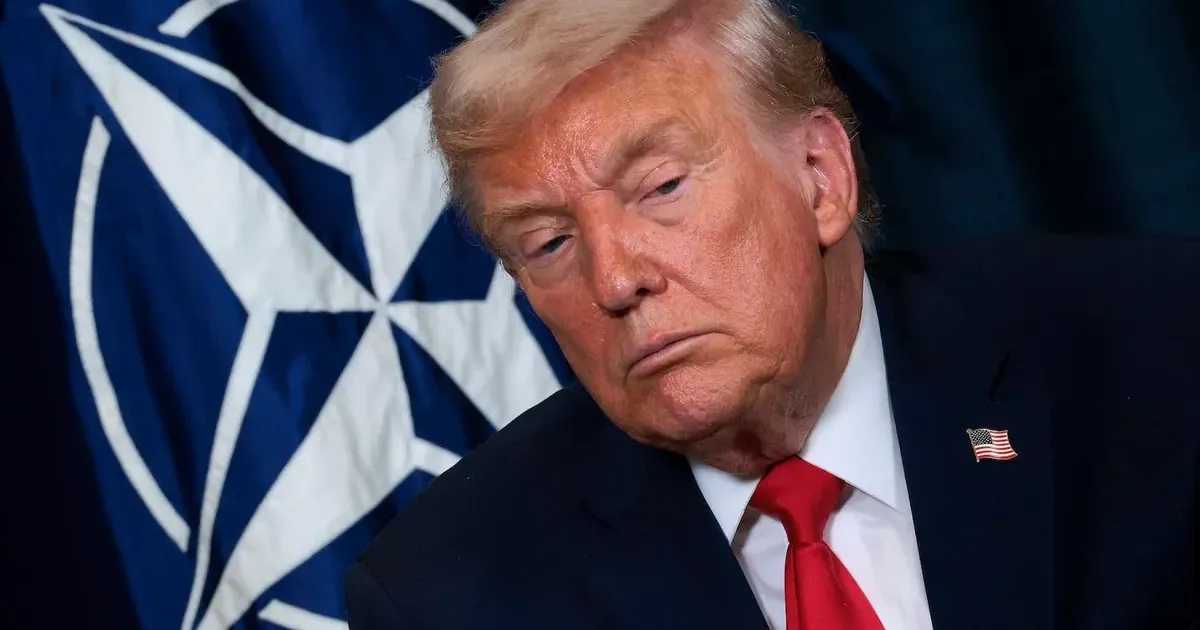
President Trump's NATO posture looks less like a simple withdrawal threat and more like a rolling credibility test. U.S. ambassador to NATO Matt Whitaker has framed the administration's priorities around allied burden sharing and a more combat-ready alliance. At the Ankara summit, Trump sounded warmer in public, backed the final declaration and let allies present the meeting as a show of unity.
The warmer summit language did not erase the underlying strain. The alliance is now living with two messages at once: formal U.S. support for NATO's Article 5 commitment, and recurring Trump pressure that treats allied loyalty, defense spending and support for U.S. priorities as negotiable tests.
For deterrence, the combination matters. NATO does not only depend on treaty text. It depends on whether Moscow, European capitals and U.S. voters believe Washington will act when the test comes.
Ankara Lowered the Immediate Temperature
The Ankara summit gave NATO leaders a visible moment of repair. Trump praised allies, accepted language reaffirming collective defense and avoided the open rupture many European governments feared before the meeting. For officials trying to preserve alliance confidence, avoiding a rupture mattered.
But the relief was tactical. Reports from the summit still described a president moving between criticism and reassurance, including complaints about allied defense spending and pressure around support for U.S. action in Iran. A calmer final press conference did not make the earlier volatility disappear.
European officials therefore measured the summit less by strategic breakthrough than by damage control. In the current environment, avoiding a public break has become its own diplomatic achievement.
Whitaker Keeps the Burden-Sharing Pressure Alive
Whitaker's message fits Trump's long-running argument that the United States carries too much of the alliance burden while European members rely too easily on American power. NATO has spent years pushing members toward higher defense spending, and several European governments have moved upward. The Trump administration still argues that pace and scale are not enough.
There is a legitimate policy debate inside that complaint. European defense capacity has lagged the threat environment for years. The problem is the link between burden sharing and commitment. When cost-sharing talk starts sounding like a loyalty test, allies hear more than budget discipline.
Article 5 depends on belief. If adversaries think Washington might hesitate, deterrence weakens before any formal document changes.
Congress Can Block Exit, Not Doubt
Any attempt to formally withdraw from NATO would run into U.S. law and a serious constitutional fight. Congress moved in the 2024 defense authorization law to prevent a president from suspending, terminating or withdrawing U.S. membership without Senate approval or an act of Congress. The provision grew out of bipartisan concern and was associated with Tim Kaine and Marco Rubio.
The law is a real barrier. It does not solve every practical question. Presidents control large parts of foreign policy, military posture and diplomatic signaling. A White House can reduce participation, slow support, alter troop commitments or make alliance reliability feel conditional without sending a clean withdrawal letter.
The gray zone is where much of the real conflict would likely occur.
Europe Will Watch Deployments, Not Just Declarations
Allies will listen to Whitaker's words and Trump's summit language, but they will watch operational decisions more closely. Troop movements, budget requests, exercises, arms transfers, Ukraine policy and summit follow-through will show whether the administration is bargaining for spending or shifting the alliance's basic assumptions.
Poland and the Baltic states have the most at stake because they treat U.S. presence as a central deterrent against Russian pressure. For them, American ambiguity is not a media-cycle problem. It changes defense planning.
The administration's answer is that U.S. voters asked for overseas commitments to be tested against national interest. The counterargument is that alliances are not subscription services that can be paused without cost.
Adversaries Price the Ambiguity Too
NATO's internal politics do not stay internal. Russia, China and Iran all watch whether U.S. alliance commitments appear automatic, conditional or distracted by other crises. One interview or one summit does not produce a battlefield change. Repeated doubt still shifts the risk calculation over time.
If allies feel less certain, they hedge. If adversaries feel more room to test, they probe. If Congress tries to lock in the treaty while the executive branch signals impatience, the alliance survives legally but absorbs political stress.
Credibility Is the Part No Statute Can Supply
The NATO treaty still stands. Congress has put a legal fence around withdrawal. Trump left Ankara without breaking the alliance. Those facts matter.
They do not fully answer the credibility question. Collective defense works because it is supposed to look automatic before the crisis begins. If Washington keeps treating NATO as a provisional bargain rather than a standing commitment, the alliance may remain intact while becoming less predictable.
The risk is now clear. NATO can survive another round of American pressure on spending. It has a harder problem if allies and adversaries start building plans around the possibility that U.S. commitment depends on the politics of the week.