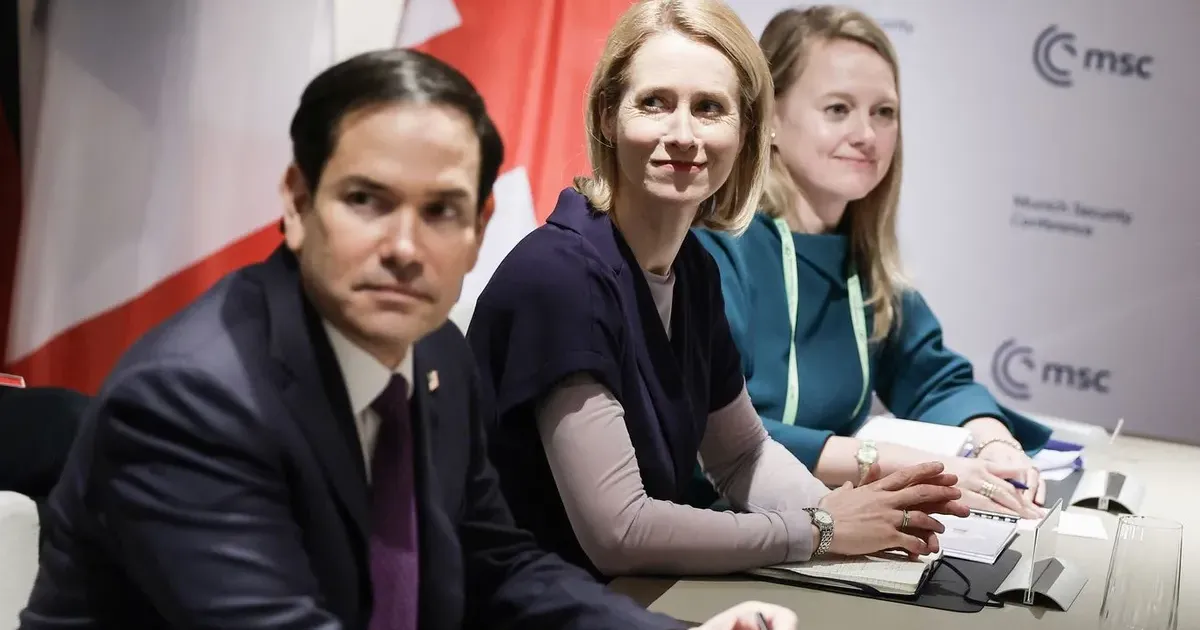
Marco Rubio and Kaja Kallas clashed over Russia policy during a tense G7 ministerial meeting. The exchange exposed a deeper disagreement over how quickly allies should harden pressure on Moscow and how much responsibility the United States should carry in the search for an end to the war in Ukraine. Diplomats described a sharp moment that both sides later tried to contain.
Kallas, the European Union's foreign policy chief and former prime minister of Estonia, has long been one of Europe's most forceful voices on Russia. According to reporting on the closed-door session, she pressed Rubio on whether Washington's patience with the Kremlin had gone on too long. Her question reflected the view of frontline European states that delay rewards Moscow.
Rubio's response was unusually blunt. He said the United States was doing what it could to end the war while continuing to support Ukraine, and suggested that Europe could take the lead if it believed it had a better path. The remark landed because it touched the central anxiety inside the alliance: Europe wants more pressure, but still wants American diplomatic weight behind the effort.
Kallas Confronts Rubio Over Russia Pressure
Kallas's frustration came from the perception that Russia has not moved meaningfully despite months of diplomacy, sanctions and battlefield pressure. For Baltic and Eastern European governments, that lack of movement is not an abstraction. It is a direct security concern. They fear that any sign of Western fatigue encourages the Kremlin to wait out the coalition.
Her challenge to Rubio reportedly referenced earlier U.S. warnings that patience with Russia was limited. If a year passes and Moscow does not change course, European officials want to know what follows. More sanctions? More military aid? A different diplomatic format? The absence of a clear answer creates mistrust.
Washington's position is more complicated. The United States is trying to maintain some diplomatic channel while supporting Ukraine with weapons, intelligence and other assistance. That dual role invites criticism from allies who see talks as weakness and from domestic voices that see aid as open-ended burden.
Rubio Warns Europe About U.S. Limits
Rubio did not accept the idea that the United States was failing to act. According to Axios and other reports, he pushed back sharply and raised the possibility that Washington could step aside if Europe believed it could do better.
"We are doing the best we can to end the war. If you think you can do it better, go ahead. We will step aside," Rubio said.
The line should not be read as a formal withdrawal announcement. It was a warning about political patience and burden-sharing. Rubio was making clear that American leadership is not an unlimited resource, especially when European partners criticize Washington's pace while depending on its leverage.
That message carries risk. If allies interpret it as abandonment, the Kremlin benefits. If they interpret it as pressure to build more European capacity, the alliance may become more balanced. The difference depends on whether Europe treats the warning as an insult or as a strategic deadline.
Allies Move to Preserve G7 Consensus
Several European ministers reportedly intervened after the exchange to stress that they still wanted U.S. diplomacy to continue. That reaction shows the contradiction at the heart of the meeting. Europe may be frustrated with Washington, but it does not want Washington absent. A Russia-Ukraine process without the United States would lose military, diplomatic and symbolic weight.
A State Department official later described the confrontation as a frank exchange of views. That is diplomatic language, but it is not meaningless. These meetings exist because allies disagree behind closed doors before trying to present unity outside the room. The danger is that private friction now leaks quickly and becomes part of public strategy.
The incident also underscores a broader trust problem. European officials worry that Washington may settle for a deal that freezes Russian gains or reduces pressure too early. U.S. officials worry that European capitals demand escalation without matching it with enough military-industrial capacity. Both critiques contain truth.
The Alliance Patience Gap
Does the American presence in Europe still serve a purpose beyond inertia? The friction between Rubio and Kallas reveals an uncomfortable truth diplomats prefer to avoid. Washington is tired of acting as Europe's primary security guarantor while being lectured by governments that often lack the military capacity to enforce their own rhetoric. Kallas may be right that Russia has not moved. But demands for more pressure are weaker when the burden still falls disproportionately on the United States.
Rubio's threat to step aside should not be dismissed as a momentary flare-up. It is a signal that unconditional American leadership in European security is under strain. If the European Union wants a more aggressive stance against Russia, it has to build the industrial and military infrastructure to sustain that stance without treating Washington as the permanent fallback. The current arrangement, where Brussels sets the moral tone and the United States supplies much of the leverage, is politically unstable. More of these clashes are coming as U.S. strategy shifts and European hawks discover that American patience may run out in a different direction than they expected.