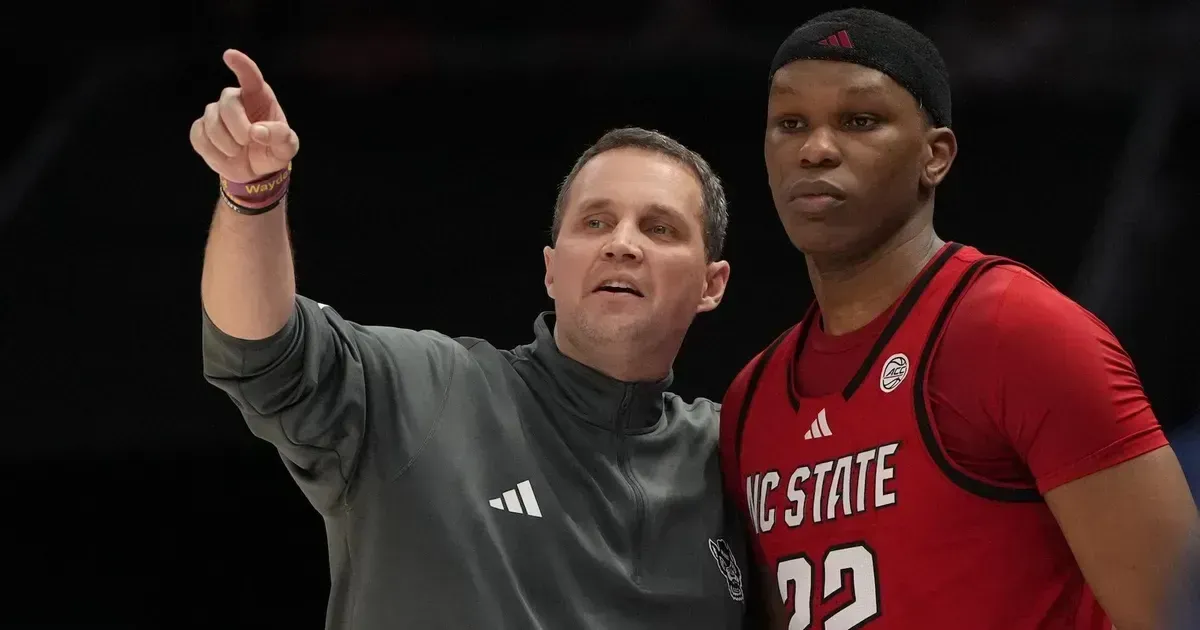
Dayton, Ohio, hosts the opening salvos of the 2026 NCAA Tournament as Texas and NC State prepare for a high-stakes First Four encounter on Tuesday. UD Arena serves as the traditional gateway for the postseason, welcoming teams that teeter on the edge of the general bracket and those seeking to validate their inclusion through on-court performance. Basketball fans across the United States have shifted their attention to this mid-Ohio hub, where the margin for error effectively vanishes for the four participating programs. Early arrivals in the city report a palpable tension among coaching staffs who know that a Tuesday loss results in an immediate flight home and a premature end to the season.
On March 12, 2026, the NCAA tournament opened with bracket risk already visible. Longhorns players arrived at their team hotel yesterday, marking their fourth postseason appearance under the current coaching regime. NC State follows a different path, having secured their spot through a late-season surge that surprised many ACC observers. The winners of this matchup will advance to face a high-seeded opponent in the Round of 64, carrying with them the advantage of having already adjusted to the tournament atmosphere. History suggests this momentum is far from anecdotal.
Betting Markets Focus on Texas and NC State
Experts at CBS Sports have analyzed the opening lines for the Tuesday slate, identifying Texas as a marginal favorite against the Wolfpack. Spread bettors currently favor the Longhorns by 2.5 points, though late money has moved toward the underdog in several offshore exchanges. High-volume wagering on First Four games has increased by 15% compared to the 2025 season, reflecting a broader trend in domestic sports betting legalization. Analytics suggest that NC State possesses a specific advantage in transition scoring, while the Longhorns rely on a veteran backcourt to manage the clock in high-pressure scenarios.
UMBC and Howard occupy the second slot in the Dayton doubleheader, representing the battle of the 16-seeds. Public betting trends show a slight preference for Howard, citing their superior rebounding margin and recent performance in their conference tournament final. But sharp bettors have noted that UMBC has covered the spread in five of their last six non-conference games against similar opponents. The line currently sits at Howard -1.5, suggesting a virtual toss-up that could be decided by free-throw accuracy in the final two minutes of play. Pressure creates diamonds or destroys brackets.
Historical Success of First Four Survivors
Statistical data from the previous fifteen years provides a compelling reason for top seeds to fear whichever team emerges from the opening round.
Since the First Four started in 2011, 13 of its teams have won multiple NCAA Tournament games.
This specific historical trend indicates that the extra game is a successful dress rehearsal rather than an exhausting burden. VCU famously reached the Final Four in 2011 after starting in Dayton, and UCLA mirrored that feat in 2021 by defeating Michigan State in the opening game. These instances prove that the NCAA Tournament often rewards teams that find their rhythm early in the week.
Dayton remains the undisputed gateway to the national stage. Separately, the coaching staff at Howard has emphasized the psychological benefit of playing on Tuesday night. By competing before the full Thursday-Friday frenzy begins, these teams capture a national television audience that would otherwise be split among four concurrent broadcasts. Exposure for small-market programs increases sharply, often leading to a spike in student applications and alumni donations. Howard officials noted a similar phenomenon during their previous tournament appearances, where web traffic to the athletic department site peaked during the second half of their First Four broadcast.
Digital Growth of March Madness Bracket Pools
Millions of office workers and casual fans have begun logging into the CBS Sports Men's and Women's Games to finalize their entries. Modern March Madness pools have evolved to include prize packages and customized scoring systems that reward picking upsets. Digital participation has reached an all-time high, with server traffic peaking on Monday morning as the first wave of bracket submissions flooded the system. Competitive pools often feature buy-ins ranging from $10 to several thousand dollars, contributing to an estimated $9 billion in total wagering across the country.
Still, the technical infrastructure required to manage these millions of simultaneous users has undergone significant upgrades. Developers at major sports media outlets now use cloud-based scaling to prevent the crashes that plagued early iterations of online bracket tracking. For one, the integration of real-time score updates ensures that users receive notifications the moment an upset occurs in Dayton or elsewhere. Participation in women's tournament games has also grown by 40% year-over-year, indicating a substantial shift in how domestic audiences consume the sport.
Local authorities in Dayton estimate that the First Four generates approximately $5 million in direct economic impact for the city each March. Hotels within a ten-mile radius of UD Arena reported a 98% occupancy rate for the three-day period surrounding the games. Restaurants in the downtown area have expanded their hours to accommodate fans traveling from Texas, North Carolina, and Maryland. To that end, the city has invested in specialized transit routes to move spectators from the airport to the arena without disrupting local commuting patterns.
Yet, the long-term value of hosting the opening round extends beyond immediate revenue. City officials view the NCAA Tournament as a branding opportunity that positions the region as a hub for collegiate athletics. The atmosphere at UD Arena is unique in the tournament field, characterized by a crowd that often supports the underdog regardless of geographic affiliation. This local enthusiasm has ensured that the NCAA Tournament stays in Dayton despite competing bids from larger metropolitan areas in the Midwest. Scheduling for the 2026 event was finalized months in advance to avoid conflicts with other regional sporting events. The logistics involve coordinating security, broadcast crews, and team travel for four separate programs in a 24-hour window. Each team receives a strictly timed practice slot on the main court on Monday afternoon, followed by mandatory media obligations. Even so, the efficiency of the Dayton organizing committee has been cited by the NCAA as a primary reason for the city's permanent hosting status.
Dayton Turns Bubble Stress Into Tournament Fuel
The First Four is often treated like a preface, but Dayton has become one of the tournament’s most dangerous rooms. Teams arrive with bruised resumes and one last chance to justify the committee’s faith. That pressure can either break a roster or harden it before the rest of the bracket has even warmed up.
That is why top seeds should hate seeing a Dayton survivor. The winner has already handled elimination, television pressure and a neutral floor. The NCAA sells the First Four as an opening act, but the history says something harsher: Dayton can turn a questioned team into a problem no favorite wants to inherit.