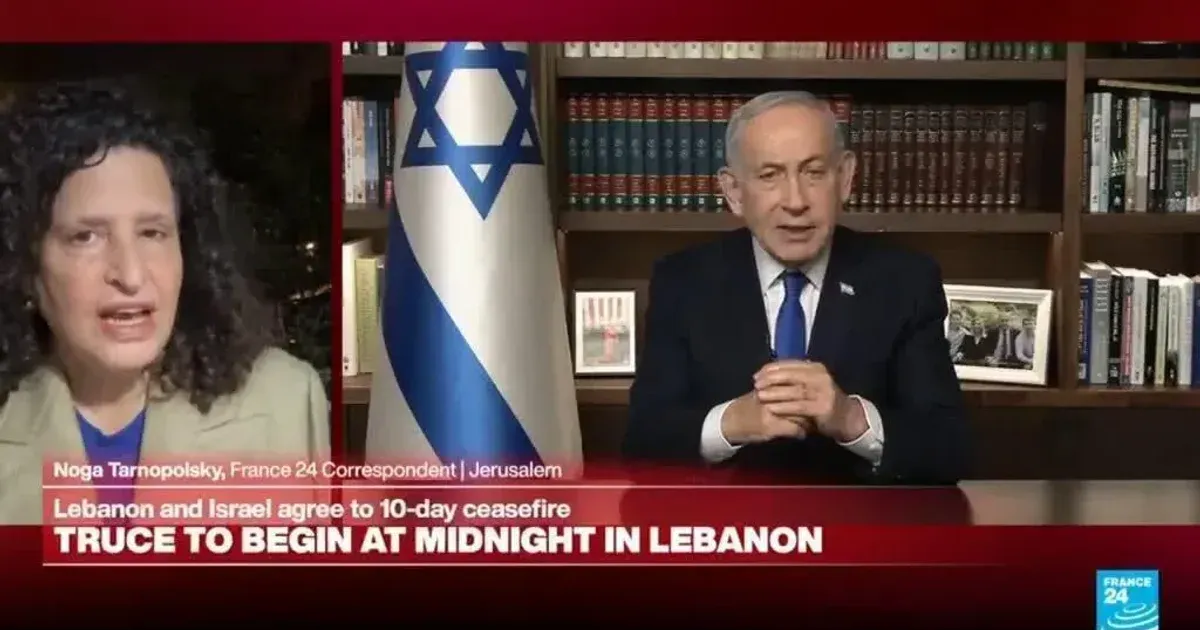
Israel’s northern border entered a short diplomatic test after renewed rocket fire. The pause gives Washington and Beirut only a narrow window to prove control. Benjamin Netanyahu announced on April 16, 2026, a 10-day ceasefire between Israel and Lebanon. Hezbollah forces launched rockets into northern Israel just hours before the diplomatic breakthrough. Rockets struck Kiryat Shmona, sparking fires that local emergency teams struggled to contain. Israeli officials characterized the pause as a temporary measure to test the viability of a long-term resolution. Prime Minister Netanyahu stated the move intended to advance peace efforts with the Lebanese state. Firefighters in the north spent the morning extinguishing flames near residential sectors.
Military commanders confirmed that the barrage from Lebanese territory caused meaningful property damage but no immediate casualties. Israeli air defenses intercepted several projectiles, yet the volume of fire saturated localized response systems. Smoke plumes from the impacts were visible across the border. Netanyahu confirmed his cabinet agreed to the timeline despite the morning provocation. Security analysts in Jerusalem viewed the timing of the Hezbollah strike as a message of defiance against the proposed pause.
“I am taking this step in an attempt to advance peace efforts with Lebanon,” Benjamin Netanyahu stated in a video release from his office.He emphasized that the survival of any truce depends entirely on the actions of the Lebanese government. Officials in Washington welcomed the move as a necessary de-escalation. The United States State Department indicated that Beirut has provided assurances regarding the cessation of hostilities. Previous attempts at similar pauses collapsed within hours due to command-and-control failures among non-state actors.
Netanyahu Seeks Peace Despite Northern Border Strikes
Israeli intelligence indicates that the internal political pressure on Netanyahu influenced the decision to accept a ten-day limit. Residents of northern communities have lived under constant threat for months, demanding a permanent security buffer. The 10-day window allows for humanitarian relief and the repositioning of civil defense assets. Netanyahu signaled that a historic agreement with Lebanon is possible if specific security conditions are met. His rhetoric shifted from purely military objectives to a conditional diplomatic framework. The Israeli prime minister continues to demand the disarmament of the Shiite Hezbollah movement.
Firefighters in Kiryat Shmona confirmed that three residential buildings sustained direct hits.
This 10-day window provides a narrow opportunity for negotiators to establish a monitoring mechanism. Israeli defense officials expressed skepticism that Hezbollah will honor the commitment made by the central government in Beirut. History indicates that the Lebanese Armed Forces lack the capacity to enforce border restrictions against heavily armed militias. Netanyahu maintained that any violation would result in an immediate and disproportionate military response. The persistence of cross-border fire leaves little room for error during the transition period.
Beirut Pledges Containment of Hezbollah Militants
Lebanese authorities communicated through backchannels their intent to restrain local militia groups. The US State Department reported that Lebanon committed to stopping all attacks originating from its territory. Achieving this goal requires the Lebanese army to deploy more effectively in southern regions. Analysts in Washington suggested that the central government in Lebanon is desperate to avoid a full-scale invasion. Beirut officials have not specified the mechanisms for enforcing this restriction on militia activity. The lack of a clear enforcement plan remains a serious risk to the longevity of the truce. These ongoing peace efforts with Lebanon are currently being discussed during direct diplomatic talks in Washington.
Disarmament of Hezbollah forces requires a political consensus that currently does not exist in Lebanon. The Shiite movement remains a dominant military and political force with an independent command structure. Netanyahu insisted that the ceasefire is only a precursor to a more comprehensive disarmament deal. TASS reports suggest that Israeli negotiators have set the removal of long-range missiles as a non-negotiable term. Success in these talks would change the regional security dynamic for a generation. The United States continues to provide logistical support for the border monitoring teams.
Washington Brokers Short-term Security Guarantees
Diplomats in the United States worked throughout the night to secure the commitments from both sides. State Department spokesperson accounts suggest that the 10-day duration was a compromise to satisfy Israeli security hawks. Washington hopes this pause will lead to a broader international conference on Lebanese sovereignty. Previous diplomatic efforts stalled over the issue of Israeli overflights. The current arrangement focuses exclusively on the cessation of rocket fire and cross-border raids. American officials emphasized that they will hold the Lebanese government accountable for any breaches of the agreement.
Israeli public opinion is divided on the merits of a short-term pause. Critics of the prime minister argue that a 10-day window only allows Hezbollah to regroup and rearm. Supporters believe it provides a necessary reprieve for the overstretched Israeli Defense Forces. Netanyahu must balance these competing domestic interests while managing the expectations of international allies. The United States has offered to increase surveillance flights to monitor the ceasefire line. Israeli reconnaissance drones observed Hezbollah movements near the Litani River shortly after the announcement.
Disarmament Demands Frame Future Diplomacy
Total disarmament of non-state actors in Lebanon is the ultimate goal for the Israeli cabinet. Netanyahu described the current situation as a chance to sign a historic agreement that secures the northern border. This security framework hinges on the ability of the international community to pressure Hezbollah sponsors. Regional powers like Iran have not yet commented on the 10-day pause. The Israeli prime minister reiterated that he will not accept a return to the status quo. Hezbollah leaders have historically rejected any calls to surrender their weapons caches. The tension between these two positions defines the limits of the current diplomatic effort.
Netanyahu faces domestic pressure to ensure northern residents can return to their homes. Protests in Tel Aviv have highlighted the economic cost of the prolonged conflict. The tourism sector in northern Israel has seen a 90% decline in revenue over the last quarter. Netanyahu knows that a failed ceasefire will lead to intensified calls for his resignation. The 10-day clock began at midnight, according to sources in Jerusalem. Early reports indicate a fragile silence along the main border crossings.
Ceasefire Clock Tests the Border
Diplomatic success in the Middle East is measured by the duration of the fuse. Netanyahu's acceptance of a 10-day ceasefire is a calculated gamble that seeks to offload the burden of border security onto a Lebanese government that has historically proven itself incapable of governing its own territory. By securing a commitment from Beirut to stop Hezbollah attacks, Israel creates a legal and diplomatic pretext for a huge escalation should the rockets fly again on the eleventh day.
This is not a peace plan; it is a tactical repositioning designed to satisfy Washington while preparing the Israeli public for a wider conflict. The demand for Hezbollah disarmament is a poison pill that the militant group cannot swallow without ceding its entire reason for existence.
The Lebanese state is essentially a bystander in this arrangement. Its commitment to restrain a militia that possesses more firepower than the national army is a hollow promise, and every actor in the region knows it. Netanyahu is setting the stage for a narrative of Lebanese failure. If the United States cannot provide surveillance, this 10-day window will be remembered as a final, failed courtesy before the border is redrawn by force. The strategic reality is that silence is temporary, and the disarmament demand is the starting gun for the next phase of the war. Reality dictates that 10 days of peace is only a 240-hour countdown to a more violent confrontation.