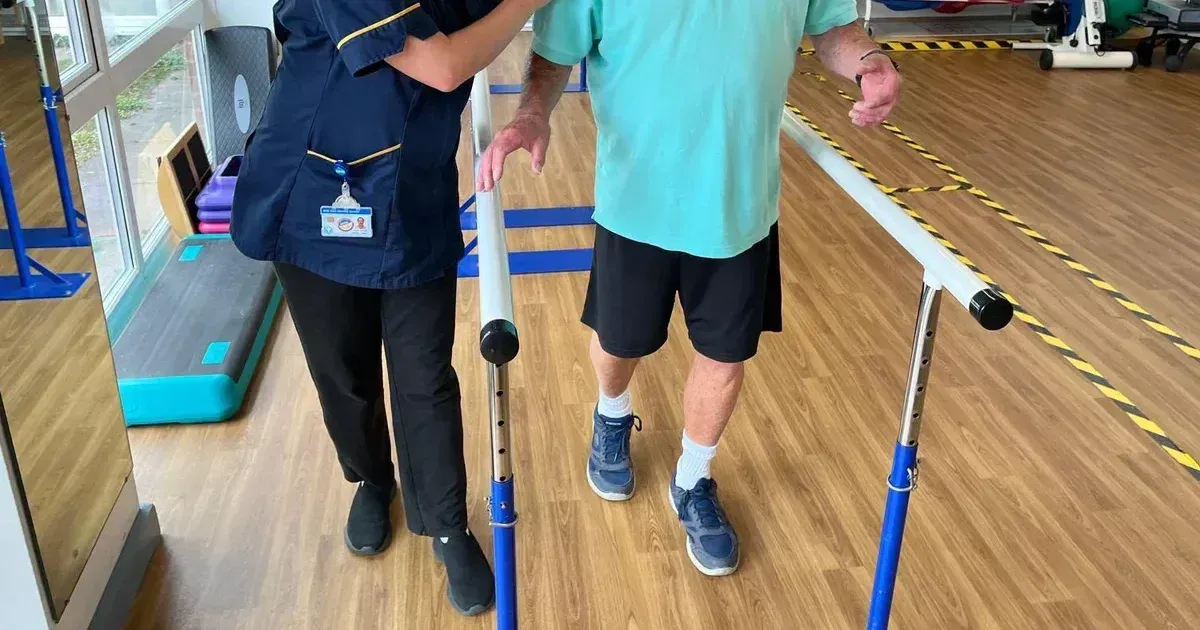
Stroke rehabilitation teams across the UK reported staffing below national guidance, with the largest physiotherapy gaps in community services. A workforce survey covering 159 services found fewer registered physiotherapists and support workers than the staffing levels used to plan recommended care.
The April 2026 warning was about capacity, not a claim that every survivor received the same amount of therapy. The survey described averages across responding services and compared workforces with guidance. It did not provide patient-level outcomes or prove that an individual delay caused a particular disability.
The Survey Measured Three Staffing Gaps
The Chartered Society of Physiotherapy and the Association of Chartered Physiotherapists in Neurology surveyed stroke services in December 2024 and January 2025. Responses came from 159 hospital, community and other services across the UK.
Hospital stroke teams reported 15% fewer registered physiotherapists than required by guidance. Community stroke services had 26% fewer registered physiotherapists, while community rehabilitation teams had 36% fewer physiotherapy support workers.
These are workforce shortfalls relative to a staffing benchmark. They do not show that community rehabilitation disappeared across whole regions, and the survey page does not identify every local service. The defensible national finding is uneven capacity with deeper average gaps after discharge.
The Current Benchmark Is Three Hours Across Therapies
NICE recommends needs-based rehabilitation for at least three hours a day on at least five days a week. The three hours cover a range of multidisciplinary therapy, including physiotherapy, occupational therapy and speech and language therapy. It is not a three-hour daily physiotherapy requirement.
If a person is unable or does not wish to participate at that intensity, NICE says needed therapy should still be offered at least five days a week. Duration and content should reflect the person's needs, capacity to participate and functional goals.
The original key point cited 45 minutes of daily therapy as the current recommendation. That was drawn from the 2013 guideline, which referred to at least 45 minutes of each relevant therapy for suitable patients. NICE replaced that intensity recommendation in 2023 with the combined three-hour benchmark. Mixing the old and current standards created a contradiction.
Actual Delivery Fell Short on Days as Well as Time
Data cited by the Guardian suggested that patients received rehabilitation on three to four days a week in hospital on average and one to two days after discharge. The comparison with a five-day recommendation exposes a frequency gap before the daily duration is even considered.
Community capacity matters because NICE says people who need rehabilitation should receive it from a specialist stroke service in hospital and subsequently from a specialist community stroke team, or directly in the community through early supported discharge where appropriate.
But the available report does not provide waiting-time distributions, therapy minutes by discipline or the proportion of patients meeting the full standard. It therefore cannot support a precise claim that a recovery window closed while someone waited for assessment.
More Registered Staff Did Not Mean More Stroke Posts
CSP director Ash James said the number of registered physiotherapists was at a record level while stroke services remained understaffed. The organisation's argument was that workforce growth had not translated into enough funded posts in the teams delivering stroke rehabilitation.
That distinction prevents a misleading national headcount debate. Registration totals do not show where clinicians work, how many hours they provide, their level of experience or whether community posts are funded and filled.
The Department of Health and Social Care acknowledged that too many survivors were not getting the support they needed. It said specialist stroke rehabilitation was being expanded in people's homes and referred to standards for good care. The response did not quantify how many teams had gained staff or when the survey gaps would close.
The Missing Measure Is Delivery Against Need
NICE's evidence review found that more intensive physiotherapy improved quality of life and activities of daily living and judged longer sessions cost-effective for the NHS. That supports the guideline. It does not calculate the economic loss caused by the staffing gaps in this particular survey.
The next audit should connect funded posts to delivery: vacancies and turnover by service, therapy days and minutes by discipline, patient ability to participate, time from discharge to community contact and progress against agreed goals. Without those measures, a workforce percentage identifies pressure but cannot show who missed what care.
The hard conclusion is operational. A three-hour multidisciplinary standard is meaningless if commissioners count registrations while stroke teams lack funded people to deliver it. Equally, a shortage headline is incomplete without patient-level delivery data. The NHS must publish both, because recovery should not depend on whether a postcode has enough staff hidden behind an adequate national total.