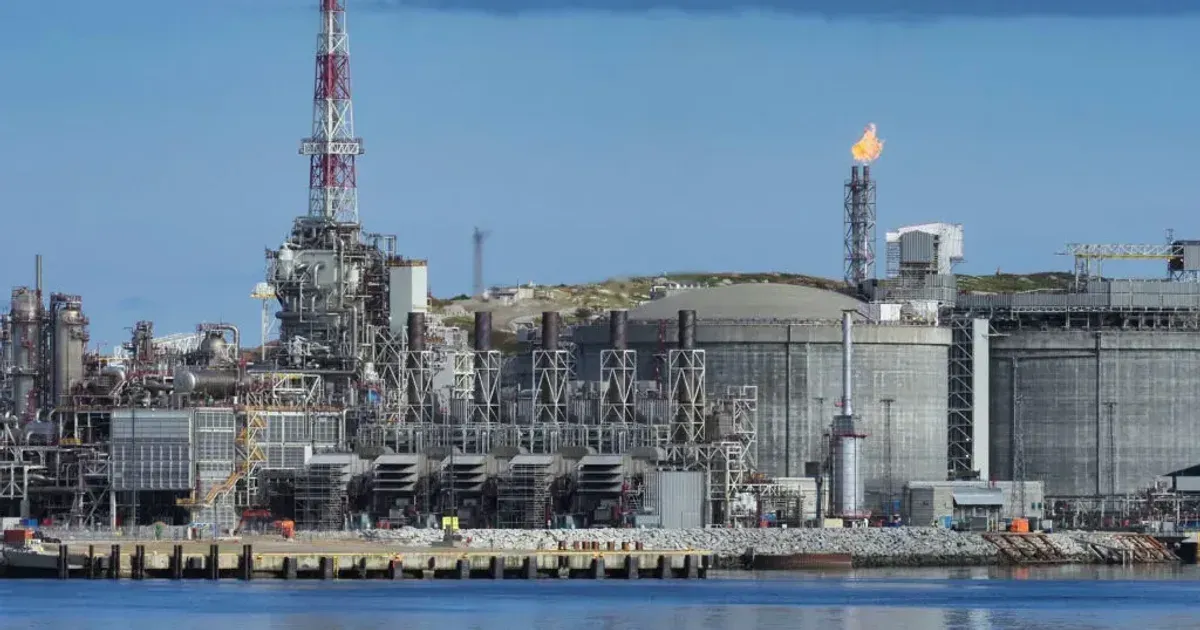
Jonas Gahr Store stood before a packed hall of industry executives in Oslo with a message of calculated stability. Rising tensions in the Middle East have forced European capitals to look North once again for a guarantee of survival. The Norwegian prime minister argued that the widening conflict involving Iran has made the reliability of the Norwegian Continental Shelf a matter of strategic survival, not just trade. Europe is reassessing supply risk during the Iran conflict, and Norway is using the moment to underline its role as the continent's most reliable gas supplier. Norway now acts as the primary artery for the continent's industrial heart after years of shifting away from Eastern dependencies. The sudden escalation of U.S. and Israeli strikes on Iranian targets has sent ripples through the Dutch TTF gas hub and global crude markets. Store noted that the lack of a clear exit strategy in the Middle East creates a vacuum that only stable partners can fill. Norway cannot simply turn a valve to save the continent. Energy markets reacted sharply to the news of the strikes, with Brent crude briefly touching $90 per barrel earlier this week. In particular, the fear of a closed Strait of Hormuz has placed renewed pressure on pipeline gas from the North Sea. But Norwegian officials are quick to dampen expectations of a sudden surge in exports. Terje Aasland, the Energy Minister, confirmed that the nation is now operating at the absolute limit of its technical capacity. He explained that every available cubic meter of gas is already spoken for by buyers in Germany, France, and the United Kingdom. This reliance on the North Sea has transformed Norway into the largest single supplier of natural gas to the European Union.
Norway Anchors Europe Gas Supply
Europe completely overhauled its energy architecture after the full-scale invasion of Ukraine in 2022. Historically, the continent relied on Siberian fields for roughly 40 percent of its gas needs. Today, that figure has plummeted toward zero for most Western nations. Norway stepped into the breach by maximizing output from the large Troll and Ormen Lange fields. Norwegian pipelines now provide the baseline energy required to keep German factories running through the winter months. The completion of the Baltic Pipe to Poland served as a physical manifestation of this geopolitical pivot. The transition was not without cost, as European consumers faced record-high prices during the initial shift away from Russian contracts. Equinor, the state-controlled energy giant, has become the most important corporate entity in the European energy mix. Equinor manages a vast network of subsea infrastructure that stretches thousands of miles across the ocean floor. Anders Opedal, the company's chief executive, clarified that nearly 95 percent of the oil and gas produced by the company is destined for European markets. American liquefied natural gas remains a more expensive and logistically complex alternative. Pipeline gas offers a level of consistency that shipping lanes cannot always match, especially when global maritime routes face threats from regional conflicts. Opedal highlighted the efficiency of the existing network while acknowledging the pressure of meeting such high demand.
Shelf Capacity Limits Fast Relief
Ministers in Oslo are now grappling with the physical limits of their geography. The existing fields are maturing, which naturally leads to a decline in pressure and output over time. Maintaining the current record levels of production requires constant reinvestment and the drilling of new subsea wells. Even the government estimates suggest that without new discoveries, Norwegian gas production will begin a steady decline after 2030. This reality has sparked a fierce debate within the Storting about the future of exploration licenses. To sustain the role of a lifeline, the country must find new reserves in increasingly difficult environments. Aasland noted that the government remains committed to a long-term strategy of predictable supply.
Store warned that the Middle East conflict appears to have no clear plan, which makes stable European supply contracts more valuable.
Investors are watching the 2026 licensing rounds with intense interest. Some analysts argue that the low-hanging fruit of the North Sea has already been picked. Future growth depends on the Norwegian Sea and the Barents Sea, where the technical challenges are sharply higher. Meanwhile, the costs of labor and materials in the offshore sector have inflated alongside global trends. Even with high energy prices, the capital expenditure required for deepwater projects is large. For instance, the development of the Johan Castberg field faced years of delays and cost overruns before nearing completion. These projects are essential for offsetting the natural depletion of older reservoirs.
Arctic Drilling Splits Oslo and Brussels
Brussels wants the gas but rejects the drills. Environmental groups in Oslo have joined the chorus of opposition against Arctic expansion.
The process reduces the carbon footprint of extraction but does nothing to change the emissions from the eventual combustion of the gas. The debate remains a stalemate between climate targets and immediate heating needs.
Security of the subsea network has become a top priority for the Norwegian Armed Forces. Since the sabotage of the Nord Stream pipelines, the vulnerability of the Baltic and North Sea infrastructure has been clear. Norway has increased its naval patrols and used advanced underwater drones to monitor its pipeline network. Any disruption to the Langeled or Europipe systems would cause an immediate energy emergency in London or Berlin. The government has deepened its intelligence sharing with NATO allies to counter potential hybrid threats. The physical protection of these assets is now treated with the same urgency as military defense. Oslo recognizes that its role as a lifeline makes it a high value target in any broader conflict.
Global market dynamics continue to fluctuate based on the latest headlines from the Persian Gulf. If Iranian exports are fully removed from the market, the pressure on non OPEC producers like Norway will intensify. The physical volume of Norwegian gas is fixed by the diameter of the pipes and the capacity of the processing plants at Kollsnes and Nyhamna. There is no spare capacity left to cushion a major global supply shock. For now, the focus remains on reliability and the avoidance of technical outages. The 2026 winter outlook depends entirely on the continued stability of these northern flows. Markets are pricing in a permanent risk premium as long as the Middle East remains unstable.
Energy Security Still Has a Carbon Cost
How long can the European Union maintain the pretense of environmental leadership while sucking the North Sea dry to keep its lights on? The current posturing in Brussels regarding the Arctic is an exercise in bureaucratic hypocrisy that ignores the cold reality of industrial survival. Norway has been the silent partner in Europe's peace for decades, providing the heat and power that allowed Germany to build an empire of manufacturing. At the first sign of a climate summit, those same beneficiaries are the first to condemn the drills that save them from freezing.
The Norwegian government should stop apologizing for its resource wealth and start demanding a long-term commitment from the EU. If Europe wants energy security, it must accept the geographic and industrial reality of where that energy comes from. The idea that we can have a stable economy without Arctic gas is a fantasy sold by politicians who have never looked at a pipeline map. Norway is not just a lifeline; it is the only thing standing between the European continent and a return to coal-fired desperation.
It is time for Brussels to stop the moralizing and sign the long-term contracts that Norway needs to justify its investments.