March 30, 2026, is a defining date for the digital ecosystem of the New York Times as its gaming portfolio continues to absorb the attention of millions worldwide. Modern mobile habits dictate a morning routine fueled by a succession of lexical and logical challenges designed to drive daily active usage metrics. Beyond the traditional crossword, the company has successfully integrated various acquisitions and internal developments to secure its position in the competitive casual gaming sector.
Digital enthusiasts woke to a weather-focused challenge in Strands, the word-search variant that mandates a complex spatial understanding of the letter grid. Today’s theme, framed by the prompt For a rainy day?, required players to identify components commonly associated with personal precipitation protection. Unlike standard word searches where terms appear in straight lines, Strands forces the user to navigate a winding path across the board. Every single letter provided must find a home within a solution, ensuring no character is left behind.
Rainy Day Theme Dominates NYT Strands Grid
Strands participants discovered the spangram Umbrella Term early in their Monday session, which bisected the grid horizontally. Following this anchor, the word list revealed itself through specific umbrella components including Shaft, Canopy, Vent, and Panel. Buttons and Ribs rounded out the list, alongside the necessary Handle. Success in this environment requires not only a broad vocabulary. Logic dictates that the player must visualize the physical structure of the device to unlock the hidden words.
Mashable notes that Strands creates a brain-teasing experience that often takes longer to solve than Wordle. Such a design choice intentionally targets users seeking a larger mental workout during their commute or morning coffee. The integration of a thematic spangram ensures that the game is not merely about finding random letters but rather about solving a cohesive linguistic riddle. Players who struggle with the opaque nature of the initial hint often turn to external guides to maintain their daily streaks.
Complexity is the primary driver for retention.
Pips Integration Into Daily Gaming Habits
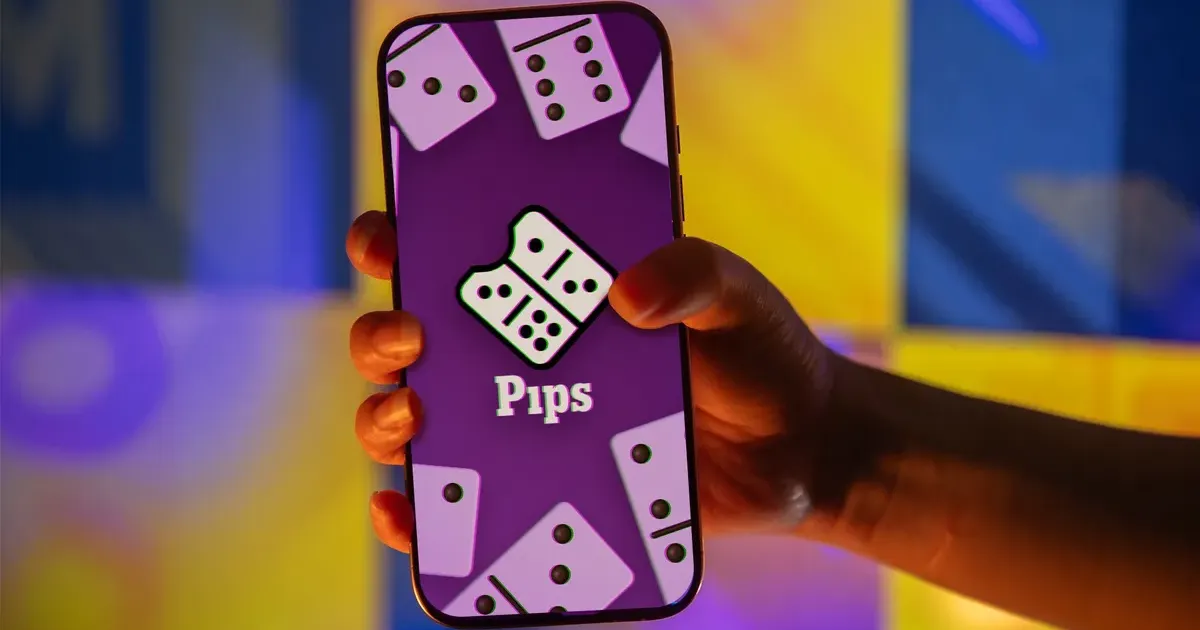
Pips, which debuted in August 2025, represents the latest attempt by the New York Times to capture the logic-puzzle market. Taking inspiration from classic dominoes, the game introduces a single-player mechanic that emphasizes mathematical constraints and color-coded zones. Unlike traditional domino games where matching ends is the primary goal, Pips requires players to satisfy specific arithmetic or logical conditions within designated areas of the board. These conditions change daily, preventing the gameplay from becoming a matter of rote memorization. Beyond the standard word grids, readers can also test their knowledge with the latest NYT Connections Sports Edition.
Every color-coded space carries a different mandate for the domino halves placed within its boundaries. A space marked with a number requires all pips in that area to sum exactly to that total. Other regions might specify Equal or Not Equal conditions, where tiles must either match their neighbors or differ from them entirely. Greater than and Less than markers add a layer of inequality logic that forces players to plan several moves in advance. The game allows only for the revelation of the entire puzzle if a player becomes stuck, which resets the difficulty and forces a fresh start.
Strategy in Pips revolves around managing the overlap between these colored zones. Half of a tile might sit in a sum-constrained area while the other half must satisfy an inequality condition in an adjacent space. This mechanical friction creates the difficulty curve that keeps the gaming community engaged. Many users find the vertical and horizontal placement rules familiar from childhood games, yet the color-coded logic layers provide a modern, intellectual twist on the 18th-century pastime.
Astronomy Clues Define Wordle Success
Wordle remains the foundation of the daily puzzle suite despite its transition from a personal gift to a corporate asset. Originally developed by Josh Wardle for his partner, the game now is a serious funnel for the New York Times Games subscription service. Today’s solution targeted fans of astronomy, leveraging a word common to the study of stars and celestial bodies. Long-term players often use a starting word strategy that prioritizes high-frequency vowels and consonants like S, T, R, and N to narrow down the field quickly.
Historical records of the game’s growth show a rapid shift from a niche engineering project to a global phenomenon that spawned numerous imitations. Versions like Dordle and Quordle attempted to increase the difficulty by requiring simultaneous solutions, but the original five-letter format persists as the most popular iteration. Public interest in Wordle is so high that creators on TikTok frequently livestream their daily attempts to thousands of viewers. The social aspect of sharing a grid of green and yellow squares has become a linguistic shorthand for cognitive sharpness across social media platforms.
it was done at the request of the New York Times.
Controversy surrounded the removal of the original Wordle archive, which had allowed fans to play through every puzzle since the game’s inception. Josh Wardle confirmed that the archive was shuttered to comply with the requests of the new owners. Currently, only those with a paid Games subscription can access the full history of past challenges. This transition highlights the ongoing tension between the open-web origins of these puzzles and their current status as gated content designed to drive recurring revenue.
Mini Crossword Trends and Puzzle Solutions
Monday’s Mini Crossword offered a brief respite for those intimidated by the full-sized version or the newer Pips mechanics. CNET provided the primary reporting on the solutions for March 30, which followed the standard five-by-five grid format. These puzzles often include wordplay that reflects current events or common cultural idioms. The goal is to provide a challenge that can be completed in under two minutes, catering to the short attention spans of the modern mobile user. This speed-focused design complements the slower, more analytical pace required by Strands and Pips.
Competition between digital publishers for the morning puzzle slot has reached a fever pitch. While Mashable and CNET provide hints and answers, the New York Times continues to iterate on its platform to prevent user fatigue. The addition of Pips indicates a move toward more abstract, non-verbal challenges to diversify the user base. Data from these games allows the publisher to track user engagement down to the second, providing insights into which types of puzzles lead to higher retention rates. The algorithmic approach to fun ensures that the daily habit remains unbroken for millions of subscribers.
The Elite Tribune Strategic Analysis
Has the morning routine become nothing more than a series of mandatory digital chores? The New York Times has weaponized the dopamine hit of a solved puzzle to build a subscription wall that is as much psychological as it is financial. By acquiring Wordle and launching Pips, the organization has effectively monopolized the brief window of time between waking up and starting the workday. It is not a service for the curious; it is an extraction mechanism for the bored.
The closure of the Wordle archive remains a cynical maneuver. It signaled a clear shift from community-led gaming to a closed-loop system where even history is a premium commodity. If you want to see how the world felt on a specific Tuesday three years ago, you must pay the entrance fee. The commodification of shared cultural moments is the inevitable end state of the subscription economy. We are no longer playing games; we are participating in a multi-million dollar retention experiment.
Daily streaks act as the ultimate psychological shackle. The fear of losing a number on a screen prevents users from questioning the value of the time spent on these grids. March 30, 2026, is just another data point in a spreadsheet at 620 Eighth Avenue. The house always wins when the game is designed to be habit-forming rather than truly challenging.
Predicting the next moves is simple. Expect more paywalls and fewer free hints. The fun is now a byproduct of the profit margin.