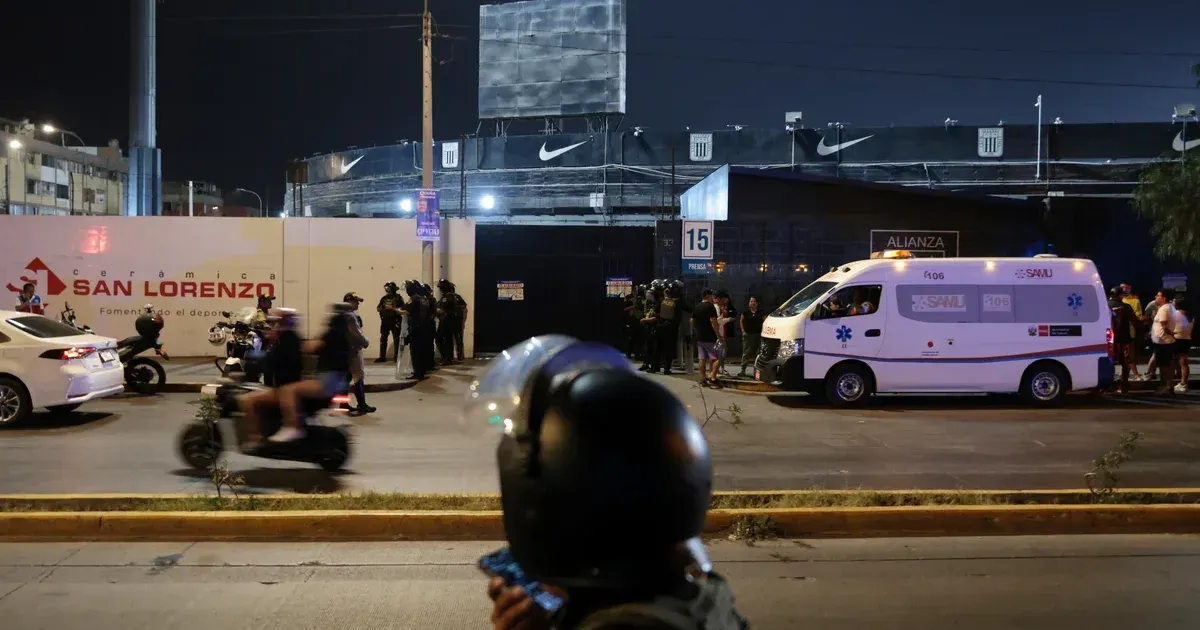
Emergency responders in Lima secured the Alejandro Villanueva Stadium on April 4, 2026, after a pre-match rally turned fatal for one attendee. Early reports from Alianza Lima officials confirmed that dozens more suffered injuries during the traditional flag-waving event. Fans had gathered to support their team ahead of the highly anticipated derby against Universitario de Deportes. Chaos erupted as thousands of supporters packed into the facility, creating a density that overwhelmed on-site security teams. Witnesses described a sudden surge of movement near the entrances and within the stands. Medical personnel arrived quickly to treat those trapped in the swell of the crowd.
Medical units transported at least 35 people to nearby hospitals with varying degrees of trauma. Authorities have not yet released the identity of the deceased individual pending family notification. Preliminary assessments from the Lima Police Department indicate that the casualty resulted from asphyxiation. Initial rumors circulated on social media regarding a potential wall collapse within the arena. Alianza Lima management released a statement late Friday night explicitly denying any structural failures. They maintained that the stadium remains physically sound and compliant with local building codes.
Alejandro Villanueva Stadium Safety Protocol Under Review
Investigators spent the morning examining the south stands where the highest concentration of fans occurred. This area typically hosts the most passionate supporters, known locally as the Comando Sur. Video evidence suggests that the influx of people exceeded the temporary capacity limits set for the non-matchday event. Stadium gates were reportedly opened to allow a larger group of fans to enter for the flag-waving ceremony, which is a common ritual in Peruvian football culture. Security barriers failed to contain the pressure of the arriving crowd. Officers noted that the narrow corridors leading to the seating areas became bottlenecks during the surge.
National police commanders in Lima have launched a full-scale inquiry into the private security firm hired for the event. Coordination between the club and municipal authorities is a primary focus of the investigation. Documents obtained by local media suggest that the permit for the Banderazo, or flag-waving rally, did not account for the sheer volume of attendees who arrived three hours before the scheduled start. Crowd management experts point to a lack of staggered entry points as a contributing factor to the tragedy. The facility was designed to hold 30,000 spectators for seated matches, but the fluidity of a rally creates different physical stressors on the infrastructure.
Alianza Lima Denies Structural Failure Rumors
Club executives held a press conference to address the circulating footage of debris near the stadium perimeter. While some masonry appeared damaged, the club clarified that these were cosmetic issues unrelated to the crowd crush. Structural engineers arrived on site to verify the integrity of the concrete supports in the south stands. Every inspection conducted so far has validated the club's claim that the walls did not fail under the weight of the supporters. The focus has shifted entirely toward human flow management and the lack of physical barriers between sections. Fans inside the stadium reported that the panic began when people at the front of the section were pushed against the perimeter fences.
"Initial reports suggested parts of the arena's wall had collapsed, but Alianza Lima says there were no structural failures," the club's communications department said in an official statement.
Police reports mention that several emergency exits remained locked or obstructed when the crush reached its peak. This discovery has led to a temporary suspension of all activities at the Alejandro Villanueva Stadium. Fans who survived the incident recounted a lack of clear instructions from stadium announcers or security staff. One witness described the scene as a sea of people with nowhere to move as the pressure mounted from the back of the queue. The club has pledged to cooperate with the Public Ministry to determine if criminal negligence played a role in the lack of exit availability. Footage broadcast by local television stations showed an explosion of fireworks within the stands just moments before the panic intensified. Pyrotechnics are technically prohibited inside Peruvian stadiums, yet supporters frequently smuggle them past security checkpoints. The smoke from the flares obscured visibility and contributed to the sense of disorientation among the crowd. Some fans began to run toward the exits to escape the smoke, which triggered a secondary surge in the lower concourses. Investigators are currently reviewing CCTV footage to identify the individuals who sparked the fireworks. The presence of flammable materials in a high-density environment sharply increased the risk profile of the event.
Security protocols for the upcoming derby against Universitario de Deportes are now in question. The Peruvian Football Federation is considering a mandate to play the match behind closed doors or at a neutral venue. Financial losses for Alianza Lima could exceed $1.5 million if the stadium is shuttered for the remainder of the season. Municipal inspectors have already issued a series of citations for fire code violations discovered during the post-incident walkthrough. These violations include expired fire extinguishers and inadequate signage for emergency routes. The city of Lima has threatened to revoke the stadium's operating license if these issues are not rectified within 48 hours.
The review will also examine whether crowd flow was monitored before the crush began. Small changes in gate timing, barriers and steward placement can determine whether a dense crowd keeps moving or locks in place.
Crowd Crush Puts Stadium Controls Under Review
The fatal crush puts attention back on crowd control basics: open exits, real-time communication and accountable security planning. Alianza Lima can deny structural failure, but the safety review still has to explain how the crowd became trapped.