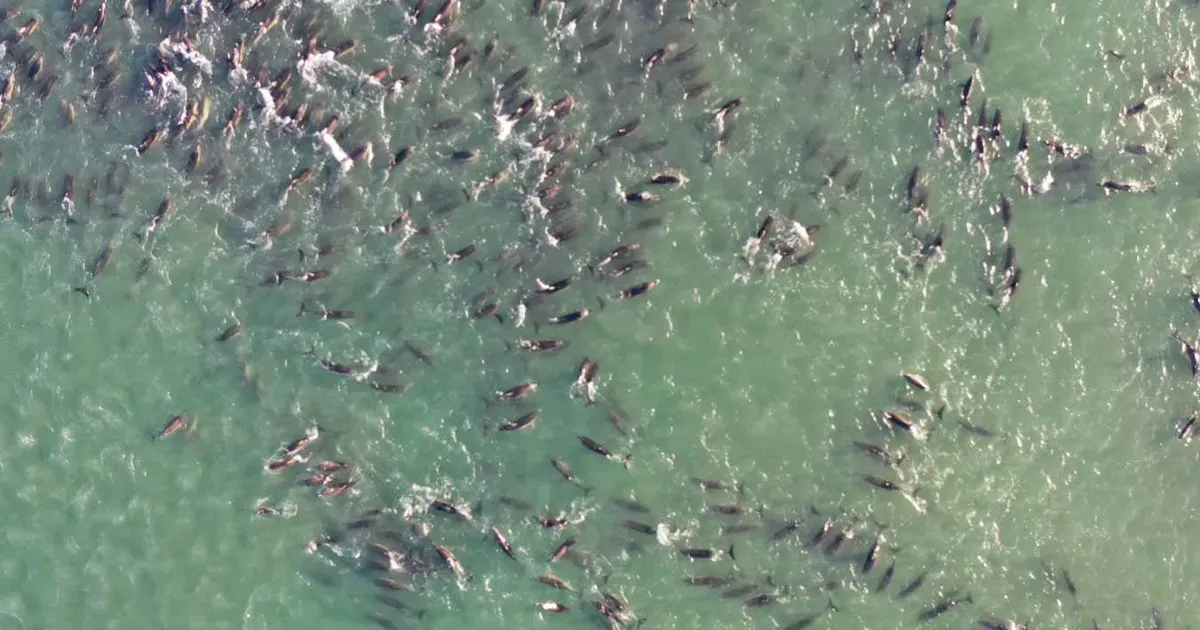
New research linking dolphin strandings in Argentina to orca hunting behavior is challenging older assumptions about why entire groups beach themselves.
Death on the Argentine Shore
Patagonia's windswept coastline became a graveyard for hundreds of common dolphins earlier this year, sparking a frantic search for answers. For decades, marine biologists blamed such mass casualties on toxic algae, naval sonar, or geomagnetic interference. Recent evidence gathered from two significant events in Argentina suggests a more primal cause: the lethal efficiency of the apex predator. The report was published March 11, 2026, as researchers reassessed predator pressure in coastal strandings. Killer whales, or orcas, appear to be the primary drivers of these catastrophic beachings, using fear to herd their prey into shallow, inescapable traps. Researchers analyzing the remains of hundreds of dolphins found patterns of trauma and behavioral panic that point directly to predation. While the sight of a stranded pod usually evokes images of environmental collapse, these findings indicate a natural, albeit brutal, biological interaction. Marine biologists from local institutes tracked orca movements in the weeks leading up to the strandings, noting a sharp increase in hunting activity near the coastal shelves where the dolphins were last seen alive. Predation is a messy, violent affair that rarely leaves a clean record. Dolphins rely on speed and complex social structures to evade the ocean's most intelligent hunters. When orcas approach, the standard defensive maneuver involves tight schooling and a rapid retreat toward shallower water where the larger predators might struggle to follow. But this survival instinct often backfires. In the chaos of a high-speed pursuit, the leading dolphins may miscalculate the depth of the tide, leading the entire pod into the surf zone. Once one dolphin hits the sand, the social cohesion of the group prevents others from abandoning their companions, resulting in a mass mortality event.
Tactical Prowess of the Apex Hunter
Orcas inhabiting the waters off the Valdes Peninsula are famous for their unique hunting style. They are among the few populations globally that intentionally beach themselves to snatch sea lion pups from the shoreline. Scientists now believe this mastery of shallow-water tactics allows them to pressure dolphin pods with surgical precision. By flanking the dolphins from the seaward side, orcas create a wall of sound and motion that leaves the prey with only one path: toward the beach. Scarring found on some survivors of the Argentine strandings tells a harrowing story. Rake marks from orca teeth were visible on several individuals, suggesting they narrowly escaped the jaws of the hunters before losing their orientation in the breakers. Such physical evidence contradicts the theory that these dolphins were simply sick or disoriented by human activity. Instead, they were fleeing for their lives, driven by a predator that understands the terrain of the coast as well as any terrestrial hunter. The math of the hunt simply does not favor the smaller cetaceans.
Acoustic data recorded by underwater microphones in the region caught the distinct, rapid clicking of orca echolocation just hours before the first reports of strandings reached the authorities. These sound signatures are consistent with 'active' hunting phases rather than social travel. When orcas hunt, they often go silent to avoid detection, but the final stage of the attack involves high-energy bursts of sound to disorient the prey. For a dolphin pod, this sensory overload combined with the physical presence of several multi-ton predators is enough to trigger a total breakdown in navigational logic.
Reevaluating Traditional Stranding Theories
Scientific consensus for years prioritized anthropogenic factors when discussing why whales and dolphins end up on land. High-decibel naval sonar is known to damage the sensitive hearing of deep-diving species, causing them to surface too quickly or lose their way. Still, these Argentine events involved shallow-water species that are typically more resilient to such acoustic interference. By focusing on the orca factor, researchers are beginning to fill the gaps in the record where human activity was absent but deaths remained high.
Evidence from similar events in Australia and New Zealand supports the predator-driven hypothesis. In those regions, mass strandings of pilot whales often coincide with the presence of transient orca pods. Yet, the Argentine data is particularly compelling due to the sheer volume of animals involved. Hundreds of dolphins dying simultaneously suggests a level of coordinated pressure that only a highly organized predator group can exert. It challenges the notion that nature exists in a state of quiet harmony, revealing instead a constant, high-stakes arms race beneath the surface.
Marine ecosystems are governed by the ruthless logic of energy transfer.
Observations from the New Scientist report highlight that these Argentine strandings happened in areas with specific geographic features. Funnel-shaped bays and rapidly receding tides act as natural traps. When orcas push a pod into these bottlenecks, the dolphins have nowhere to go. Even if the orcas only consume a few individuals, the sheer panic of the attack can destroy the entire pod. Such collateral damage is a frequent byproduct of apex predator activity, yet it is often misread as a symptom of environmental decline by the public.
The next research question is whether predator pressure is changing stranding risk more often than scientists assumed.
Understanding the role of orcas in mass strandings requires a shift in how conservationists monitor coastal health. If these events are indeed natural consequences of predator-prey dynamics, the intervention strategies used by rescue teams may need to change. Pushing a dolphin back into the water while its predators are still circling nearby may be a death sentence. Rescuers might need to consider the presence of orcas as a decisive factor in whether a refloating effort is even viable.
Tracking technology is now being deployed to monitor orca pods in real-time along the South American coast. By using satellite tags and drone surveillance, researchers hope to predict where the next stranding might occur. Such data could provide an early warning system for local wildlife agencies. It also allows for a more nuanced view of orca populations, which are themselves facing threats from climate change and dwindling food sources. As their traditional prey disappears, orcas may be forced to employ more aggressive hunting tactics, potentially leading to an uptick in dolphin strandings globally.
Nature rarely provides clear-cut answers without a deeper investigation into the food chain. For the dolphins of Argentina, the threat from below is just as significant as any threat from human industry. As we continue to peel back the layers of marine behavior, the image of the orca as a sophisticated, relentless architect of the ocean's most tragic scenes becomes undeniable. The beachings are not just accidents; they are the final act of a hunt that began miles out at sea.
What the Strandings Reveal
Western environmentalism has long suffered from a romanticized delusion regarding the marine world. We project human ethics onto apex predators, framing orcas as 'ocean ambassadors' while ignoring the visceral cruelty of their survival. This discovery in Argentina should shatter the Disney-fied lens through which we view the deep. Nature is not a peaceful sanctuary being ruined solely by human hands; it is a slaughterhouse where the most intelligent species thrive by terrorizing the less capable. The rush to blame naval sonar or plastic pollution for every dolphin death is often a convenient distraction from the uncomfortable reality that these 'charismatic' orcas are perfectly willing to wipe out entire pods for a single meal. We must stop treating the ocean as a fragile garden that needs our constant, gentle stewardship and start seeing it as the brutal, competitive arena it has been for millions of years. If we want to understand the death of hundreds of dolphins, we need to stop looking at our own footprints and start looking at the teeth of the predator. There is no moral lesson in a mass stranding, only the cold, hard efficiency of the food chain at work.