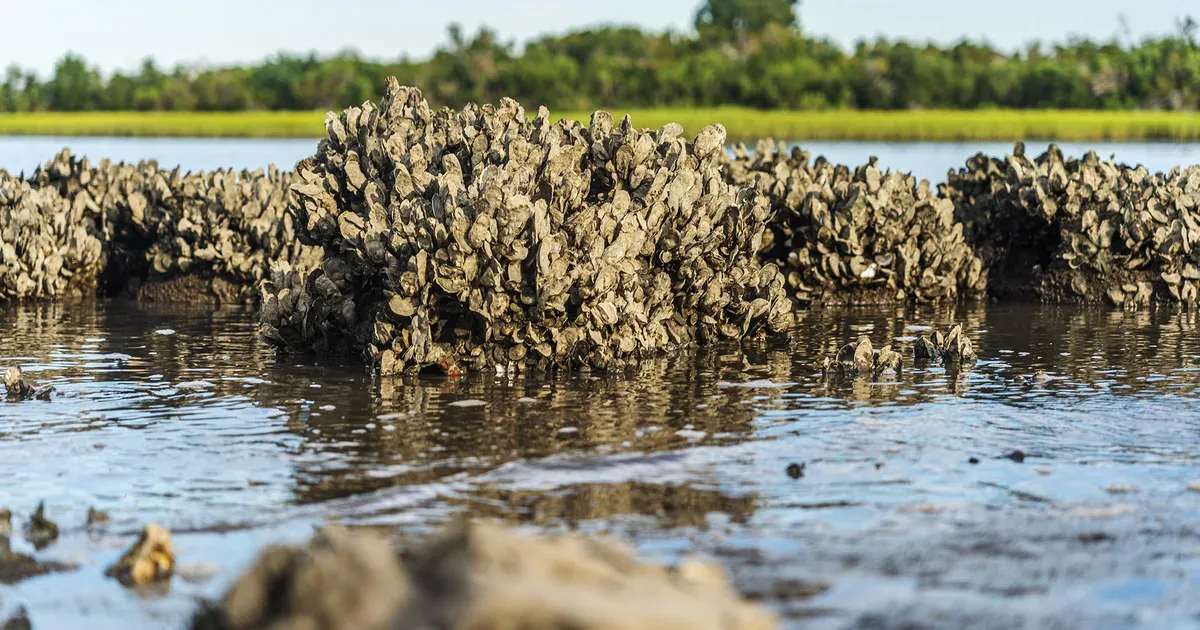
The oyster study turns a small microbial relationship into a climate-resilience question. Survival may depend on partnerships that are easy to miss. The next step matters. By March 13, 2026, the update had entered the public record. Deep within the murky estuaries of the Atlantic coast, a silent partnership is rewriting our understanding of marine survival. Harvard University researchers recently published findings in the Proceedings of the National Academy of Sciences that suggest oysters are not the solitary engineers we once believed. That makes the study relevant for conservation planning in warming estuaries where temperature, acidity and disease risk move together.
These bivalves appear to be coordinating with microscopic organisms to perform the essential task of shell construction.
Calcification, the biological process of extracting minerals from seawater to form a protective exterior, requires immense metabolic energy and precise chemical control.
Microbes living within the oyster tissue handle the most difficult aspects of pH regulation.
By outsourcing this demanding labor, oysters maintain their resilience in environments where high acidity would otherwise dissolve their nascent shells.
Microbes complicate the usual picture of reef survival. If oysters rely on microbial partners, restoration work has to protect the surrounding biological community as well as the shellfish.
Outsourcing Biological Alchemy
Harvard’s research team focused on how oysters create an internal environment suitable for calcification. Usually, an organism must expend significant ATP, the cellular currency of energy, to pump protons out of the calcifying fluid to keep the pH high. Higher pH levels allow calcium carbonate to precipitate and harden. Microbes assist in this proton expulsion or concentrate carbonate ions through their own metabolic pathways. Such coordination suggests that the oyster microbiome acts as a key organ rather than a collection of passive passengers. Bacteria within the oyster tissues provide a chemical buffer that protects the organism from the volatile chemistry of the surrounding sea. Marine biologists have noted that this relationship might explain why certain oyster beds survive in conditions that decimate others. Resilience in a changing ocean may depend more on these microbial alliances than on the genetics of the shellfish themselves.
Florida Institute of Technology scientists have simultaneously revealed the precarious nature of these aquatic structures in a study spanning 12,000 years of global reef growth. Coral reefs, the underwater cathedrals of the planet, have a very narrow window for peak performance. Records from the Holocene epoch show that reefs once kept pace with rising tides with remarkable efficiency. But the thermal sweet spot for this growth is surprisingly specific. Data indicates that reefs grew most effectively when the ocean temperature hovered around 77 degrees Fahrenheit, or 25 degrees Celsius. Heat spikes above this threshold disrupt the symbiotic relationship between coral polyps and their photosynthetic algae. When these polyps are stressed by heat, they cease the vertical accretion required to stay near the sunlit surface. Warming waters are now pushing reefs beyond this metabolic ceiling, limiting their capacity to grow vertically at the exact moment they need to accelerate.
Twelve Thousand Years of Reef History
Records analyzed by Florida Tech include sediment cores and historical growth patterns that reflect the stable climate of the past several millennia. During the early Holocene, reefs demonstrated a strong ability to track sea level rise. Rising oceans were matched by upward-growing limestone structures that provided habitats for thousands of species. The current era of rapid warming is different because it couples thermal stress with regional disturbances like pollution and overfishing. Recent ocean warming is reducing the capacity of reefs to maintain their height. If a reef cannot grow fast enough to stay near the sunlit surface, the entire ecosystem eventually drowns. Scientific models suggest that many reefs are already failing to match the pace of sea level rise seen in the mid-2020s. The survival window is closing for many species.
Marine ecosystems are losing the race against time.
Coastal protection relies heavily on the physical barrier provided by both oyster beds and coral reefs. These biological bulwarks absorb up to 90 percent of wave energy during storm surges. Economics and ecology are inextricably linked here, as the loss of these structures leaves coastal cities vulnerable to flooding. While Harvard’s oyster research offers a glimpse of potential adaptation through microbial help, the Florida Tech data provides a sobering limit to that optimism. Oysters might outsource their labor to microbes, yet coral polyps cannot simply negotiate with the laws of thermodynamics. Survival depends on maintaining a delicate balance of temperature and chemistry that has existed for 12,000 years. Resilience has a breaking point.
Reef Survival Clue
The severe lesson is that adaptation cannot be treated as rescue. Microbes may help oysters endure hotter water, but they do not repeal the physics of warming seas. If policymakers turn a survival mechanism into an excuse for delay, the reefs will become another monument to clever science arriving after political will has failed.