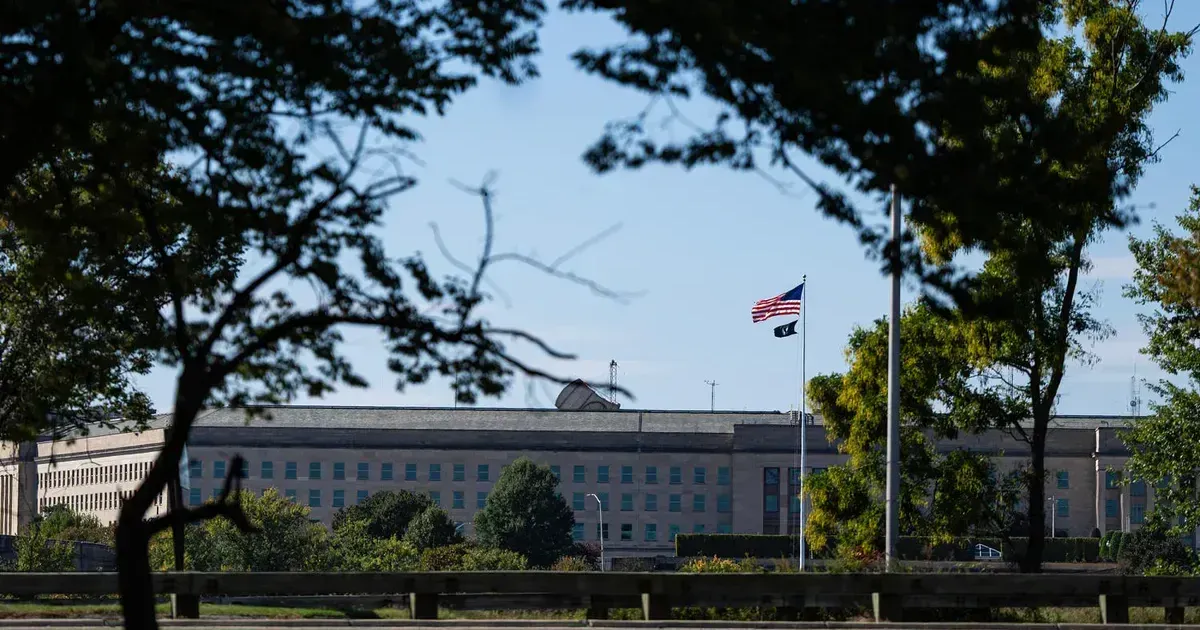
Hazmat teams responded to the Pentagon on Thursday after building systems flagged an air quality issue inside part of the Defense Department headquarters. The alert brought Arlington County Fire and EMS units to the complex alongside the Pentagon Force Protection Agency's hazardous materials team. The air quality alert was reported on June 11, 2026.
Officials treated the incident as a precautionary emergency rather than a confirmed attack.
Pentagon spokesman Sean Parnell said the building's systems detected an issue that required standard protective measures while officials determined its significance and response teams remained in place. He emphasized that response teams were already in position to support occupants if the alert proved serious.
"The Department is executing standard protection protocols," Parnell said.
The strongest fact in the early reporting is also the most important limitation: officials had not publicly identified a specific substance. That means the story should be read as an air quality alert with a hazardous-materials response, not as proof of a chemical release or deliberate act. The distinction matters because the Pentagon's security posture can make precautionary movement look more alarming than the confirmed facts support.
What Responders Were Checking
Arlington County said its hazardous materials team was operating at the Pentagon in support of PFPA's hazmat unit. CNN-affiliated reporting said several floors and corridors were affected, while local reports described shelter-in-place orders for the relevant area. The public picture was therefore clear on the response but limited on the cause. That uncertainty is normal in a building where security and safety systems are layered. Air monitoring can trigger because of a genuine hazard, a maintenance-related issue, a sensor problem or a substance that requires testing before officials can classify it. A message reported by CNN said additional testing could take one to two hours, which explains why officials were cautious about declaring the incident resolved too quickly. Because officials had not identified the source, the incident remained a potential systems alert under investigation.
The presence of local firefighters also does not mean federal control of the scene failed. It reflects mutual-aid planning in the National Capital Region, where civilian responders and federal protective units often work side by side at large government sites. Reports also indicated that the affected area included specific floors and corridors rather than the entire Pentagon, which is a meaningful distinction for readers trying to understand the scale of the disruption. In this case, the shelter-in-place order was the immediate operational signal, not a declaration that the wider building was unsafe.
The Pentagon is not a standard office building. It houses military leadership, civilian defense officials and sensitive communications, which makes even a localized safety alert difficult to manage quietly. A full evacuation can create its own risks, especially if classified systems, secure rooms and high-traffic corridors are involved.
That is why shelter-in-place can be the preferred first move. It keeps people away from a possible exposure zone while allowing responders to isolate the area, test the air and avoid unnecessary movement through controlled spaces. The goal is not only physical safety but also continuity of command and orderly communication while responders confirm whether the alert reflects a real hazard or a limited technical trigger. For nearby commuters and staff, the most practical point was narrower: avoid the affected area and wait for official updates. Early reports did not establish injuries, a named contaminant or a public threat outside the Pentagon grounds. Officials had not released a final assessment, so claims about the cause remained unsupported.
Operational Lessons from a Precautionary Lockdown
The episode shows how quickly a technical alert can become a national-security story. The Pentagon's public credibility depends on separating confirmed facts from understandable fear. If the incident proves minor, the response still offers a useful test of how PFPA, Arlington County and internal building managers communicate under pressure. The broader lesson is about resilience rather than drama. A facility like the Pentagon needs systems sensitive enough to catch a real hazard early, but not so blunt that every unclear reading disrupts a large command environment for longer than necessary. That balance is difficult, and Thursday's response will likely be reviewed for timing, communication and threshold decisions.
The most important metric is whether the Pentagon Force Protection Agency and local responders can close the information gap quickly. If occupants understand what is known, what is unknown and what action they should take, a precautionary lockdown can protect people without feeding unnecessary panic. Building managers will also review whether alerts moved through offices quickly enough for employees who were away from their desks. If the source proves mechanical, the Pentagon still has to show why normal building operations triggered such a visible response.