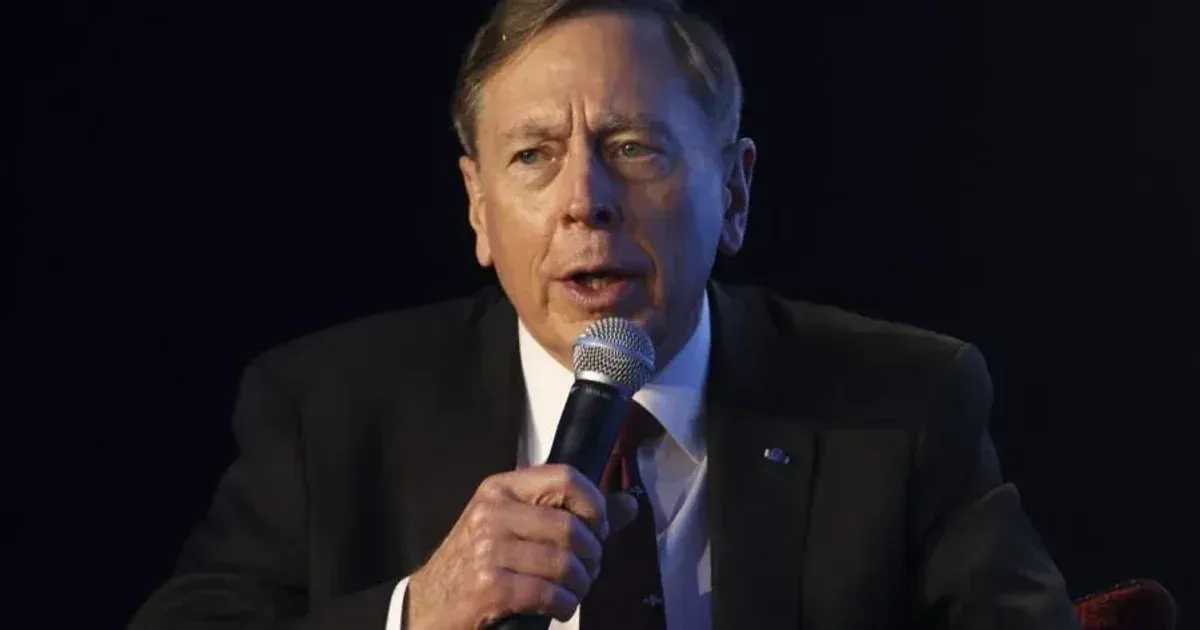
David Petraeus warned that Iranian officials are skilled at stalling diplomacy during current U.S.-Iran nuclear negotiations. Speaking on the radio program Cats Roundtable, the retired general suggested that the international community should anticipate a protracted timeline rather than a swift resolution. His observations followed a series of meetings between Western powers and Tehran that failed to produce a real breakthrough regarding uranium enrichment limits. John Catsimatidis hosted the interview on WABC 770 AM, where the discussion pivoted from Middle Eastern stability to the nuclear posture of neighboring states.
Tehran possesses a long history of using procedural delays to mask enrichment progress.
Negotiators from the United States have faced persistent challenges in pinning down specific commitments from their Iranian counterparts. Petraeus described the Iranian delegation as quite good at dragging out negotiations, a tactic often used to gain leverage or continue technical work behind the scenes. Such maneuvers create a difficult environment for diplomats who seek verifiable milestones. Reports from the ground indicate that the latest round of talks ended with substantial gaps remaining on the duration of oversight protocols and the sequence of sanctions relief.
Tehran Tactics and Diplomatic Stalemate
Petraeus noted that the strategic patience of the Iranian regime often exceeds that of Western democratic administrations. While the White House operates under the pressure of election cycles and shifting public opinion, the Iranian leadership maintains a consistent, long-term focus on regional hegemony. This disparity in political timeframes allows Tehran to wait out various international pressures. Experts in non-proliferation observe that every month of delay provides Iranian scientists with additional opportunities to refine centrifuge designs. Progress in advanced enrichment technology is difficult to reverse once achieved.
Wes Streeting, the U.K. health secretary, added his voice to the growing list of concerned Western officials. Streeting stated that the United Kingdom remains hopeful for a deal but expressed clear disappointment that recent efforts have not yielded a settlement. He emphasized that the British government seeks an end to the nuclear ambitions of the Iranian state to ensure broader security across the continent.
Pakistan Influences on Middle East Security
Pakistan currently attracts close attention from military analysts monitoring the nuclear balance in the region. Petraeus highlighted that all eyes are on Pakistan right now, suggesting that the stability of Islamabad's own nuclear arsenal is closely linked to the Iranian file. Proximity and shared borders make the relationship between these two nations a critical variable in any security calculation. If Iran successfully achieves a nuclear breakout, the pressure on Pakistan to re-evaluate its defensive posture would likely increase.
Regional rivals might feel compelled to seek their own deterrents, creating a cascade of proliferation that could destabilize South Asia and the Middle East simultaneously. Intelligence agencies have increased their surveillance of cross-border transfers and technological exchanges. The risk of illicit material trafficking persists as a primary concern for the International Atomic Energy Agency. Security in the Balochistan region also plays a role in how these two neighbors interact on a military level. The ongoing failure to uphold the Nuclear Non-Proliferation Treaty has led Washington to weigh the costs of pursuing total victory.
British Interests and Global Proliferation
Success in these negotiations is more than a bilateral concern for the United States and Iran. The United Kingdom, though not a direct participant in every sub-session of the current talks, maintains a heavy stake in the outcome. Streeting's comments reflect a broader frustration within the British cabinet regarding the slow pace of international diplomacy. London views a nuclear-armed Iran as a direct threat to global shipping lanes and energy security in the Persian Gulf. Economic stability in the U.K. depends heavily on the uninterrupted flow of oil and gas through the Strait of Hormuz.
Any escalation in the nuclear standoff could lead to maritime disruptions that would spike inflation and hurt British consumers. Streeting's intervention suggests that even officials outside the Foreign Office are being briefed on the high stakes of these discussions. The U.K. government continues to support the framework of international monitoring but is wary of endless talk without action. Diplomatic cables suggest that London may advocate for tighter snapback sanctions if progress does not materialize by the end of the second quarter.
Strategy of Perpetual Negotiation
Delaying tactics serve a dual purpose for the Iranian administration by providing domestic political cover and technical space. Hardliners in Tehran view the negotiation process as a way to demonstrate resistance against Western dictates. By refusing to concede quickly, they satisfy a domestic base that is skeptical of engagement with the United States. Simultaneously, the technical teams at sites like Natanz and Fordow continue their work. This two-track strategy ensures that even if talks fail, the Iranian state is closer to its goals than when the process began. $11 billion in frozen assets also stays at the center of the debate, with Tehran demanding access to these funds as a precondition for further cooperation. Washington has resisted this demand, fearing that the capital would be diverted to regional proxies. The resulting deadlock satisfies neither side but prevents a total collapse of the diplomatic channel. International monitors have noted that the level of cooperation from Iranian officials fluctuates based on the perceived progress of the high-level talks.
Access to sensitive sites is often used as a bargaining chip in the middle of these sessions. The Iranians are quite good at dragging out negotiations, and it is clear that they are using every available moment to their advantage during these sessions. Washington must now decide whether to continue the current path or seek alternative methods of pressure. The effectiveness of economic sanctions is debated among policy circles, with some arguing that the point of diminishing returns has been reached. Others believe that only the threat of total economic isolation will force a change in Tehran's behavior. The military option stays on the table but is viewed as a last resort due to the potential for a regional war. Petraeus's warning is a reminder that the window for a diplomatic solution is not infinite.
As the enrichment levels of Iranian uranium move closer to weapons-grade, the calculus for Israel and other regional actors shifts. The possibility of a unilateral strike by a third party cannot be ruled out if the U.S.-led talks continue to stall. Security analysts are currently drafting contingency plans for a scenario where no deal is reached by the year's end. The period of uncertainty creates volatility in global markets and complicates long-term defense planning for Western allies. The focus on Pakistan also implies that the scope of the problem has expanded beyond the original JCPOA framework.
Delay as Diplomatic Strategy
Diplomacy with Iran has become a theater of the absurd where the script is written by the very regime it seeks to constrain. Petraeus’s observation that Iranians are experts at dragging out talks is more than a tactical note; it is a description of a successful grand strategy that has effectively neutralized Western leverage for two decades. The West continues to treat these negotiations as a problem to be solved with a contract, while Tehran treats them as a process to be managed until they reach the finish line of nuclear capability. By the time a deal is signed, if it ever is, the technical knowledge gained during these delays will have rendered the original restrictions obsolete.