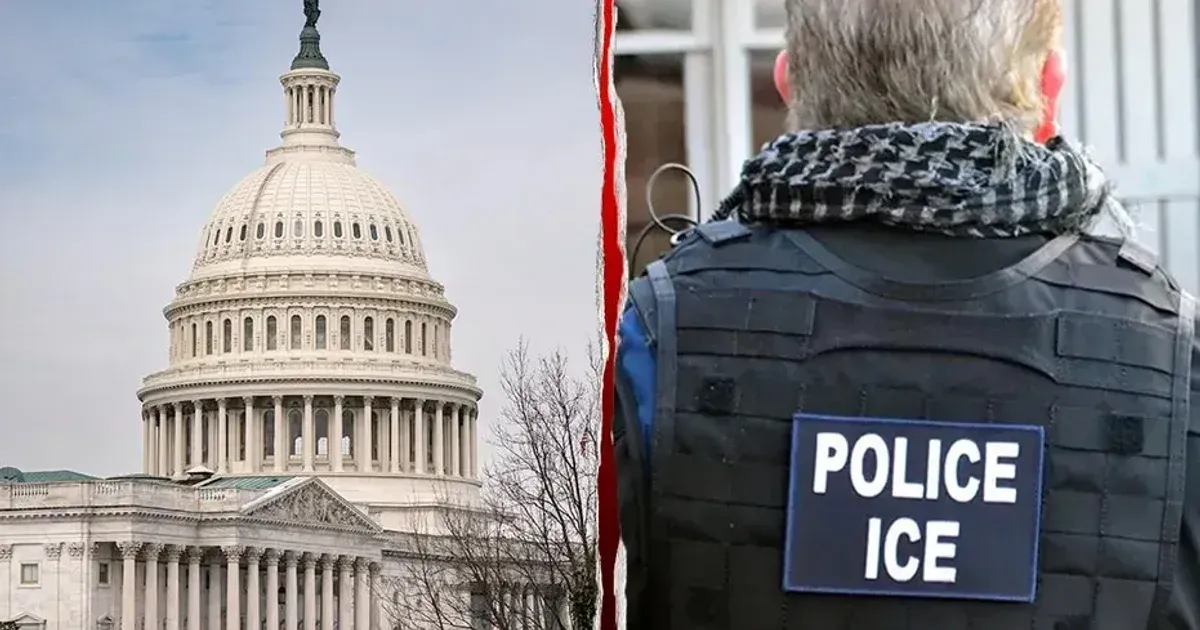
Republicans in the House of Representatives are struggling to implement a funding strategy for the Border Patrol and other agencies. By April 12, 2026, Speaker Mike Johnson faced intense pressure to resolve a deadlock that left a key domestic security apparatus without a formal budget. Current legislative efforts to reopen the Department of Homeland Security have entered a critical phase as the funding lapse stretches into its third month. Reports from the Capitol indicate that lawmakers are trying to balance internal party demands with the urgent needs of federal law enforcement.
Speaker Mike Johnson has navigated a complex political path while attempting to unify his conference. His initial opposition to a Senate-approved funding package eventually shifted toward a period of inaction, leaving the House without a clear trajectory for several weeks. This legislative paralysis forced a search for alternative funding mechanisms that could bypass traditional roadblocks in the upper chamber. Internal frustrations have grown as the lack of a resolution affects the daily operations of thousands of federal employees.
“We’re all in misery,” several lawmakers said while navigating the current legislative deadlock in the House of Representatives.
Speaker Johnson Navigates Internal Party Fractures
Negotiations within the House Republican conference have been hindered by conflicting priorities regarding border security and broader fiscal policy. Mike Johnson remains at the center of a storm where hardline members demand specific policy changes in exchange for their votes. The Speaker has attempted to reconcile these demands with the reality of a divided government, often finding himself at odds with both the conservative wing of his party and the Democratic minority. This internal friction has made the passage of a standard appropriations bill virtually impossible under current conditions.
Projections from fiscal analysts suggest that the Department of Homeland Security is operating on emergency reserves and diverted funds that cannot sustain long-term operations. Lawmakers describe the situation as a locked safe for which no one possesses the correct combination. Efforts to pass a standalone funding bill have failed repeatedly because of the narrow margins held by the majority party. Every failed vote increases the political stakes for the leadership team as the public begins to feel the effects of the shutdown at ports of entry and security checkpoints.
Budget Reconciliation Offers Filibuster Proof Path
Republican leaders are now considering the use of budget reconciliation to break the deadlock. Budget reconciliation is a specialized legislative process that allows certain spending and tax measures to pass with a simple majority in the Senate, effectively neutralizing the threat of a filibuster. This maneuver is rarely used for primary appropriations but offers a tactical advantage in a highly polarized environment. By using this process, the majority party could potentially fund its priorities without requiring support from the opposition, provided they maintain total unity within their own ranks.
President Donald Trump has signaled his approval for this specific procedural shift. His support provides the necessary political cover for Mike Johnson to move forward with a plan that prioritizes specific border agencies over the broader department. The shift toward reconciliation means an admission that traditional bipartisan cooperation has completely evaporated. Leaders in the House believe this path is the only viable way to reach the June 1 target for restored funding. Legislation remains paralyzed as factions within the Republican Party debate the appropriate scope of federal spending.
Strategic Omissions Exclude Disaster Aid and Farmers
One important aspect of the new reconciliation plan involves its narrow focus on enforcement agencies. Republicans intend to limit the scope of the package to fund only Immigration and Customs Enforcement and Customs and Border Protection. This strategy therefore excludes billions of dollars in expected aid for disaster recovery and agricultural support. Farmers in the Midwest and residents in storm-affected regions of the South may find themselves without federal assistance as the legislative focus narrows to the southern border.
Omitting the SAVE America Act from the reconciliation package has also become a point of contention among certain conservative members. The decision to strip the bill of these additional policy riders is a calculated move to ensure the final package remains within the strict rules governing the reconciliation process. These rules, which require provisions to have a direct impact on the federal budget, often force the removal of non-fiscal policy goals. Donald Trump and his allies have reportedly agreed to these concessions to ensure that border agents receive their paychecks before the summer season begins.
Preparations for the June 1 deadline involve a multi-step process that must begin with the passage of a budget resolution. The resolution acts as a shell that provides the instructions for the subsequent reconciliation bill. Every delay in the House slows the entire timeline, as the Senate requires its own period for debate and amendment. The Department of Homeland Security continues to issue guidance to its employees regarding the continuity of operations, though morale is reportedly at an all-time low. Administrative staff members are currently working without pay, relying on the promise of back wages once the crisis concludes.
A Narrow Path Through Congress
Relying on fiscal loopholes to manage national security is a confession of systemic failure. The move to use budget reconciliation for Department of Homeland Security funding demonstrates that the House of Representatives has ceased to function as a deliberative body. By stripping away disaster relief and agricultural support to secure a narrow win for border enforcement, Republicans are gambling with the stability of the domestic interior. The tactical shift is not a sign of strength but a symptom of a party unable to whip its own members into a coherent majority.
Voters in storm-prone regions or farming communities may find little comfort in a strategy that treats their survival as negotiable. Mike Johnson is effectively admitting that the regular order of governance is dead. Donald Trump and his endorsement of this policy create a hierarchy of safety that prioritizes optics over full emergency management. If the government cannot fund its own primary defense and rescue apparatus without resort to parliamentary gimmicks, the institutional rot is deeper than any budget shortfall. Stripping the SAVE America Act from the package suggests even the most vocal ideologues recognize their leverage is evaporating. June will reveal if this gamble pays off or leaves the country more vulnerable.