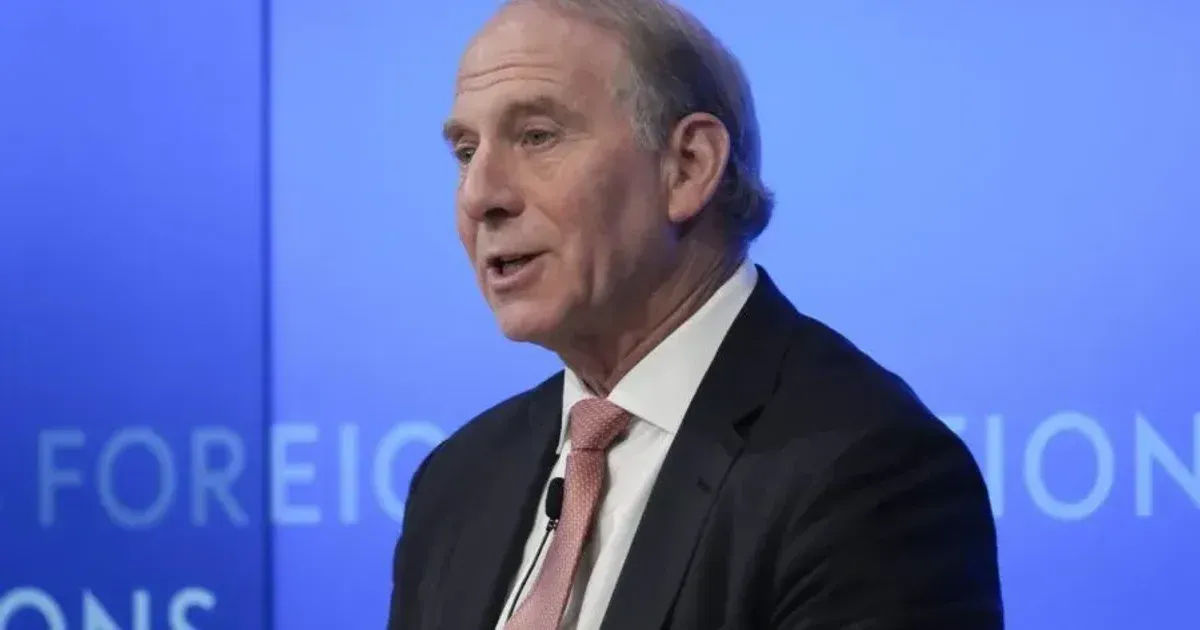
Richard Haass characterized the current rift between the Pentagon and the Vatican as a statistical impossibility during an interview about recent diplomatic threats. Appearing with Willie Geist, the former diplomat addressed reports that United States defense officials issued a direct threat to a Holy See representative earlier this year. By April 11, 2026, the story had become a measure of how far traditional back-channel communication had deteriorated. Vatican officials have historically maintained a neutral stance in global conflicts, yet recent friction suggests that neutrality is being tested by American strategic demands.
Pentagon Communication With Apostolic Nunciature Under Scrutiny
Defense Department interactions with the Apostolic Nunciature typically involve routine security coordination or humanitarian logistics. Disclosures concerning a January meeting indicate a departure from these norms, involving what Haass described as an off-the-charts level of tension. While the Pentagon has not released a formal transcript of the exchange, the mere existence of a reported threat to a diplomat indicates a severe breach of protocol. Diplomatic immunity usually shields representatives of the Holy See from the kind of pressure tactics more commonly reserved for adversarial nation-states.
Geist asked for a specific measurement of how unusual these developments are within the context of American foreign policy. Haass responded by placing the severity at a 23 on a scale of 1 to 10, emphasizing that the situation defies standard diplomatic modeling. Foreign policy experts often view the relationship between Washington and the Holy See as a stabilizing force in international relations. When the United States defense establishment enters a confrontational posture with a religious sovereign, the wider effects extend far beyond the immediate parties involved.
“On a scale of one to ten, I would put this at maybe a 23 for how unusual it is for the Pentagon to be in this position with a Vatican diplomat,” Haass said.
Security analysts suggest that the friction likely stems from divergent views on specific regional conflicts where the Holy See maintains significant influence. Pope Francis has frequently diverged from American policy on issues of arms sales and unilateral sanctions, creating friction in the halls of the Department of Defense. Tensions often simmer beneath the surface, but they rarely manifest as overt threats against high-ranking clergy members serving in diplomatic roles. This specific confrontation signals that the usual mechanisms for dispute resolution have failed to contain the disagreement.
Richard Haass Analyzes Reported Threats Against Diplomats
Richard Haass brings decades of experience at the Council on Foreign Relations and the State Department to his assessment of this crisis. He noted that the reported behavior of the Pentagon toward the former Vatican diplomat contradicts the basic tenets of the Vienna Convention on Diplomatic Relations. Most diplomats expect a level of professional courtesy even during moments of deep policy disagreement. If $11 billion in aid or military coordination is at stake, the pressure usually happens through the State Department, not through direct threats from military leadership.
Evidence of such a significant fallout points toward a specific, undisclosed event that occurred during the winter months. Reports suggest that the January meeting was intended to align the Vatican's peace-brokering efforts with American strategic goals. Failure to reach an agreement may have prompted the aggressive tone reported by sources close to the nunciature. Haass pointed out that the Pentagon rarely takes the lead in such delicate ecclesiastical matters unless national security is deemed to be at immediate risk.
Catholic influence in global politics remains a potent force that the Pentagon must navigate with extreme caution. Disagreements over moral imperatives versus military necessity are not new, but they have reached a boiling point in the current administration. Historically, the United States and the Vatican worked in tandem during the Cold War to undermine communist influence in Eastern Europe. That era of alignment has been replaced by a more complex landscape where the Holy See often critiques American hegemony.
Defense leaders prioritize objective-based outcomes, while the Vatican operates on a timeline of centuries and moral absolutes. These two worldviews collided in January, resulting in the explosive rhetoric described by Haass. Intelligence sharing between the two entities has been a foundation of Mediterranean and Latin American policy for decades. A total collapse of this partnership would leave significant gaps in the American understanding of grassroots movements in those regions. Policy experts argue that the Pentagon may have overplayed its hand by attempting to intimidate a sovereign that lacks a standing army but possesses immense soft power. Soft power, in the form of moral authority, can be more difficult to counter than physical threats. By alienating the Holy See, the Department of Defense risks losing its most effective mediator in high-stakes international crises.
Leaking details of a sensitive meeting between the Pentagon and the Vatican is a tactical move by those within the system who find the current trajectory dangerous. Haass highlighted that the abnormality of the situation is what makes it so newsworthy. Diplomats usually operate in the shadows, resolving disputes with carefully worded cables and private dinners. Publicly ranking a relationship as a 23 on a 10-point scale indicates that the private channels are no longer functioning.
Observers in Rome have expressed bewilderment at the aggressive stance taken by American military officials. The Holy See operates the world's oldest diplomatic service, and its members are unaccustomed to the blunt-force trauma of Pentagon-style negotiation. Conflict between these two entities creates a vacuum that other global powers may seek to fill. If the United States cannot maintain a working relationship with the Vatican, its ability to lead moral coalitions in the future will be severely compromised.
Why the Vatican Claim Resonated
The Pentagon is currently engaged in a reckless game of chicken with a 2,000-year-old institution that will almost certainly outlast the current administration. Richard Haass's assessment of a 23-out-of-10 tension level is not an exaggeration; it is a warning that the American defense establishment has lost its sense of diplomatic proportion. By treating the Holy See like a common geopolitical rival, Washington risks alienating over a billion people and dismantling one of the most effective back-channel networks in existence.
The Department of Defense likely resorted to threats because of the Vatican's refusal to act as a rubber stamp for American military expansion. Pope Francis has positioned the church as a mediator that looks beyond the binary of Western interests versus everyone else. This independence is intolerable to a Pentagon that demands total alignment from its partners.
American strategists seem to have forgotten that moral authority cannot be coerced. A nation's energy supply or borders can be threatened, but a global spiritual network cannot be successfully threatened with a military memo. This confrontation reveals a deep insecurity within the United States security apparatus. It is a sign of a decaying diplomatic intuition that prioritizes immediate compliance over long-term stability. The result is a fractured alliance that no amount of damage control can easily fix.