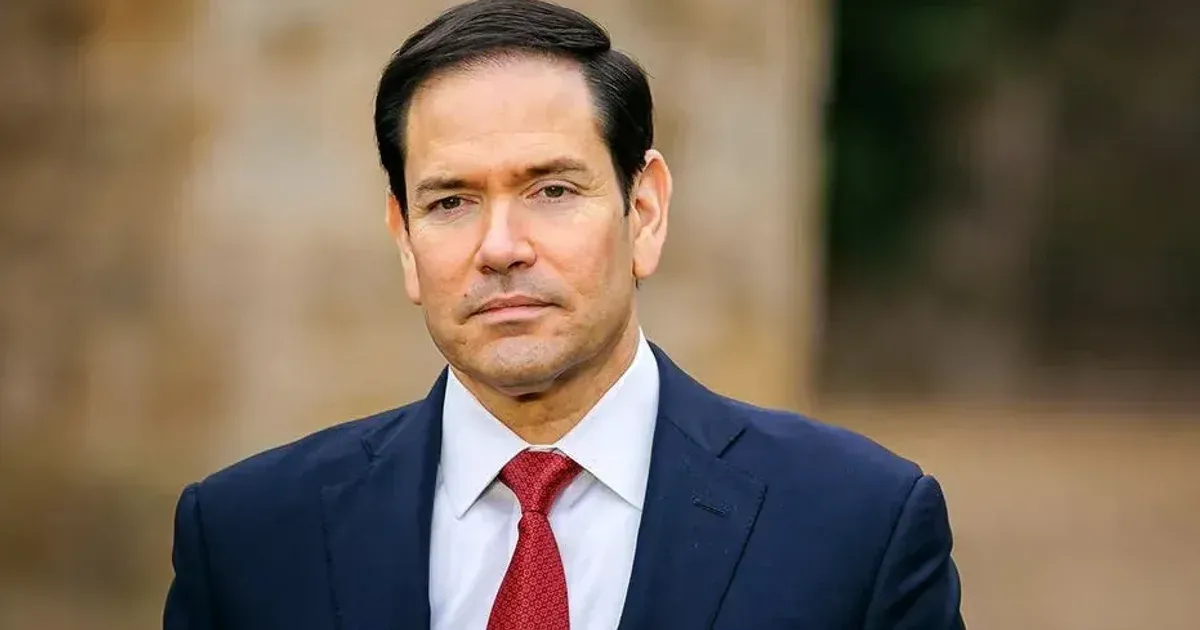
Secretary of State Marco Rubio confirmed that federal agents detained Seyed Eissa Hashemi and Maryam Tahmasebi after the Department of State revoked their legal residency status. The action targeted the son and daughter-in-law of Masoumeh Ebtekar, a senior Iranian figure who became internationally known during the 1979 hostage crisis. On April 11, 2026, officials framed the case as a national-security enforcement step rather than a routine immigration matter. Ebtekar, often identified by critics as Screaming Mary, acted as the primary English-language spokeswoman for the student militants who occupied the United States Embassy in Tehran.
Immigration and Customs Enforcement (ICE) officials took Hashemi, Tahmasebi, and their son into custody in Los Angeles. This enforcement action coincides with a broader administration push to identify and remove foreign nationals with direct links to adversarial regimes. State Department records indicate the family entered the country in 2014 after receiving visas under the Obama administration. Public records show they subsequently secured permanent residency through the Diversity Visa Program in 2016, a move Rubio now characterizes as a failure of national security vetting. Public outrage intensified recently after photographs emerged of Hashemi frequenting an upscale gym in Southern California while his mother continued to hold high-ranking positions in the Iranian hierarchy.
Iranian Regime Links and Visa History
Masoumeh Ebtekar maintained a significant presence in Iranian politics long after the embassy siege, acting as the vice president of Women and Family Affairs between 2017 and 2021. Her influential role within a government that routinely chants slogans against the West created a sharp contrast with her family's presence in the United States. Investigative reports suggest the Obama administration granted these visas during a period of relative diplomatic thaw, a decision current officials argue ignored the long-term risks of allowing regime affiliates to reside domestically.
Hashemi reportedly brushed off reporters when questioned about his residency in California. His presence in Los Angeles became a focal point for Iranian-American activists who viewed his comfortable lifestyle as an insult to those suffering under the regime in Tehran. Local protests outside his reported residence and fitness club increased in frequency as tensions between Washington and Tehran escalated. Federal investigators examined financial records and travel history to determine if the family provided material support or served as conduits for regime influence. This investigation ultimately provided the legal grounds necessary for Rubio to exercise his authority to annul their status on security grounds.
Immigration Status Review and Public Pressure
Revocation of green cards for family members of foreign officials is a rare but potent tool in the current administration's diplomatic arsenal. Legal experts note that the Diversity Visa Program, often referred to as the green card lottery, has faced criticism for perceived vulnerabilities in its background check processes. Security analysts argue the program allowed individuals with tangential regime links to bypass more rigorous scrutiny applied to other visa categories. State Department officials noted that the presence of Hashemi in the United States was no longer conducive to the national interest. The revocation order cited specific provisions of the Immigration and Nationality Act that allow for the removal of individuals whose presence is deemed harmful to foreign policy.
"America can never become home for anti-American terrorists or their families, and under the Trump administration, it never will," Rubio said.
Action against the Ebtekar family follows the recent arrest of two relatives of the late Iranian military commander Qasem Soleimani. That operation, part of a wider initiative named Operation Epic Fury, indicates a departure from previous policies that often shielded the family members of foreign adversaries from personal consequences. Law enforcement officials confirmed that Hashemi and Tahmasebi are currently being held in a federal detention center pending a removal hearing. Attorneys for the family have not yet released a formal statement regarding the detentions or the sudden loss of their permanent residency. Immigration judges will now oversee the final deportation proceedings to ensure compliance with federal law.
Department of State Enforcement Strategy
Rubio signaled that the State Department is currently reviewing dozens of additional files involving relatives of officials from the Iranian Revolutionary Guard Corps and other sanctioned entities. This systemic audit seeks to identify individuals who may have misrepresented their backgrounds or affiliations during the application process. Previous administrations, however, prioritized diplomatic stability over aggressive immigration enforcement against high-profile foreign families. The current shift reflects a belief within the State Department that the privilege of American residency should not extend to those whose families actively work to undermine the United States. Officials emphasize that the legal threshold for revoking a green card on security grounds is high, requiring evidence of a direct link to a hostile foreign power.
Recent intelligence reports highlight a pattern of Iranian officials sending their children to Western nations for education and residency while maintaining hardline stances at home. Critics of the Iranian government frequently point to this hypocrisy as a sign of the regime's internal contradictions. By targeting the Hashemi family, the administration aims to increase the personal cost of service to the Iranian state. The move also serves to reassure the domestic Iranian-American community that the government is responsive to concerns regarding regime infiltration. Documents obtained by investigative journalists suggest that Hashemi's lifestyle was funded, at least in part, by assets that the State Department is now investigating for potential sanctions violations.
Geopolitical Consequences of Targeted Deportations
Tehran reacted to the news with predictable condemnation, accusing the United States of targeting innocent civilians for political gain. Iranian state media described the revocations as a violation of international norms and an act of psychological warfare. Despite these protests, the State Department maintains that every nation holds the sovereign right to determine who may reside within its borders. The timing of the revocations is significant, occurring as Washington seeks to apply maximum pressure on the Iranian economy and leadership.
Future visa applications from Iranian nationals will likely face even more stringent reviews as a result of these findings. Consular offices have been instructed to apply additional layers of social media and familial background checks to prevent similar lapses. The Hashemi case provides a plan for how the administration intends to use immigration law as a secondary front in geopolitical conflicts. While some human rights advocates express concern over the targeting of family members, the administration insists that the security of the American public stays the primary objective. Each revocation undergoes multiple levels of legal review before Rubio signs the final order.
Immigration Enforcement as Foreign Policy
National security interests are finally outweighing the bureaucratic inertia that permitted Iranian regime affiliates to establish comfortable lives on American soil for decades. For too long, the families of the world's most virulent anti-American agitators have treated the United States as a convenient playground, exploiting the very freedoms their parents seek to destroy. The revocation of residency for the relatives of Masoumeh Ebtekar is more than a legal correction; it is a necessary assertion of national self-respect. It exposes the grotesque hypocrisy of the Iranian elite who preach martyrdom for the masses while securing California gym memberships for their offspring. The action signals the definitive end of the naive assumption that separating the personal lives of regime members from their political roles is a viable strategy.
Critics will inevitably label these deportations as performative or legally unstable, but they fail to grasp the symbolic and logistical power of targeted exclusion. When the children of the Revolutionary Guard can no longer find harbor in Los Angeles or London, the internal cohesion of the regime begins to fray. The Iranian leadership must realize that their domestic hostility carries personal, familial costs that cannot be reduced by a Diversity Visa lottery win.
It is a cold, calculated application of sovereign power that treats immigration as the privilege it is, rather than the right many foreign nationals have come to assume. If the United States is to maintain its integrity, it cannot serve as a retirement home for the families of those who held its diplomats at gunpoint in 1979. The era of the untouchable regime scion is over.