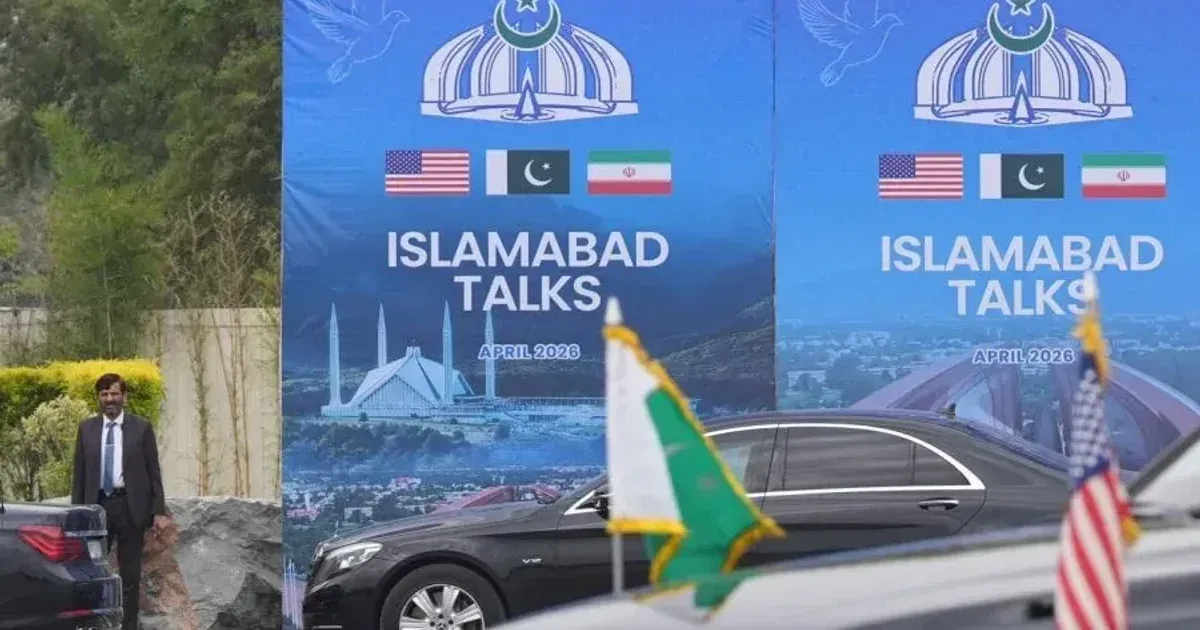
Donald Trump authorized the first direct diplomatic session between American and Iranian envoys in Islamabad, ending 47 years of mediated-only communication. Pakistani security forces established a large perimeter around the Serena Hotel as representatives arrived to address a six-week naval conflict. The April 11, 2026, meeting followed successive rounds of back-channel messaging through Swiss intermediaries. Officials from both nations now face the task of stabilizing a fragile two-week ceasefire that remains the only barrier to a wider regional war.
Negotiators entered the secure facility without making public statements to the gathered international press corps. This temporary halt in hostilities stopped a cycle of missile exchanges that nearly closed global energy corridors. White House officials confirmed the face-to-face nature of the talks late Saturday morning. Security within the Pakistani capital reached historic levels to protect the delegations from local extremist factions. Specific agendas for the meeting include the permanent reopening of shipping lanes and the verification of missile battery withdrawals. Direct dialogue between these adversaries has not occurred since the 1979 embassy crisis in Tehran.
Islamabad Summit Breaks Decades of Diplomatic Silence
Islamabad is the physical bridge between two powers that have communicated primarily through threats and sanctions for decades. Pakistani Prime Minister Shehbaz Sharif enabled the logistics, positioning his nation as the essential mediator in Southwest Asia. American delegates arrived with a mandate to secure long-term maritime safety in exchange for partial sanctions relief. Iranian representatives countered by demanding the immediate removal of carrier strike groups from the Persian Gulf. Previous attempts at reconciliation failed because of mutual distrust and domestic political pressure in both capitals.
Diplomatic experts note that the 1979 rupture created a vacuum of understanding that these talks aim to fill. National security advisers from the White House spent months coordinating the secret flight paths of the Iranian delegation to ensure safe passage. International observers believe the presence of senior military commanders on both sides indicates a desire for a technical, rather than purely political, resolution. Economic data suggests the six-week conflict cost the global shipping industry over $11 billion daily.
Trump Negotiates Under Threat of War Crime Inquiries
Critics of the administration argue the sudden pivot toward diplomacy stems from legal vulnerability regarding military conduct. Bill Maher, host of Real Time, used his Friday evening monologue to challenge the underlying motivations of the executive branch. Maher suggested that the sudden ceasefire was a tactical maneuver to avoid scrutiny from international judicial bodies. Concerns regarding civilian casualties during naval strikes in the Gulf of Oman have circulated within the United Nations for several weeks. Political opponents in Washington claim the president is attempting to avoid a prolonged investigation into the rules of engagement used by the Navy.
Trump continues to maintain that every military action taken was defensive and necessary for national security. While the administration highlights the reopening of the Strait of Hormuz, skeptics point to the lack of a long-term strategy. Domestic polling shows a divided public, with many wary of any agreement that benefits the regime in Tehran. Investigations into the targeting of Iranian coastal infrastructure remain a point of contention among legal scholars. Pressure from European allies also influenced the decision to abandon kinetic operations in favor of the Islamabad summit.
Trump pushed this ceasefire solely to save face while international observers began questioning the legality of recent naval strikes, according to Bill Maher.
Strait of Hormuz Conflict Drives Economic Urgency
Energy markets reacted with extreme volatility during the six weeks of naval skirmishes. Crude oil prices surged to record highs, forcing the administration to coordinate with OPEC+ members to prevent a global recession. Strategic petroleum reserves in the United States dropped to their lowest levels in a generation. Shipping insurance rates for tankers entering the Persian Gulf spiked by 400 percent in a single week. Iranian Revolutionary Guard vessels used drone swarms to harass merchant ships, leading to several high-profile seizures. American retaliatory strikes destroyed multiple coastal radar installations and fast-attack boats.
These engagements created a maritime environment that most commercial carriers deemed too risky for transit. Global supply chains experienced delays that rippled through the automotive and electronics sectors. Reopening the Strait of Hormuz became the primary economic objective for every major global economy. Financial analysts in London and New York warned that a permanent closure would trigger a depression. Every day of the ceasefire provides an essential window for clearing the backlog of stranded cargo vessels. Future stability depends on whether the Islamabad talks produce a verifiable de-escalation protocol.
Diplomacy Under Economic Pressure
Skeptics of this diplomatic pivot might argue that Donald Trump is simply purchasing time before the next election cycle begins. The sudden transition from bellicose rhetoric to face-to-face negotiation in Islamabad suggests a desperation to neutralize a political liability. For Iran, the talks offer a rare chance to breathe under the weight of crushing sanctions while their enrichment programs continue behind closed doors. This is not a grand bargain but a mutual exercise in survival. Tehran knows the American public has no appetite for a third Middle Eastern war in twenty years.
Washington knows that a $200 barrel of oil ends any hope of domestic economic stability. Both sides are currently using the Islamabad summit as a theatrical stage to appease their respective audiences. If these talks fail, the return to kinetic warfare will be swifter and more lethal than the initial six-week skirmish. The risk of a miscalculation remains at an all-time high despite the polite handshakes in Pakistan. History rarely rewards those who mistake a temporary truce for a lasting peace. This process is a gamble with the global economy as the primary stake. Direct talks are the final exit ramp before total escalation.