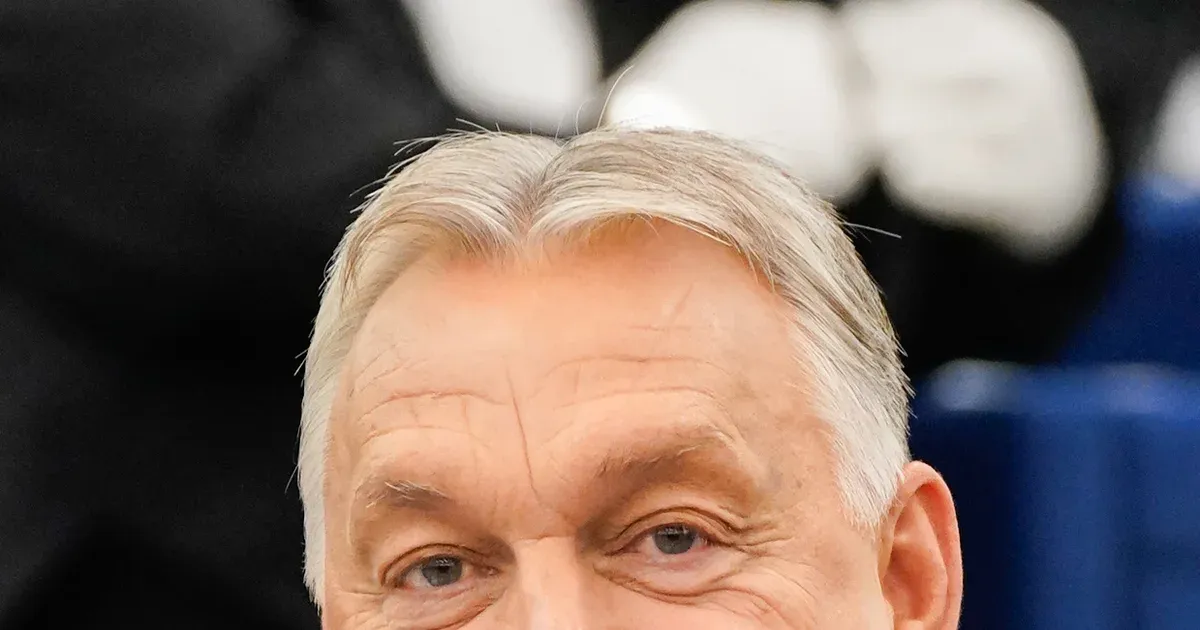
Donald Trump pledged U.S. economic support for Viktor Orbán as Hungary moved into a tense election stretch. The intervention raised the stakes around foreign influence, populist alliances and Hungary's economic future. Opposition leader Péter Magyar was already challenging Fidesz dominance. The message landed on April 11, 2026, just before voters headed toward the polls.
Pressure is also mounting inside Hungary as Orbán enters the final stretch of a campaign that no longer looks routine. Fidesz officials are trying to frame Trump's pledge as proof that Budapest has a powerful ally outside Brussels. Opposition figures argue the promise shows how dependent the incumbent has become on ideological partners abroad. The economic offer also lands at a moment when inflation, energy costs and European Union funding disputes have weakened the government's usual message of stability. For voters, the question is whether American backing looks like reassurance or outside interference.
Trump Turns Hungary Vote Into a Transatlantic Test
The administration has not specified the size, structure or legal basis of any potential support package. That ambiguity gives Trump political room while giving Orbán a headline he can use immediately. Hungarian markets reacted unevenly because investors still need details on whether the pledge involves loans, trade preferences, energy support or investment guarantees. Diplomats in Brussels are watching closely, since a U.S. promise to shield one European Union member from economic pressure could complicate bloc discipline. The result is a campaign issue that now reaches far beyond Budapest.
Simultaneously, the administration is focusing its resources on the European continent. Hungary is a primary partner in this strategy. Orbán promptly thanked Trump for the public endorsement by posting a video featuring the song "Y. M. C. A." on social media. This gesture highlighted the personal rapport between the two leaders. Financial markets in Budapest reacted with volatility to the news of potential American economic intervention. American officials have not specified the exact amount of aid, but they emphasized that the "full economic might" of the country is available. Such promises are rare for nations that are not currently engaged in active warfare.
Orbán Trails Péter Magyar Before Critical Hungary Vote
Sunday's election is a departure from previous Hungarian contests. Péter Magyar, a former ally of the prime minister, now leads the Tisza party with 50 percent of the projected vote. Magyar has focused his campaign on transparency and distance from the current administration's ties to Moscow. Fidesz has struggled to counter his narrative in recent weeks. Evidence surfaced recently indicating that Hungary shared confidential European Union documents with Russia. This revelation has complicated Orbán's relationship with other European leaders. Intelligence agencies in Brussels have expressed deep concern regarding the security of shared tactical data.
"My Administration stands ready to use the full Economic Might of the United States to strengthen Hungary's Economy, as we have done for our Great Allies in the past, if Prime Minister Viktor Orbán and the Hungarian People ever need it," Trump wrote.
Voters in rural districts have traditionally supported the Fidesz party. Magyar has successfully courted these demographics by emphasizing economic reforms. The Tisza party's platform includes a pivot back toward standard European Union cooperation. Polls indicate that young voters are particularly energized by the prospect of a change in leadership. Fidesz leaders have responded by accusing the opposition of being puppets for foreign interests. Counter-arguments from the Tisza party suggest that the current government has compromised national sovereignty. Polling stations across the country report high early turnout numbers.
JD Vance flew to Budapest on Tuesday to personally campaign for the incumbent prime minister. The vice president accused European Union bureaucrats of meddling in the national politics of Hungary. He described the situation as one of the worst examples of foreign election interference in modern history. These remarks drew immediate charges of hypocrisy from political opponents in Washington. Standing next to Orbán, Vance argued that the sovereignty of Hungary must be protected from external pressures. His presence in Budapest signaled a deep ideological alignment between the two administrations. The visit occurred despite the recent scandals involving the leak of sensitive documents.
Brussels has countered these claims by pointing to the necessity of maintaining unified security protocols. European officials stated that the document leak to Russia was a violation of mutual trust. Tensions between the United States and the European Union have reached a peak due to these disagreements. Critics of the vice president suggest that his rhetoric undermines the stability of the Western alliance. Supporters, by contrast, view the move as a necessary defense of a close ally. The trip highlighted the administration's willingness to bypass traditional diplomatic channels. Hungarian state media provided extensive coverage of the visit to boost Orbán's standing.
Investment in Hungary is part of a broader strategy to create a network of loyal partner states. Trump stated that he is excited to invest in the future prosperity generated by Orbán's leadership. The approach prioritizes personal loyalty over traditional multilateral agreements. Similar economic pledges have been made to other allies in the past. Critics argue that using economic power in this manner creates unpredictable dependencies. Proponents suggest it is a more effective way to secure national interests. The scale of the promised support could potentially reach billions of dollars if the Hungarian economy continues to struggle. Specific details on the funding mechanisms are currently being reviewed by the Treasury Department.
High-stakes elections in Europe often have consequences for the entire continent. If Orbán loses, the United States may find itself without its closest ideological partner in the European Union. A victory for Magyar would likely lead to a re-evaluation of Hungarian-American relations. The administration remains committed to its current path despite these uncertainties. Observers note that the use of Truth Social as a primary diplomatic tool has become standard practice. The method allows for direct communication with foreign leaders and their electorates. The outcome of the vote on Sunday will determine the viability of this transactional foreign policy model.
Foreign Support and Election Risk
Relying on personal affinity over institutional stability has become the hallmark of current American diplomacy. The decision to pledge the full economic might of the United States to a leader trailing by 30 points in the polls is not a calculation based on traditional statecraft. It is a gamble on the survival of a specific ideological brand. By intervening so directly in a European election, the administration has abandoned the pretense of non-interference. The strategy ignores the risk that a Magyar victory would leave Washington alienated from a newly reorganized Hungary. The transactional nature of these promises creates a fragile framework that can crumble the moment a leader falls from power.
The promise of American dollars is unlikely to sway a Hungarian public tired of corruption allegations and security breaches. The data points in the other direction. When an opposition party reaches 50 percent, the momentum usually becomes irreversible regardless of foreign endorsements. The administration's focus on Orbán looks less like strategic depth and more like a refusal to acknowledge shifting political realities. If Fidesz collapses on Sunday, the vice president's trip to Budapest will be remembered as a diplomatic blunder that wasted political capital on a lost cause. Washington is betting on a past that is rapidly disappearing. It is a high-risk play with diminishing returns. The era of the populist strongman is facing its first major stress test in the West.