Péter Magyar launched his final campaign push ahead of a national election that tests the durability of Viktor Orbán and his Fidesz party. Voters across Hungary prepare to decide whether the incumbent prime minister's decade-long grip on power is still unshakeable. Viktor Orbán has governed with a constitutional supermajority since 2010, reshaping the judiciary, media, and electoral laws to favor his populist vision. Recent months have seen a rapid erosion of that perceived invincibility. Hungary moved toward another high-stakes national vote on April 10, 2026, as Magyar intensified his challenge.
Political stability in Budapest fractured following a clemency scandal that forced the resignation of the president and the justice minister. This opening allowed Magyar, a former government insider and ex-husband of the former justice minister, to launch a lightning campaign under the banner of his newly formed Tisza party. Success for Magyar depends on his ability to consolidate a fractured opposition that has failed to unseat Orbán in four consecutive elections. Public squares in rural towns, once Fidesz strongholds, have filled with thousands of protestors demanding transparency. European Union funding worth $11 billion remains frozen due to concerns over the rule of law and judicial independence, placing immense pressure on the national budget. Economic reality has begun to puncture the nationalist rhetoric that previously insulated the government from criticism.
Péter Magyar Challenges Fidesz Power Structure
Péter Magyar emerged from within the very system he now seeks to dismantle. His intimate knowledge of the inner workings of the Hungarian state gives his accusations of corruption a weight that previous opposition figures lacked. He released secret recordings and detailed accounts of how government contracts were allegedly steered toward a small circle of loyalists. Fidesz officials dismiss him as a disgruntled opportunist, yet his polling numbers suggest a genuine resonance with voters tired of stagnant wages.
Tisza Party supporters often cite the collapse of public services as a primary motivation for their shift in loyalty. Schools and hospitals face chronic underfunding while the government spends millions on state-sponsored advertising campaigns. Magyar promises to dismantle the crony capitalism that defines the Orbán era, aiming to reintegrate Hungary into the European mainstream. Skepticism persists among some liberal voters who worry about his own history within the ruling elite. Control over the narrative remains the government's strongest defense against this insurgent threat.
Hungarian Economic Stagnation Impacts Voter Sentiment
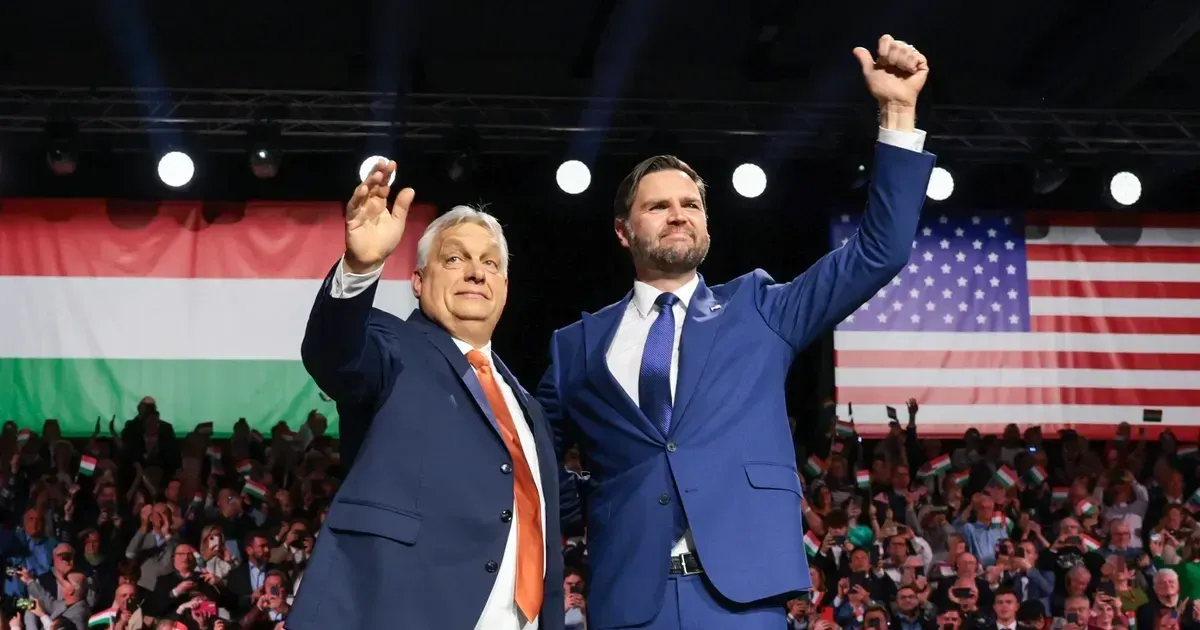
Inflation in Hungary spiked to the highest levels in the European Union during the previous year, severely eroding the purchasing power of middle-class families. While the government blamed international sanctions on Russia for the price increases, many economists point to domestic fiscal policies and a weak forint. These financial pressures have made the electorate less receptive to the identity politics that have long sustained Orbán's popularity. International support remains a key factor, as JD Vance backs Viktor Orbán in the lead-up to this contest.
“I believe that we can build a new country where there is no more fear and where talent, not political connections, determines your future in Hungary,” Magyar said.
Voters in the industrial heartlands are feeling the pinch of rising energy costs and food prices. Fidesz has responded by promising further social subsidies, but the state treasury is depleted. This fiscal crunch limits the ability of the prime minister to deploy the traditional pre-election spending sprees that secured his past victories.
Media Control Shapes the Hungarian Electoral Environment
State-run media outlets provide near-constant coverage of government achievements while largely ignoring or vilifying opposition candidates. The Central European Press and Media Foundation, known as KESMA, controls hundreds of local and national outlets, ensuring a uniform message reaches the rural population. Independent journalists work in a hostile environment, often facing surveillance or character assassination in the tabloid press. Magyar has used social media to bypass these traditional gatekeepers, reaching a younger demographic that consumes news online.
Electoral laws also present a significant hurdle for any challenger. Fidesz redesigned the voting districts to ensure that a simple plurality of votes can translate into a large majority of seats. The winner-compensation mechanism further boosts the strongest party, making it statistically difficult for a fragmented opposition to gain control. Magyar’s strategy hinges on becoming the sole alternative to the status quo, forcing a binary choice on the electorate.
Geopolitical Tensions Shape the Security Debate
International observers are watching the April 10, 2026, proceedings with intense focus. Hungary’s relationship with NATO and the United States has cooled sharply because of Budapest's proximity to Moscow and its repeated delays in approving alliance expansions. Orbán positions himself as a defender of Hungarian sovereignty against foreign interference, but critics argue his policies have isolated the country. A change in leadership could drastically shift the balance of power within the European Council on issues ranging from defense to migration.
Washington and Brussels have frequently criticized the democratic backsliding observed under the current administration. If Magyar achieves a breakthrough, it could signal a reversal of the illiberal trend that has influenced other regional leaders. Security analysts worry that a contested result or a narrow Fidesz victory could lead to civil unrest, given the polarized nature of the campaign. Stability in Central Europe depends on a clear and transparent outcome that the majority of citizens can accept. Hungary stands at a crossroad where the traditional levers of power are being tested by a new form of digital and grassroots activism.
Magyar Tests the Limits of Orbán’s System
Autocratic systems usually decay from the inside out, and the rise of Péter Magyar is the most significant internal rupture in Viktor Orbán's tenure. Loyalty in Budapest has long been a commodity bought with state contracts and administrative protection, but that currency loses value when the economy falters. The current challenge is more than a political rivalry; it is a structural stress test for a state that has been methodically captured by a single interest group. The evidence points to the limits of the illiberal model when it encounters an insider who knows where the bodies are buried and a public that is too broke to care about culture wars.
Orbán has spent fifteen years building a fortress of legislation and media control, yet he neglected the fundamental vulnerability of any populist leader: the necessity of perpetual growth. Without the ability to buy off the middle class, the ideological shell of national sovereignty begins to crack. Magyar is an imperfect vessel for reform, given his deep roots in the system he attacks, but perfection is irrelevant in a survival struggle. The real question is whether the electoral machinery Orban built can be overwhelmed by sheer turnout, or if the system is now so rigged that numbers no longer matter. If Fidesz holds on through administrative manipulation rather than genuine consent, the subsequent lack of legitimacy will make Hungary ungovernable. This is a battle for the soul of a nation that has forgotten what it means to have an alternative. The verdict will be final.