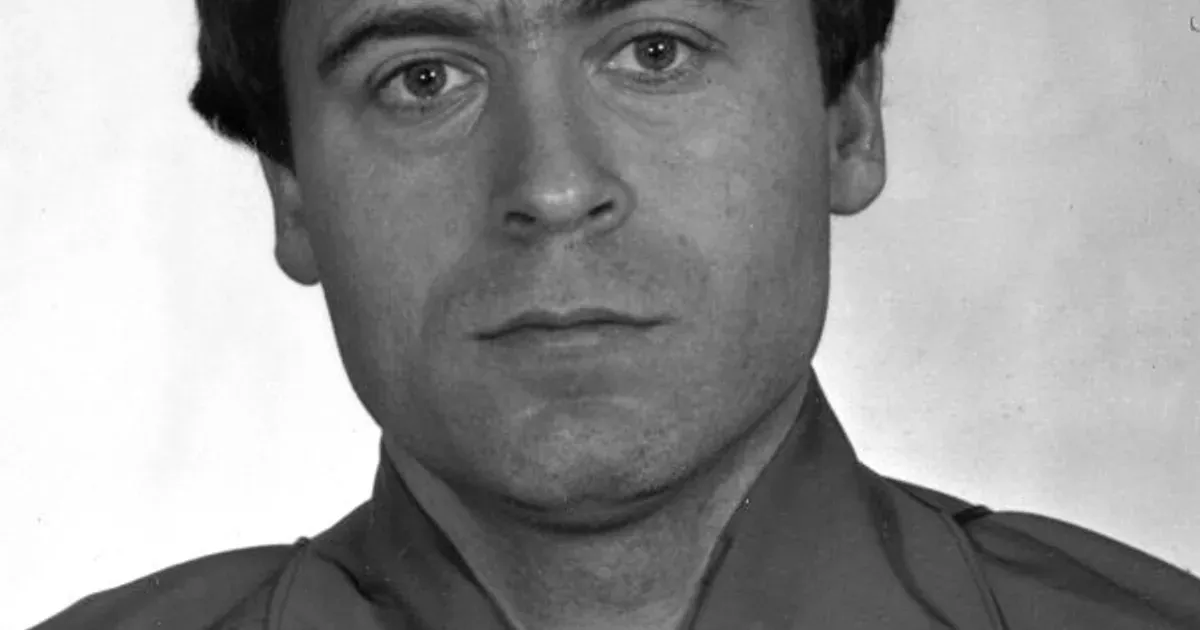
Laura Aime appears in a new light as her family discloses that Ted Bundy engaged in a calculated stalking campaign months before her murder. Relatives of the seventeen-year-old victim now claim the killer infiltrated her social circle at her Utah high school long before her October 1974 disappearance. By April 12, 2026, the new assertions had shifted attention from a sudden abduction theory toward a longer predatory pattern. Investigative records from that era focused primarily on the immediate disappearance, but the family account suggests earlier warning signs.
Ted Bundy allegedly stood on campus grounds and identified himself to students as her boyfriend, effectively monitoring her movements during the school day. Documents recently reviewed by family members indicate this behavior occurred multiple times throughout the autumn semester. Years of silence regarding these specific interactions ended this morning as siblings sought to correct the historical record of her final weeks. Aime disappeared on Halloween night in 1974 after leaving a cafe in Lehi, Utah. Her naked, severely beaten body was discovered nearly a month later in American Fork Canyon.
Utah Investigative Records Reveal Stalking Patterns
Lehi High School became a hunting ground for the law student who had recently moved from Washington to attend the University of Utah. Witnesses at the time noticed a mature man in his early twenties loitering near the student parking lot, but his conventional appearance allowed him to blend into the academic environment. Instead of the impulsive crimes many associated with his later escapes, his behavior in Utah showed a patient, almost surgical interest in the daily routines of his targets.
Survivors of his other attacks have described him using a fake cast or crutches to elicit sympathy, but the Aime case highlights a darker level of social engineering. He assumed a false identity that granted him proximity to his victim without raising alarms among her peers or teachers. This sophisticated ruse permitted him to learn her schedule, her friends, and the routes she took home. Salt Lake County investigators struggled to piece together these sightings in the pre-digital era of 1974.
Notorious serial killer Ted Bundy had stalked one of his teen victims—even posing as her boyfriend—months before her severely beaten, naked corpse was discovered in Utah, her family says.
Family Claims Bundy Infiltrated Local High School
Siblings of the victim emphasize that the killer was not a stranger who happened upon her on a dark Halloween night. They contend that his presence at the school was a precursor to the violence that followed in late October. Besides the physical stalking, the psychological manipulation of her social environment provided him with a sense of control that he craved. Students reportedly saw the man they now know was Ted Bundy waiting by her locker or walking near the gymnasium.
If questioned, he simply claimed a romantic connection to the teen, a lie that deflected suspicion in a tight-knit community where young couples were common. Such proximity allowed him to choose the exact moment of her vulnerability. Her family members believe this disclosure sheds light on how he managed to bypass the natural defenses of a cautious teenager. Despite his move to Utah supposedly for his legal education, his primary occupation appears to have been the systematic observation of young women. Records from the University of Utah show he frequently skipped classes to travel throughout the region.
Detecting his patterns proved impossible for local police departments that lacked a centralized database for missing persons. Communication between jurisdictions remained fragmented, allowing a predator to operate in plain sight for months. Socially, he was a ghost who occupied the margins of the community while appearing perfectly mainstream.
Forensic Evidence in the 1974 Laura Aime Case
Recovery of the remains in American Fork Canyon on Thanksgiving Day 1974 provided grim evidence of the brutality Aime suffered. Medical examiners noted that she had been bludgeoned with a blunt object and sexually assaulted before her death. Technically, the cause of death was listed as a cerebral hemorrhage resulting from multiple skull fractures. The site of her recovery was remote, suggesting the killer possessed intimate knowledge of the Utah wilderness and its canyon roads. Investigators found hair samples and fiber evidence that they could not definitively link to a suspect until much later.
DNA technology did not exist to process the biological material left at the scene in the mid-seventies. Instead, detectives relied on blood typing and primitive hair analysis, which offered only exclusionary value instead of a direct match. The sheer volume of victims across Utah, including Melissa Smith and Debby Kent, stretched the resources of the Salt Lake County Sheriff's Office to their breaking point. Meanwhile, Ted Bundy continued to reside in a boarding house near the university, maintaining a facade of academic ambition.
Serial Killer Methodology and Victim Selection
Patterns in victim selection during his Utah tenure reveal a preference for young women with long hair parted in the middle. Aime fit this profile perfectly, making her a primary target for his predatory focus. His ability to pose as a boyfriend or an authority figure was a hallmark of his high-functioning psychopathy. Historically, criminologists have focused on his escapades in Florida or his escapes from custody, but the Utah period represents his most prolific and undetected phase. He managed to murder at least five women in the state within a single calendar year.
These new details about his time at Lehi High School suggest he was refining his methods of grooming victims before his final moves toward abduction. High school campuses offered a target-rich environment with minimal security compared to modern standards. Teachers and administrators in 1974 rarely questioned well-dressed adults who appeared to have a legitimate reason for being on the grounds. This institutional vulnerability was exploited to its fullest extent. Even today, the revelation that he spent months watching Aime before killing her changes the understanding of his patience.
How Stalking Patterns Became Evidence
Psychological profiles of Ted Bundy frequently rely on his own self-mythologizing accounts, but the revelation of his stalking at Lehi High School exposes a more consequential failure of public safety systems. We must stop viewing Bundy as a brilliant mastermind and start seeing him as a symptom of a catastrophic lack of inter-agency cooperation. That a known suspicious individual could pose as a student's boyfriend on school grounds for months without a single background check or police intervention is an indictment of 1970s security culture. We are not just looking at a serial killer; we are looking at the price of institutional complacency.
This case forces a re-evaluation of the current narrative surrounding victim vulnerability. Aime was not a runaway or a risk-taker; she was a student methodically hunted within the confines of her own educational environment. While law enforcement has modernized its digital footprint, the human element of deception remains as potent today as it was in 1974. If a predator can manipulate social structures to gain access, technology is merely a secondary tool. The focus must remain on behavioral red flags instead of digital surveillance. To ignore the persistence of these predatory patterns is to invite their repetition in a new era. Complacency kills faster than any weapon.