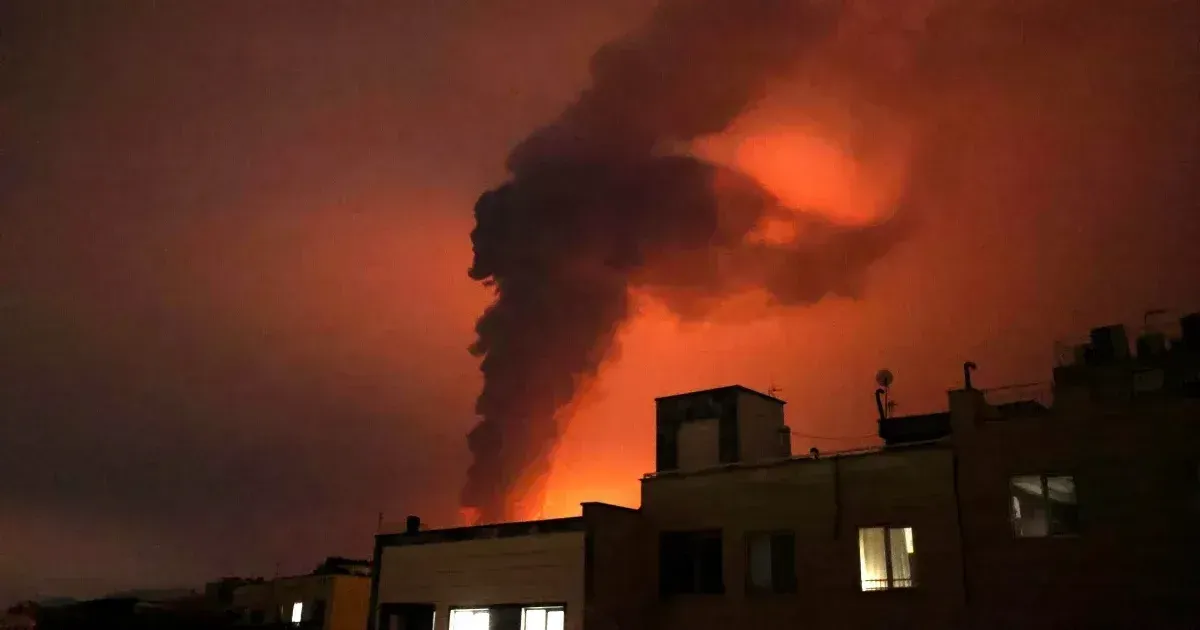
Pentagon officials redirected carrier strike groups from the South China Sea toward the Middle East, effectively stalling the long-planned military realignment toward Asia. Military planners confirmed that the escalating conflict with Iran required an immediate shift in naval and aerial assets. Defense analysts said the redeployment undermines years of strategic preparation designed to counter Beijing's regional influence. By April 12, 2026, the diversion had become a problem for the planned China summit as much as for regional Gulf security.
Carriers once dedicated to monitoring the Taiwan Strait are currently being refueled for operations in a different hemisphere. Satellite imagery reveals a surge in activity at logistics hubs in Guam and Okinawa as equipment is packed for westward transport. Strategic planners in Washington are struggling with the reality that a two-front military posture is increasingly difficult to sustain. Military readiness in the Pacific has dropped to its lowest level in three years. Beijing has already noted the reduction in American patrols near the Spratly Islands. Officials in the United States have not yet specified when these assets might return to their primary stations.
History suggests that Middle Eastern entanglements have a habit of derailing broader American foreign policy goals. President Barack Obama first announced the so-called pivot to Asia in 2011, promising to leave behind the wars in Iraq and Afghanistan. Successive administrations struggled to complete this transition as new crises emerged in the Levant and Eastern Europe. Recent hostilities with Iran have effectively terminated the remaining components of that 2011 strategy. Military spending is now being diverted toward expensive precision munitions used in the Iranian theater. Air Force wings previously assigned to the Pacific Command are now flying sorties over the Zagros Mountains. Command structures have shifted their daily briefings to prioritize Tehran over the South China Sea.
Pentagon Moves Pacific Assets to Counter Iran Threat
Logistically, the strain on the American supply chain is becoming visible at every level of the command. Cargo planes that were scheduled to deliver parts to Japan are being rerouted to bases in the United Kingdom and Cyprus. Naval commanders in the Pacific expressed concern that their area of responsibility is being hollowed out to support a war they did not plan for. Fuel reserves in the $800 billion defense budget are being consumed at an accelerated rate by long-range bomber missions. Intelligence assets that once focused on Chinese cyber activity are now tasked with tracking Iranian missile movements. The 7th Fleet has seen its operational capacity reduced by nearly 30 percent.
Diplomatically, the timing of the Iran conflict could not be worse for the White House. Xi Jinping is expected to use the upcoming summit to press for concessions on trade and regional security. Chinese state media has highlighted the American military's departure from the region as evidence of a fading security guarantee. Regional allies like Japan and Australia are reportedly seeking clarification on the status of joint exercises. Many of these exercises have been scaled back or canceled entirely. State Department officials are worried that the U.S. will enter the summit from a position of tactical distraction.
British Soil Supports Military Operations Against Iran
Across the Atlantic, 15 American military sites across the U.K. countryside have entered the spotlight. These bases are often obscured from public view behind highly secured perimeter fences in the rural British landscape. Most of these outposts carry the Royal Air Force designation, but they operate under the direct control of the American president. Facilities like RAF Croughton and RAF Lakenheath are critical for communications and strike capabilities against Iranian targets. Large stocks of bunker busters are being moved through these installations to prepare for strikes on fortified Iranian nuclear sites. The presence of a Burger King on these bases provides a small slice of American life for the thousands of personnel stationed there.
Technically, they are on British soil, and misleadingly most have “Royal Air Force” in their name. But in many respects, these military outposts are under the control of the U.S. president and commander-in-chief.
Diplomatic Friction Shadows Upcoming China Summit
Geopolitically, the focus on Iran has created a power vacuum that Beijing is eager to fill. Chinese naval vessels have increased their presence in the Philippine Sea since the American carrier departure. Military analysts in Taipei reported a marked increase in incursions into their air defense identification zone. Washington is finding it difficult to maintain its deterrent posture while its primary assets are thousands of miles away. The 2026 summit was supposed to be a moment of American strength in the Pacific. Instead, it is becoming a test of how much the United States is willing to cede to avoid a broader global conflict. Beijing continues to monitor the movement of every American destroyer.
Economic pressures are also mounting as the cost of the Iran war grows. The Pentagon requested an emergency appropriation of $4.5 billion to cover the first month of expanded operations. This request comes at a time when many in Congress are calling for fiscal restraint. Treasury officials are concerned that prolonged involvement in the Middle East will divert funds from domestic technology investments. High oil prices caused by the conflict are adding another layer of complexity to the economic outlook. Inflationary pressures could impact the American bargaining position during the trade portions of the summit. The United States debt continues to rise.
Operational Focus Shifts to 15 Bases in Britain
Strategic maps at the Pentagon show a clear tilt toward the west. Air bridges have been established between the continental United States and the 15 sites in Britain. These bases serve as the primary nodes for data gathered by surveillance drones over Iran. Technicians at RAF Menwith Hill are processing signals intelligence around the clock. The facility is a sea of golf ball-like radomes that house sensitive listening equipment. Information gathered here is sent directly to the National Security Agency. The 100th Air Refueling Wing is currently operating at maximum capacity.
London remains a key partner in these operations, though the political cost for the British government is rising. Prime Minister's questions have been dominated by inquiries into the extent of British involvement. Some members of Parliament are calling for a vote on the use of U.K. soil for American strikes. The British government has so far resisted these calls, citing the importance of the special relationship. Protesters have blocked the main gates at RAF Mildenhall on several occasions. Security forces have increased patrols along the perimeter. The base stays operational despite the disruption.
Strategic Focus Under Strain
Washington has spent fifteen years chasing a ghost in the Pacific while the ghosts of the Middle East refuse to stay buried. The collapse of the Asia pivot was not caused by Chinese brilliance but by American inconsistency. The evidence points to a superpower that lacks the discipline to ignore minor distractions in favor of existential threats. Iran is a regional nuisance, whereas China is a systemic rival. By allowing a war in the Persian Gulf to cannibalize assets meant for the Pacific, the Pentagon is effectively surrendering the 21st century to the Communist Party of China. This is a failure of grand strategy that no amount of bunker busters can fix.
The upcoming summit will be a funeral for the American Century if the president does not prioritize. Xi Jinping understands that time is on his side as long as the United States remains mired in the desert. We should be closing the 15 bases in the U.K. and moving those resources to the First Island Chain. The special relationship is a relic of 1945 that provides little value in a struggle for the South China Sea. If the administration continues to be reactive rather than proactive, the Pacific will belong to Beijing before the first shot is even fired in the Taiwan Strait. Strategy is about choice, and Washington has chosen poorly. Disastrous.