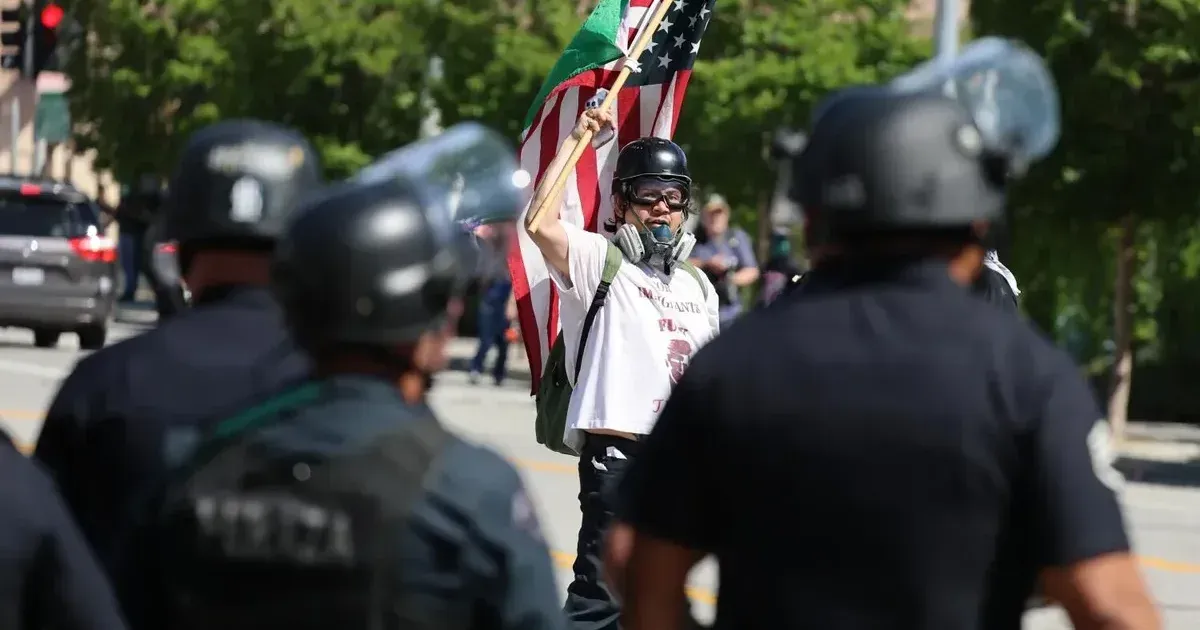
LAPD officers responded after Metropolitan Detention Center security personnel discovered hundreds of prohibited items scattered across the perimeter. Guards maintained their positions behind fortified glass while police moved to restore control around the building. By April 12, 2026, activists had targeted the downtown Los Angeles facility to voice opposition against ICE facility operations and federal immigration enforcement.
Reports from the scene indicate that the choice of projectiles was a deliberate attempt to mock the authority of federal agents. Organizers of the event aimed to disrupt standard operating procedures through unconventional tactics. Los Angeles Police Department officers arrived shortly after the first items cleared the fence. Uniformed personnel monitored the crowd for several hours before tensions escalated between participants and law enforcement. Officers eventually declared the gathering an unlawful assembly after protesters refused to clear the public sidewalk.
The Los Angeles Police Department issued an unlawful assembly order and made arrests during the Saturday protest outside the Metropolitan Detention Center. Records from the scene confirm that multiple individuals were taken into custody for failure to disperse. Police used loudhailers to communicate the dispersal order across the intersection of Aliso Street and Alameda Street. The crowd, however, remained defiant for nearly thirty minutes before tactical units began moving in to clear the area. The local response focused on the immediate logistics of public safety. Maintenance crews spent the morning of April 12, 2026, removing rubber and plastic objects from the roof and ventilation intakes.
Metropolitan Detention Center Security Breach
Federal facilities in major urban centers have seen a rise in creative obstruction techniques. Security at the Los Angeles site relies on heavy-duty fencing and surveillance, yet the lightweight nature of the thrown items allowed them to bypass primary barriers. Architectural features of the MDC include high-security glass and reinforced concrete designed to withstand much heavier impacts. These defenses performed as intended, though the visual optics of the protest presented a unique challenge for public relations staff.
Construction of the Metropolitan Detention Center was completed in 1988 to house federal detainees awaiting trial or sentencing. It sits in a high-traffic area of the Civic Center, making it a frequent target for political expression. Saturday's event saw a higher volume of debris than previous rallies held at the same location. Cleaning efforts required specialized equipment to reach the upper ledges of the facility where several items had become lodged. Fourteen individuals were processed by evening for various misdemeanors related to the disturbance.
Operational status inside the building stayed consistent throughout the afternoon. Staff members reported that no detainees were in the exercise yards during the peak of the projectile throwing. This ensured that no individuals in federal custody were harmed by the objects falling from the street level. Security protocols for the MDC are governed by federal guidelines that mandate a specific distance between protesters and the building envelope.
Los Angeles Police Department Response and Arrests
Tactical units from the Los Angeles Police Department used a containment strategy to prevent the crowd from spilling onto the nearby Hollywood Freeway. Officers in riot gear stood in formation while legal observers documented the interactions from the periphery. Command staff at the scene evaluated the risk to federal property before authorizing the use of force to clear the sidewalk. Most of the arrests occurred when small groups of protesters sat on the ground and linked arms to prevent police movement.
Uniformed officers used plastic zip-tie restraints to secure those who refused to comply with the dispersal order. Bus transport was staged nearby to move the arrested individuals to the Van Nuys jail facility for processing. Documents released by the LAPD show that the majority of those detained were residents of the greater Los Angeles area. Legal representation for several protesters arrived at the precinct within hours of the first bookings.
Judicial officers in Los Angeles County have previously ruled on the limits of First Amendment activities near federal buildings. Local statutes prohibit the throwing of any object at a structure, regardless of the object's nature or the intent of the thrower. This legal framework provided the basis for the unlawful assembly declaration. Crowds eventually thinned out by nightfall, leaving behind a heavy police presence that persisted into the early hours of Sunday morning.
Regional advocates for immigration reform have shifted toward more theatrical forms of protest in recent years. Traditional picketing and speech-making are frequently supplemented by performance art or high-visibility stunts designed to capture social media attention. Media coverage of the event highlighted the contrast between the gravity of federal detention and the absurdist choice of projectiles. Coverage of the facilities continues to focus on both their cost and the social impact of their operations.
National attention often settles on these flashpoints when traditional picketing transitions into unconventional resistance. Federal agents inside the MDC are tasked with maintaining a secure environment for $11 billion worth of annual processing infrastructure. The interaction between local law enforcement and federal mandates creates a complex legal environment for managing such protests. Every arrest made on Saturday will be reviewed by the District Attorney to determine if the charges meet the threshold for prosecution.
Local Policing Meets Federal Immigration
A professional police force has few established responses to a shower of rubber dildos. The absurdity of the Saturday protest in downtown Los Angeles exposes the deepening chasm between federal enforcement and urban activism. Law enforcement agencies are trained for bricks and bottles, not phallic novelties. By choosing projectiles that carry a high degree of social stigma and humor, the protesters effectively neutralized the stern, militarized optics the LAPD usually projects. It is a tactical shift toward the carnivalesque that leaves authorities looking foolish rather than powerful.
While the arrests provide a veneer of order, the real message is clear. Federal authorities are being mocked in their own backyard. The protest was not about changing policy through dialogue. It was about humiliation as a political tool. The use of adult toys turns the gravity of a federal detention center into a joke, forcing the Los Angeles Police Department into a role where they appear as the humorless protectors of the ridiculous. If immigration advocates continue to abandon traditional protest for these Dadaist displays, the federal government faces a challenge that cannot be solved with riot shields.
They are losing the narrative battle through pure, unadulterated weirdness. Ridicule is often more corrosive to institutional power than violence. The state has no strategy for comedy.