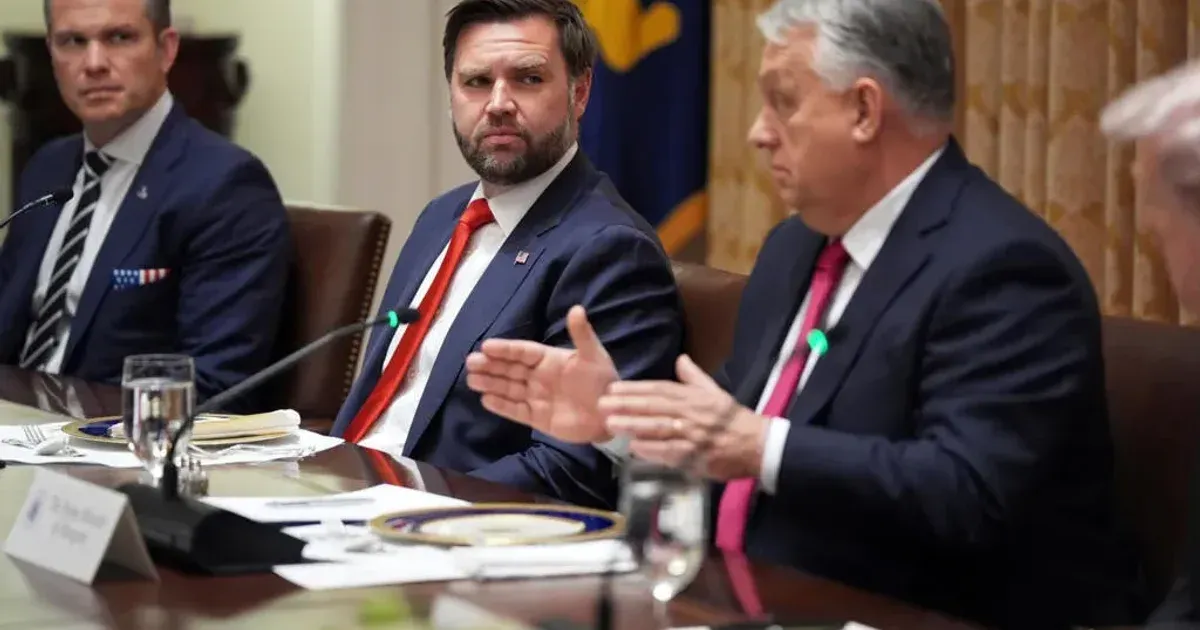
JD Vance is using a Budapest visit to signal open political alignment with Viktor Orban before a tight Hungarian election. The trip places American conservative politics inside a European campaign already shaped by Ukraine, migration and disputes with Brussels. The visit landed on April 7, 2026, with Orban facing pressure from a unified opposition led by Peter Magyar. For Washington, the appearance is more than a courtesy call because it ties U.S. diplomacy to one side of an allied country's vote.
Vance Arrives for Budapest Security Talks
Security arrangements intensified throughout the early afternoon as Vance met with Hungarian officials to discuss regional stability. These talks covered a range of topics, with specific focus on the ongoing conflict in Ukraine and energy security. Hungary has frequently positioned itself as a dissenting voice within NATO regarding military aid to Kyiv. Vance and Orban share a skeptical view of open-ended financial commitments to the Ukrainian defense effort.
Bilateral discussions also centered on the $2.4 billion in trade agreements currently under review between the two nations. Vance suggested that a continued Orban premiership would enable smoother economic cooperation. Business leaders in both countries have been monitoring the election closely for signs of regulatory shifts. Stability in the Danube region remains a priority for American investors seeking long-term manufacturing hubs.
“I am here to stand with a leader who understands that national strength begins with the family and ends with secure borders,” Vance told reporters shortly after his arrival at the airport.
Fidesz Party Faces Electoral Pressure
Fidesz party organizers have leveraged the Vance visit to strengthen their image as a globally influential movement. Television networks controlled by the state have broadcast loops of Vance and Orban shaking hands in front of the Hungarian flag. Such imagery connects with rural voters who view Orban as a protector of traditional identity. Opposition leaders argue that the visit distracts from domestic issues like inflation and healthcare underfunding.
JD Vance has long praised the Hungarian model of governance, particularly its pro-natalist social policies. He has frequently cited Budapest as a template for how conservative governments can use state power to achieve cultural objectives. This ideological affinity has transformed the US-Hungary relationship from a standard diplomatic partnership into a symbolic alliance for the global right. Supporters in the United States view Orban as a pioneer of the illiberal democratic framework.
Strategic Shift in Transatlantic Relations
Transatlantic relations are undergoing a fundamental transformation as Washington pivots toward specific European partners while bypassing traditional power centers like Paris or Berlin. Vance's presence in Budapest highlights a preference for sovereignist leaders over Euro-federalist bureaucrats. This strategy seeks to build a coalition of like-minded nations within the Western alliance. Hungary is the primary anchor for this new regional network.
Ukraine policy remains the most volatile point of contention in these discussions. Vance has consistently argued that the United States must prioritize its own border over those of Eastern European nations. Orban has echoed these sentiments, frequently blocking or delaying EU aid packages to the Zelenskyy government. Their shared stance on the conflict has isolated them from several other NATO members who favor increased military intervention.
Brussels, however, has expressed private concern regarding the timing of the Vice President's trip. Officials in the European Commission suggest that high-profile visits during an active election cycle could be interpreted as interference. Previous US administrations typically avoided such overt displays of partisanship in allied elections. This departure from diplomatic tradition marks a new phase in American foreign policy under the current executive branch.
Opposition candidate Peter Magyar has dismissed the visit as a desperate attempt by Orban to look relevant on the world stage. Magyar's campaign focuses on allegations of systemic corruption within the Fidesz inner circle. Thousands of protesters gathered in Liberty Square last week to demand transparency in government contracts. These domestic grievances contrast sharply with the polished diplomatic rhetoric flowing from the Prime Minister's office.
Critics in the US Senate have warned that aligning too closely with Orban risks alienating other European allies. Vance's supporters argue that the vice president is pursuing a realism-based foreign policy. They contend that recognizing the interests of individual nations is more effective than adhering to a monolithic Western consensus. Sunday's election results will determine whether this particular vision of the alliance gains further traction in the region.
Regional security dynamics will shift sharply if the opposition manages to unseat Viktor Orban this weekend. A new government in Budapest would likely seek to repair ties with the European Union and adopt a more conventional pro-Ukraine stance. Such a change would remove a major obstacle to collective EU decision-making. Vance's visit is partly intended to prevent this outcome by giving Orban an electoral boost at a critical moment.
Vance's schedule includes a private dinner with Hungarian intellectuals and policy strategists. These meetings aim to solidify the intellectual foundations of the nationalist movement across the Atlantic. Collaborative efforts between American and Hungarian think tanks have increased fivefold over the last three years. The network provides a pipeline for policy ideas ranging from media regulation to judicial reform.
Election Diplomacy Carries a Cost
The risk extends beyond Orban losing after receiving public support from Washington. It is that future Hungarian governments may treat the visit as proof that the United States preferred a faction over the relationship. That makes the trip a test of ideological diplomacy. Vance may strengthen Orban in the short term, but he also narrows the room for neutrality if Hungary chooses a different political path.