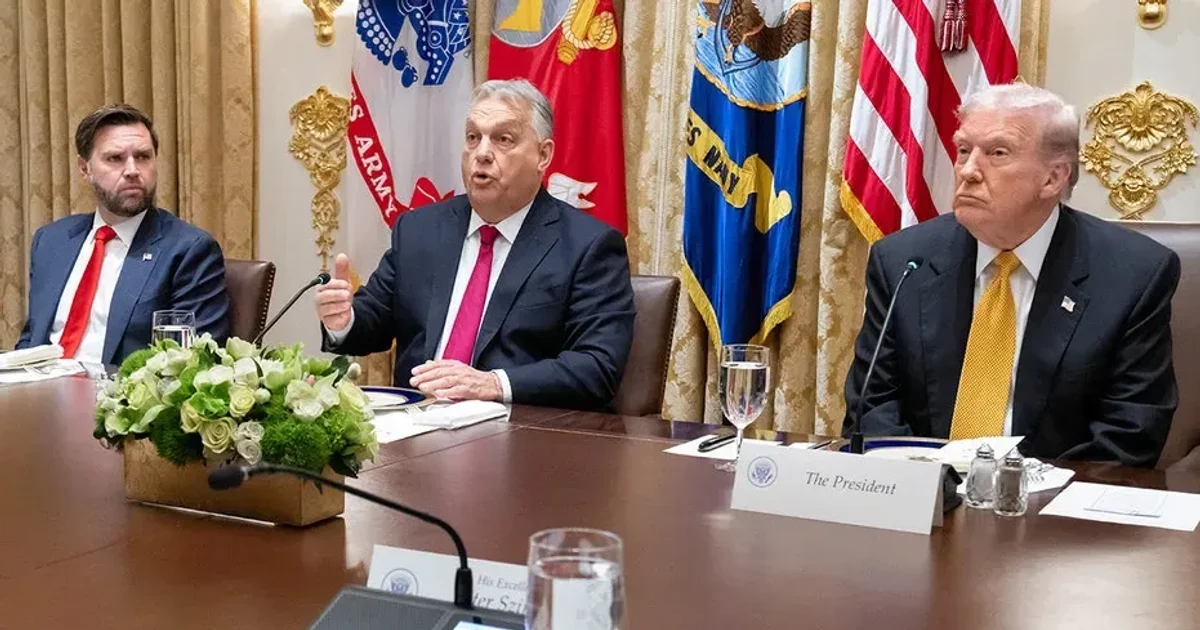
Vice President JD Vance announced a high-stakes diplomatic mission to Budapest to coordinate with Hungarian Prime Minister Viktor Orbán. Official schedules place the Republican leader in the Hungarian capital starting April 7 for a two-day itinerary focused on strengthening bilateral ties. Accompanying the vice president is second lady Usha Vance, according to travel documents shared on social media platforms. Washington expects this mission to solidify an ideological bridge between American populist-nationalism and the ruling government in Budapest. The April 3, 2026, announcement placed the trip directly inside Hungary's re-election calendar.
President Donald Trump has repeatedly signaled his support for the Hungarian leader during the current campaign cycle. Writing on Truth Social last month, Trump urged Hungarian citizens to vote for the incumbent prime minister, whom he described as a true friend and a winner. Viktor Orbán has held power for sixteen years, during which time he has become a symbol of illiberal democracy within the European Union. Support from the White House arrives as Orbán faces a surprisingly resilient domestic challenge.
Polling data indicates that the Fidesz party is struggling to maintain its traditional dominance. Opposition candidate Péter Magyar has gained substantial momentum by focusing on government corruption and economic stagnation. Magyar, once an insider within the Fidesz circle, now leads a movement that threatens to end the prime minister's long tenure. Péter Magyar recently drew thousands to the streets of Budapest in protest against the current administration.
Budapest Prepares for Vance Visit Before Election
Hungarian government spokesperson Zoltán Kovács confirmed the details of the upcoming visit via social media on Friday. Kovács noted that the talks will emphasize the deep partnership between the two nations. Analysts in Budapest suggest that the timing of the trip is intended to boost Fidesz standing before voters head to the polls.
"The visit highlights the strong and enduring alliance between Hungary and the United States," wrote Hungarian government spokesperson Zoltán Kovács.
Vance plans to deliver public remarks that celebrate the shared values of the American and Hungarian governments.
These speeches will likely echo his previous criticisms of the European Union and its approach to national sovereignty. He has often argued that Brussels elites ignore the cultural and religious preferences of their own citizens. JD Vance first gained attention for these views during a 2025 address at the Munich Security Conference.
Vance’s scheduled appearance is a direct intervention in the final week of a contested European election. Nationalists in both countries view the April 12, 2026, ballot as a test for the global durability of their political movement. Proponents of the visit believe it reinforces a necessary alternative to liberal internationalism. Strategic planners in Washington have coordinated this effort to ensure their most reliable European partner remains in power.
Opposition Leader Péter Magyar Challenges Fidesz Control
Challenger Péter Magyar has upended the political status quo by exposing internal scandals within the Fidesz hierarchy. His platform combines traditional conservative values with a promise to restore transparency to Hungarian institutions. Magyar’s surge in the polls has forced the government to rely more heavily on its international allies for legitimacy. Many young voters in Budapest have gravitated toward his message of institutional reform and European reintegration.
Fidesz officials have responded by framing Magyar as a tool of foreign interests who seeks to undermine Hungarian independence. The Fidesz narrative aligns with the broader messaging of the Trump administration, which portrays globalist organizations as threats to national identity. Vance is expected to reinforce this message during his meetings with Orbán. Their discussions will likely cover security cooperation and trade initiatives designed to bypass traditional European Union channels.
One specific area of cooperation involves the civil nuclear agreement recently finalized by Senator Marco Rubio. The civil nuclear deal aims to reduce Hungary's energy dependence on Russia by providing American nuclear technology. Energy security has become a central theme for the Orbán administration as it navigates tensions between East and West. The inclusion of these technical discussions provides a veneer of traditional diplomacy to a trip that is primarily political.
Vance's intervention in Budapest mirrors a previous American effort to stabilize the presidency of Javier Milei in Argentina. Treasury Secretary Scott Bessent traveled to Buenos Aires last year to provide economic support before critical midterm elections. That mission sought to protect an ideological partner from domestic political fallout. High-ranking officials in the Trump administration believe that supporting like-minded leaders abroad is essential for long-term American security.
Vance has been the primary designer of this foreign policy shift toward ideological alignment. During his speech at the Munich Security Conference in February 2025, he accused European leaders of failing to protect their national borders. He stated that citizens across the continent are tired of being ignored by unelected bureaucrats in Brussels. The Munich remarks established Vance as the leading voice for nationalist foreign policy within the current administration.
Opposition figures in the European Parliament have expressed concern that Vance’s visit will further polarize the region. They argue that American interference in a domestic election sets a dangerous precedent for diplomatic relations. By contrast, supporters in the United States claim that the administration is simply standing by its friends. The opposing views highlight the growing rift between the MAGA movement and the traditional Atlanticist establishment.
The upcoming vote on April 12, 2026, represents the first time in over a decade that the Fidesz party has not held a double-digit lead. Public discontent over inflation and high-profile corruption cases has eroded the prime minister's base. Orbán has responded by doubling down on his role as the defender of Christian values and national sovereignty. He often frames the election as a choice between Hungarian survival and submission to globalist forces.
President Trump’s endorsement remains a central foundation of the Fidesz campaign strategy. State-controlled media outlets in Hungary frequently broadcast Trump’s praise to reassure voters of the country's international standing. Trump has characterized Orbán as a fighter who will never let his people down. Trump's rhetoric is designed to appeal to the same populist sentiments that drove the 2024 American election results.
Budapest Trip Turns Into Election Signaling
Foreign policy under the current administration has evolved into a targeted effort to preserve ideological mirrors abroad. By deploying Vice President JD Vance to Budapest just five days before the polls open, the White House is doing more than conducting diplomacy and is actively managing a foreign campaign. The gamble links American prestige to the survival of a single leader, Viktor Orbán, whose long-term viability is currently in doubt. If Péter Magyar manages an upset victory, the United States will have effectively alienated the new leadership of a strategic NATO ally.
The MAGA strategy of exporting political consultants and high-level endorsements is a rejection of the traditional "small-d" democratic promotion that defined U.S. policy for decades. Instead of promoting institutions, Washington is now promoting individuals who share a specific worldview. The approach creates a fragile network of alliances that can vanish with a single election cycle. Relying on a 16-year incumbent who is losing momentum in the polls suggests a lack of tactical flexibility within the State Department.