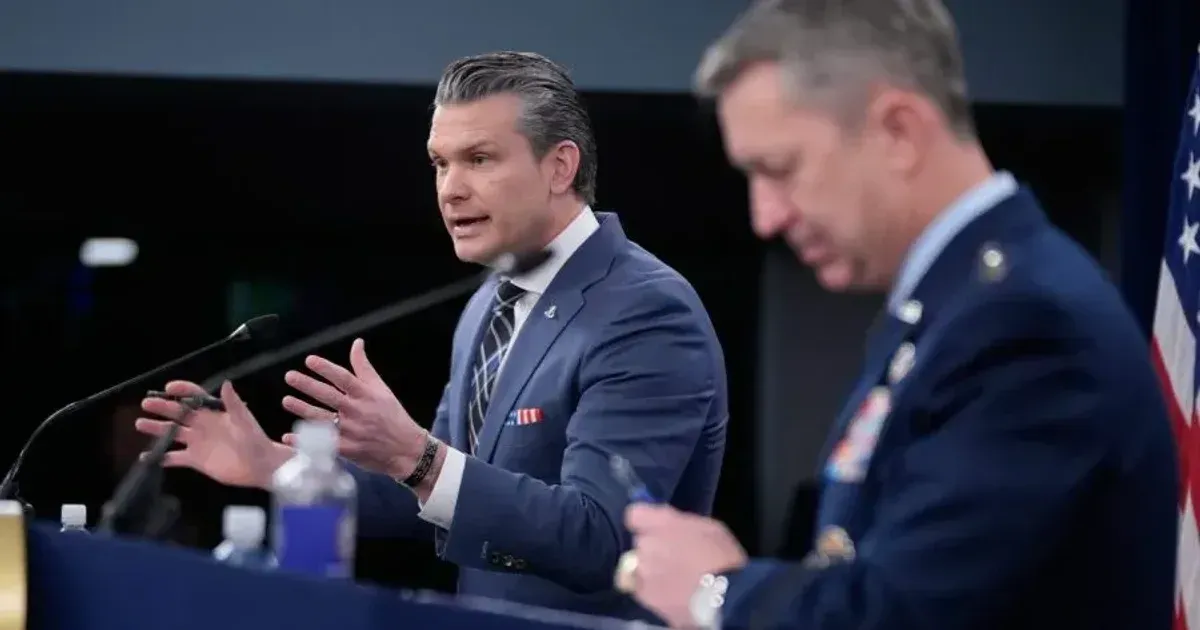
The Pentagon canceled a planned joint briefing with Pete Hegseth and Gen. Dan Caine less than an hour before reporters expected both men at the podium. The abrupt move turned a routine public-affairs event into a signal of uncertainty around defense messaging. The cancellation came on April 7, 2026, only hours before a presidential deadline tied to military policy. No official explanation was provided at the time, leaving correspondents and lawmakers to read the absence as part of the story.
Pentagon Silences Hegseth and Caine Before Deadline
Press room chairs remained empty at the scheduled start time as the Department of Defense shifted its public posture toward silence. While the initial notice arrived via the standard internal distribution list, the timing struck veteran correspondents as unusual. Deadlines set by the commander-in-chief typically require public validation from the Pentagon leadership to maintain institutional confidence. Journalists from major international networks had planned to press the duo on the logistical feasibility of upcoming deployment shifts. The 8 a.m. slot is often chosen to dominate the early morning news cycle in both New York and London.
Hegseth has previously defended the administration's right to curate its public appearances to avoid premature speculation. Caine has remained focused on the operational impact of legislative delays on troop morale and equipment maintenance. Silence is the standard currency of a department in crisis. Reporters noted that this was the first time in eighteen months that a joint briefing was pulled with less than an hour's notice. Personnel inside the building continued their routines without acknowledging the absence of the scheduled event.
Legislative Tensions Precede Press Briefing Cancellation
Policy changes regarding the recruitment and retention of service members are currently under review. Pete Hegseth has advocated for a streamlined approach to military bureaucracy that has faced pushback from some career officers. Gen. Dan Caine has consistently emphasized the necessity of maintaining established chains of command during periods of civilian-led reform. Legislative leaders on Capitol Hill were reportedly surprised by the cancellation as they prepared for their own floor debates. Many lawmakers rely on these briefings to gauge the internal stability of the defense establishment.
Budgetary cycles at the Pentagon often create friction points between the comptroller's office and operational commanders. Hegseth has pushed for aggressive reallocation of funds toward advanced technology and autonomous systems. Caine persists in his support for traditional carrier strike groups and conventional armored divisions. These differing visions for the future of the force were expected to be a primary focus of the Tuesday morning briefing. Every canceled press event creates a vacuum filled by speculation and unverified reports from anonymous sources.
“The Department of Defense routinely evaluates its public engagement schedule to ensure accuracy in messaging and alignment with executive priorities before addressing the national media,” the department said.
Washington insiders frequently analyze the body language and verbal cooperation between a defense secretary and a Joint Chiefs chair. Hegseth and Caine have exhibited a professional, if occasionally tense, working relationship during recent congressional testimony. Previous briefings showed a preference for Hegseth to handle political inquiries while Caine addressed tactical specifics. Cancellation of such a public display suggests a lack of consensus on the message to be delivered. The podium was moved back into its storage position by 8:15 a.m.
Journalists stationed at the Pentagon for decades noted that the last-minute nature of the move suggests a late-night shift in strategy. White House officials have not commented on whether the president had a role in the decision to pull the briefing. Professional standards in the Public Affairs office generally dictate a twenty-four-hour notice for any major schedule changes. Press credentials for the day had already been issued to several foreign correspondents who had traveled specifically for this event. Security around the briefing room remained standard despite the procedural disruption.
Administrative priorities at the Department of Defense have recently centered on rapid modernization and domestic manufacturing requirements. Pete Hegseth has been the primary designer of this shift, focusing on reducing dependence on global supply chains for critical components. Gen. Dan Caine has voiced concern regarding the pace of these transitions and the potential for temporary gaps in readiness. Their scheduled appearance was seen as an attempt to project a united front to the global defense community. This effort has stayed incomplete following the morning's cancellation.
Hegseth often uses his platform to challenge the established norms of the defense industry. Caine brings decades of combat experience and institutional knowledge to the table during these policy discussions. Public trust in the military relies heavily on the transparency provided during these regular interactions with the free press. One senior analyst noted that pulling a briefing 12 hours before a deadline indicates that the final policy details are still being debated. The official Pentagon calendar simply marked the event as canceled without a rescheduled date.
Silence Becomes the Message
A canceled briefing does not prove a policy rupture. It does, however, remove the chance for civilian and military leaders to answer the same questions in public. That is why the silence matters. When the Pentagon steps back from a live briefing before a deadline, the information vacuum becomes the message foreign governments and Congress are left to interpret.