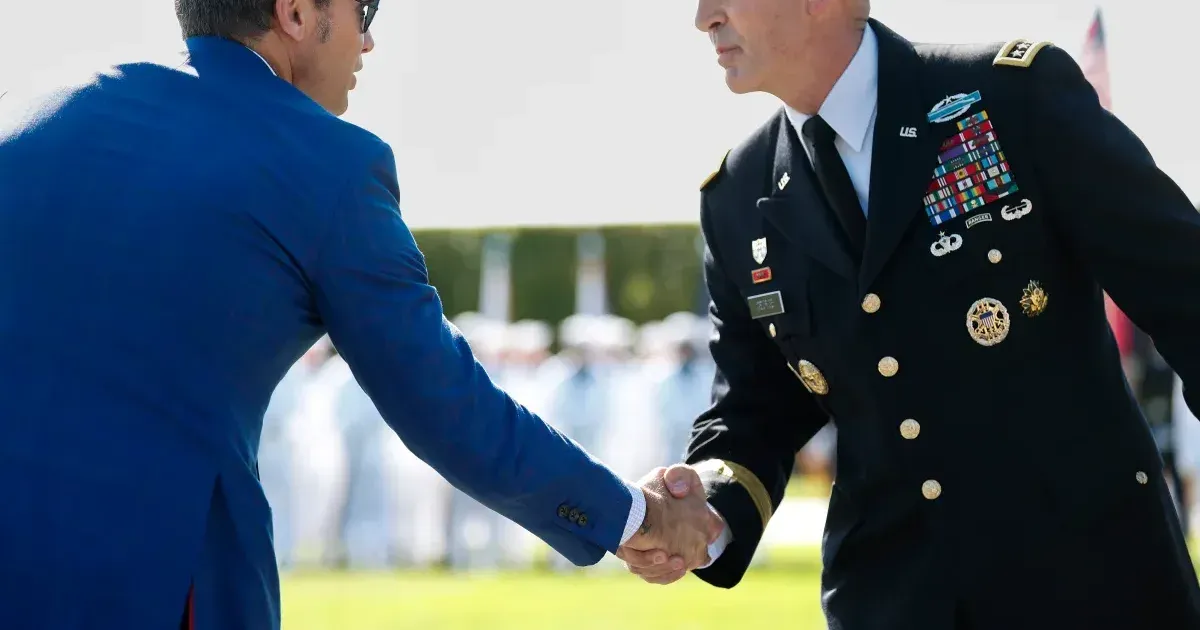
Defense Secretary Pete Hegseth's decision to push Army Chief of Staff Gen. Randy George out of the job was not just another rotation at the top of the Pentagon. George left well before the usual end of a four-year term, during a period of war pressure, Middle East deployments, modernization demands and growing scrutiny of how Hegseth is reshaping the senior officer corps.
Civilian leaders have authority over military appointments. The authority itself is not in dispute. What remains disputed is whether the authority is being used to improve command performance, settle internal power fights or screen senior officers for political comfort. The Army cannot treat the difference between performance and political comfort as abstract. It affects planning, promotions, advice and the willingness of officers to deliver unwelcome assessments.
Abrupt change at the top of the Army
George had been Army chief during a difficult stretch for the service. Recruiting problems, force-structure changes, air-defense demand, Pacific planning, munitions pressure and the Army Transformation Initiative all required steady management. His removal, along with other senior Army departures, forced commanders to read a new political signal while still carrying out normal operational work.
The Army is not a campaign operation that can swap leaders without institutional drag. Procurement programs, training models, readiness reviews and personnel systems run through long chains of command. When a service chief is removed suddenly, subordinate leaders do not only ask who signs the next memo. They ask which priorities remain protected and which judgments have become risky.
Hegseth framed the move as new direction
Hegseth and Pentagon officials have pointed to the need for leadership aligned with the president's and secretary's vision. Alignment with elected leadership can be a legitimate argument. Elected civilian leadership sets policy, and uniformed leaders are expected to execute lawful orders.
The alignment argument creates a problem if it is not backed by a clear performance explanation. Alignment can mean strategic coherence. It can also sound like a loyalty filter. In a healthy civil-military system, a service chief should follow lawful direction while still giving candid professional advice. If senior officers think candor will be read as resistance, the Pentagon may become quieter just when civilian leaders most need warnings.
Wartime timing raises the stakes
George was removed while U.S. forces were under heavy regional pressure tied to the Iran conflict and broader Gulf instability. Army units, air-defense assets, logistics networks and planners were all part of that environment. A leadership change during such a period does not automatically damage operations, but it does raise the burden on the Pentagon to explain why the change was necessary.
Allies watch these personnel decisions. So do adversaries. A service-chief removal can be read as normal civilian control, evidence of internal disorder or a sign that political leaders are dissatisfied with professional advice. The interpretation depends heavily on whether the department can offer a credible rationale.
Congress has a legitimate oversight role
Lawmakers have already pressed Hegseth on the George removal and other senior-leader decisions. Lawmakers' questions are not ceremonial. Congress funds the Army, confirms senior officers, oversees readiness and has a constitutional role in war powers. It is entitled to ask whether a dismissal reflects performance, policy disagreement, promotion disputes, culture-war priorities or personal rivalry inside the department.
Any nominee or acting leader will have to answer practical questions, not only political ones. Recruiting targets, modernization deadlines, Army air-defense shortages, ammunition production, troop rotations and the effect of command churn all matter more than slogans about toughness. The service needs leaders who can explain what will continue, what will change and why.
Promotion fights add another pressure point
George's ouster also sits beside broader controversy over senior-officer promotions. Reports that Hegseth blocked or delayed some promotion lists, including officers from groups he has criticized in diversity debates, have intensified concern that the personnel system is being used as a political sorting tool. The Pentagon disputes biased motives, but opacity creates its own damage.
Promotion systems work only if officers believe standards are knowable. If the standard becomes personal approval from political leaders, ambitious officers learn to manage appearances instead of risk. A personal-approval standard weakens military advice over time. Such damage may not appear as open defiance or public scandal. It may be a quieter officer corps that avoids saying what leaders do not want to hear.
Civilian control requires discipline
Civilian control is a constitutional safeguard, but it is not a substitute for judgment. Used well, it keeps the armed forces accountable to elected authority. Used poorly, it can turn the top ranks into a stage for political signaling.
Hegseth has the authority to remake parts of the Army's leadership. He also has to show that the changes improve readiness, strategy and trust inside the force. If the George removal leads to better direction and clearer accountability, the Pentagon can defend it. If it produces churn, fear and flatterer incentives, the country will have traded professional candor for political comfort at a dangerous moment.