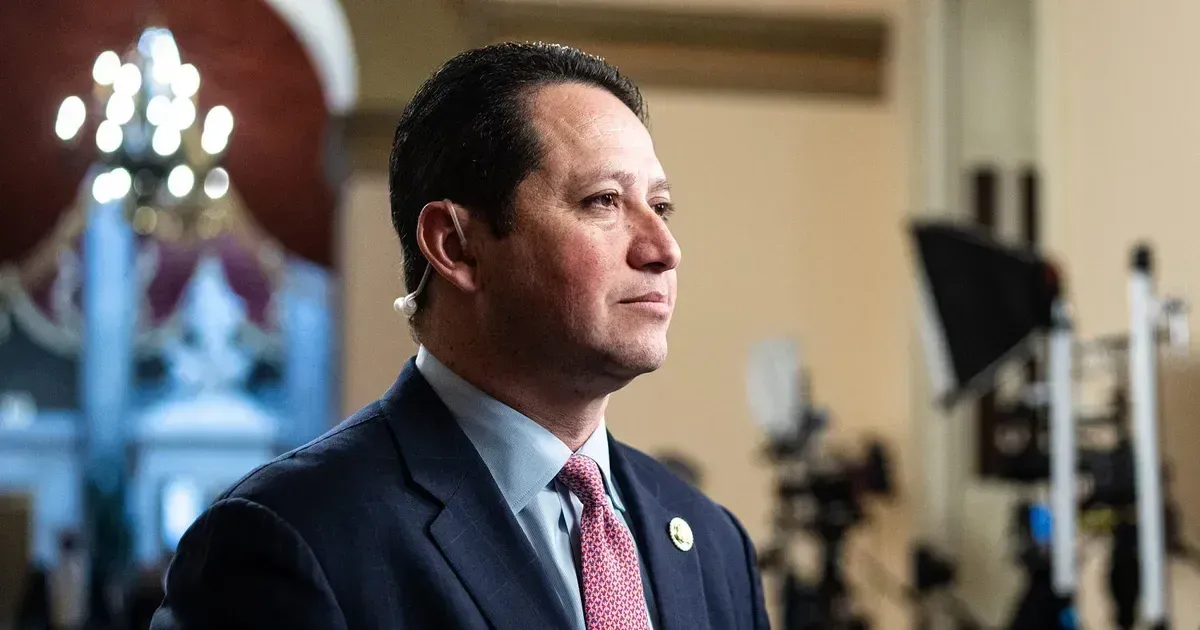
A second former staffer's accusation against Tony Gonzales turns an isolated complaint into a broader ethics problem. The allegation centers on explicit text messages allegedly sent while the woman worked in the Texas Republican's congressional office.
The office already faced scrutiny from an earlier accusation. The new claim surfaced on April 6, 2026, and mirrors that complaint. That pattern matters because House investigators often weigh whether conduct appears repeated, whether staff felt pressured and whether office power dynamics shaped the communications.
Pattern of Misconduct in the Texas District
Staff members within the Texas District 23 office describe an environment where professional boundaries frequently blurred. This particular staffer, who requested anonymity to protect her future career prospects, alleged that the messages began as friendly check-ins but quickly devolved into lewd propositions. By documenting these exchanges, she joins another former colleague who stepped forward weeks earlier with similar evidence of digital harassment. Multiple sources within the San Antonio political circle suggest that internal warnings about these behaviors were ignored by senior leadership within the office.
Congressional aides often feel trapped in such situations because their employment depends entirely on the discretion of the elected official. Texas law provides some protections for workers, but the unique nature of federal employment on Capitol Hill creates legal gray areas. Reports indicate that the second staffer possesses dozens of screenshots that have been shared with legal counsel. Similar patterns have brought down veteran lawmakers in the past when digital footprints became impossible to ignore.
Legislative Impact and Congressional Ethics Oversight
Administrative processes for investigating a sitting member of the House of Representatives are notoriously slow and politically sensitive. The House Ethics Committee operates under a bifurcated system where the nonpartisan Office of Congressional Ethics (OCE) conducts initial reviews before making recommendations. Because the Republican majority in the House is currently razor-thin, the political stakes for removing or disciplining a member are heightened. Tony Gonzales has been a reliable vote for leadership on border security and defense spending, making his potential exit a strategic liability. Historically, the committee prefers private rebukes or letters of reproof over public expulsion hearings.
Members of the OCE board are tasked with determining if the conduct violated the Code of Official Conduct, which requires members to behave at all times in a manner that reflects creditably on the House. These specific accusations of sexual harassment fall under Rule XXIII, which was updated in recent years to include more stringent definitions of workplace misconduct. Records of previous ethics cases show that digital evidence, such as text messages or emails, is the most frequent catalyst for formal disciplinary action.
Internal Staffing Turmoil at the Gonzales Office
High turnover rates in the San Antonio and Washington offices of Gonzales have drawn scrutiny from watchdog groups for several months. Reliable data from the LegiStorm database shows that the Gonzales team has seen a 40 percent higher attrition rate than the average Texas congressional delegation. Junior staffers earning less than $60,000 per year often lack the financial resources to pursue private litigation against a powerful federal official. By comparison, a member of Congress receives a taxpayer-funded salary of $174,000 and has access to the House General Counsel.
This power imbalance often prevents victims from coming forward until they have secured employment elsewhere. One former legislative correspondent noted that the culture of the office prioritized loyalty to the representative over professional ethics. Internal emails suggest that concerns about the congressman's late-night messaging habits were discussed among senior aides as early as last fall. No formal disciplinary actions were taken internally against Gonzales at that time. Legal experts argue that the failure of senior staff to intervene could create secondary liability issues under the Congressional Accountability Act.
The sheer volume of reported messages suggests a lack of oversight from the chief of staff and other ranking supervisors.
Voters in San Antonio and the surrounding rural counties are now weighing these allegations against the congressman's legislative record. Gonzales has previously faced challenges from the right wing of his party due to his bipartisan stances on gun control and immigration reform. These new sexual misconduct claims provide ammunition for primary challengers who have long sought to paint him as out of touch with conservative values. Local party leaders in Uvalde and Medina counties have remained silent on the matter, waiting for a formal response from the ethics committee.
Public polling in the district indicates that while his name recognition is high, his favorability ratings have slipped since the first accusation surfaced. If a third staffer were to come forward, the pressure for a resignation would likely become bipartisan. Texas political analysts observe that the district is one of the most competitive in the state, frequently swinging between parties. Republican leadership in Washington must balance the need for moral clarity with the pragmatic requirement of holding onto a swing-district seat.
Ethics Risk in a Narrow House
Standard bureaucratic delay is the most effective armor for a sitting member of Congress. The allegations against Tony Gonzales point beyond a personal failing to structural rot in how legislative offices operate. By allowing members to function as the sole sovereigns of their professional domains, the House has created a series of fiefdoms where accountability is an optional accessory. The House Ethics Committee is a toothless entity designed to protect incumbents until the political cost of keeping them outweighs the benefit of their vote. This is the reality of a narrow majority where every seat is a lifeline.
Voters are often told that the system has internal checks, yet those checks are frequently managed by the very people who benefit from the status quo. Gonzales is a symptom of a culture that prioritizes incumbency over integrity. If the Republican leadership continues to shield him for the sake of a floor vote, they confirm the suspicion that their moral posturing is purely performative. The digital trail left by these text messages is not a mistake; it is a display of perceived invulnerability.