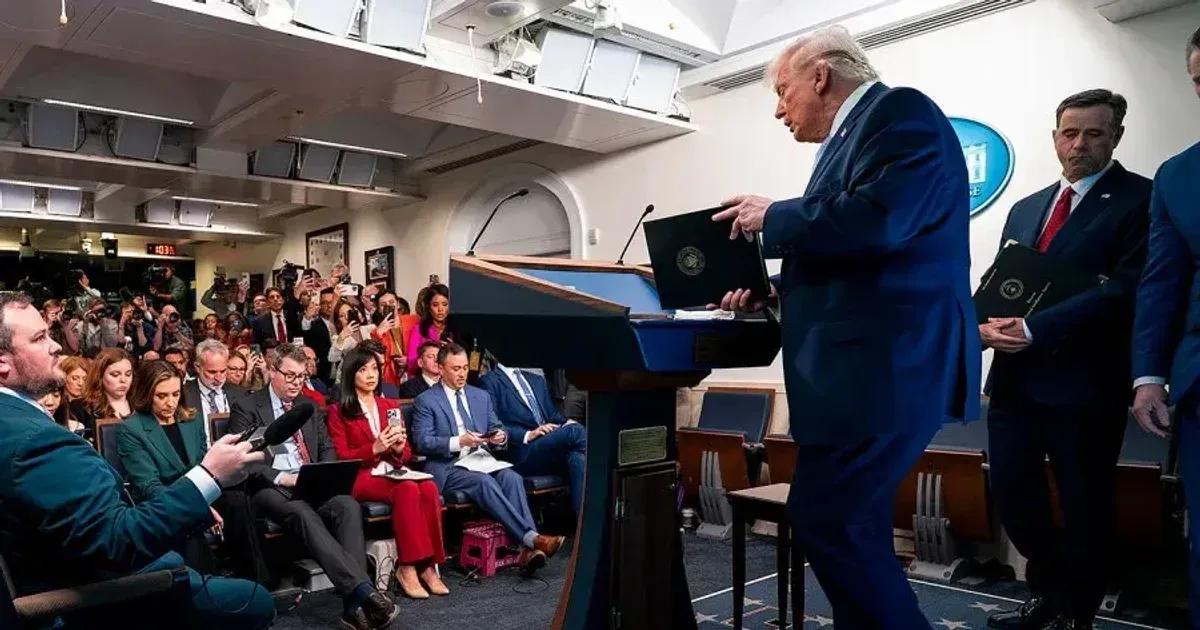
Washington is using a hard deadline to keep pressure on Tehran while trying to frame the next phase as Iran's choice. Donald Trump tied the warning to possible infrastructure strikes, a rescued U.S. airman and a narrowing diplomatic window.
The briefing on April 7, 2026, came with military claims, political theater and market anxiety moving at the same time. Any strike plan involving power, fuel or communications targets would carry consequences beyond the negotiating table.
Defense Secretary Pete Hegseth Details Airman Recovery
Defense Secretary Pete Hegseth joined the president to provide tactical specifics of a high-stakes extraction that occurred deep within Iranian territory. A lone airman had been forced to eject from a fighter jet after encountering advanced surface-to-air missile systems near the border. Search and rescue teams navigated complex terrain and avoided detection by local paramilitary groups to reach the pilot. Hegseth noted that the operation required seamless coordination between special operations forces and aerial surveillance assets. This specific mission validated recent investments in stealth recovery technology.
Recovery efforts relied on intelligence gathered from regional allies and electronic signals interception. While initial reports from Tehran suggested the pilot had been captured, Hegseth confirmed during the briefing the airman is now in American custody at an undisclosed location. Hegseth emphasized that the capability to retrieve personnel from hostile environments is a foundation of current U.S. air doctrine.
Trump Sets Tuesday Night Infrastructure Strike Deadline
Washington is now braced for the expiration of the Tuesday evening deadline set by the White House. Infrastructure targets under consideration include the gas pipelines and telecommunications hubs that sustain the Iranian economy. President Trump made it clear that the window for negotiation is closing rapidly. Iranian officials have yet to offer a public counterproposal that meets the demands for nuclear transparency and the cessation of regional proxy support. The absence of a diplomatic breakthrough increases the likelihood of a large air campaign, even as later Tehran peace efforts complicated the public timeline.
Financial markets reacted with volatility as the Tuesday deadline approached. Oil prices fluctuated based on speculation regarding the Strait of Hormuz and potential Iranian retaliation against energy shipments. White House aides spent the afternoon briefing congressional leaders on the potential for domestic fuel price increases. Military assets in the Persian Gulf have moved into strike positions to ensure immediate execution if the order is given. The recovery of the downed American pilot followed a series of aerial skirmishes earlier in the month.
“God wants to see people taken care of,” Trump said.
Rescue Mission Details Reveal Iranian Air Defense Gaps
Iranian air defenses failed to intercept the rescue teams, a fact that military analysts believe will influence the upcoming strike plan. The ability of U.S. forces to penetrate deep into the interior without meaningful resistance suggests that Tehran may have overestimated its defensive capabilities. Secretary Pete Hegseth hinted that the data gathered during the rescue is currently being used to refine the target list for tomorrow. Intelligence officers are looking for specific vulnerabilities in the command and control architecture of the Iranian Revolutionary Guard Corps.
Regional observers are watching the reaction of neighboring countries that may be caught in the crossfire. Some Gulf nations have expressed private concerns about the environmental impact of striking oil refineries and chemical plants. Despite these worries, the Donald Trump administration maintains that the responsibility for any civilian suffering lies solely with the leadership in Tehran. The Pentagon general staff has been tasked with minimizing collateral damage, though the nature of infrastructure strikes makes this difficult. A single failure in the Iranian electrical grid could trigger a humanitarian crisis during the upcoming summer months.
A successful rescue prevents the Donald Trump administration from facing a hostage crisis that could have paralyzed foreign policy. Tehran must choose between a negotiated settlement and the systematic dismantling of its industrial base.
Religious Rhetoric Shapes the War Case
The White House invoked religious reasoning as God became central to the administration's justification for the escalating war. Donald Trump told reporters that the conflict serves a higher purpose beyond mere geopolitical influence. The president linked the survival of the rescued pilot to divine intervention and suggested that the upcoming military actions align with moral imperatives. Using the briefing room as a pulpit, he argued that the removal of the current Iranian regime is a necessary step for global peace.
Critics of the administration noted that this religious rhetoric shifts the focus away from the human cost of targeting civilian infrastructure. Religious leaders in the United States remain divided on whether a preemptive strike on power grids can be classified as a just war. The Donald Trump administration has largely ignored these theological debates, focusing instead on the populist appeal of the president's message. Support for the war among the president's core constituency appears to have solidified following these remarks.
Military logistics continue to flow into the region at an accelerated pace. Transport planes carrying munitions and support personnel have been landing at bases in Qatar and Bahrain throughout the night. Hegseth's team has ensured that all combat wings are at peak readiness for the Tuesday deadline. Command centers are monitoring satellite imagery for any signs of Iranian mobilization or the movement of mobile missile launchers.
Escalation Risk After the Deadline
Invoking divine will to justify the destruction of a nation's power grid is a move that echoes the crusader rhetoric of centuries past, yet Donald Trump uses it to mask a cold, calculated geopolitical squeeze. The administration is betting that the Iranian regime is a hollow shell that will crumble under the weight of a few well-placed precision bombs. This gamble ignores the historical reality that external threats often consolidate internal power. By setting a hard Tuesday deadline, the White House has painted itself into a corner where anything short of a total Iranian surrender will be viewed as a failure of American resolve.