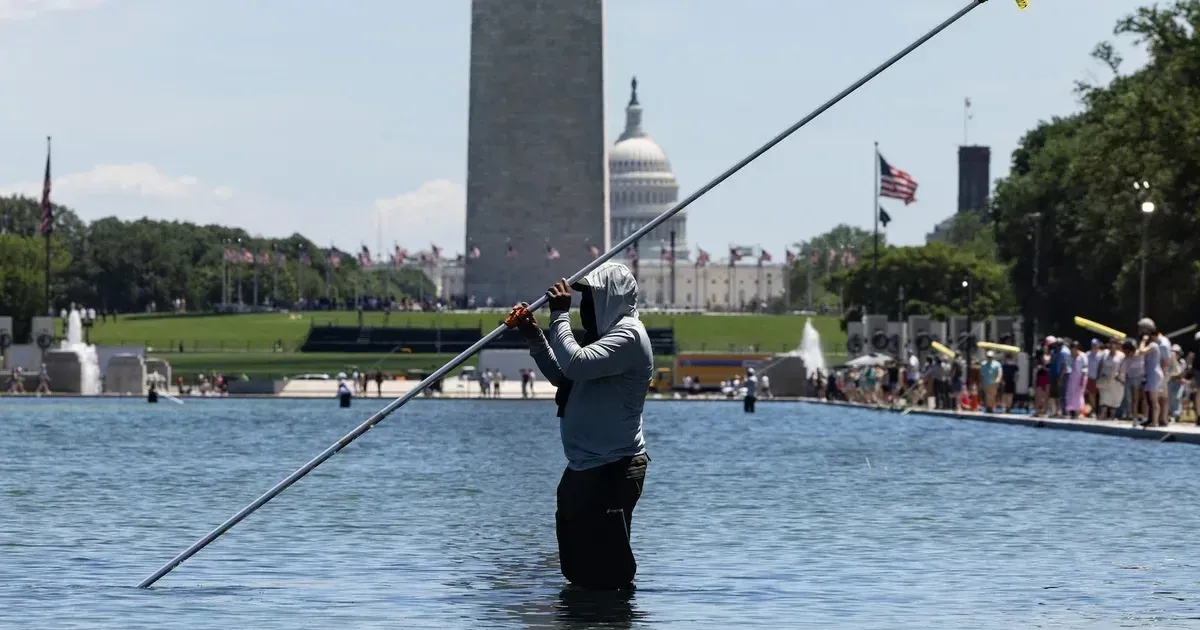
President Donald Trump's claim that multiple people were arrested over alleged vandalism at the Lincoln Memorial Reflecting Pool has deepened a dispute over whether the landmark's problems came from sabotage, renovation flaws or both. The pool has drawn attention after algae, cloudy water and peeling material appeared following an expensive makeover. The argument now turns on evidence: what was damaged by people, what failed on its own and what officials knew before the public fight began.
ABC News reported on June 21, 2026, that Trump said federal authorities had made arrests tied to alleged vandalism. The Guardian and Washington Post reported that the pool's recent renovation has been questioned after the water turned green and a new liner or coating appeared to deteriorate. Those details make the vandalism claim politically sensitive because repair quality and criminal conduct may both be part of the story.
The Reflecting Pool arrests matter because the story is no longer only about maintenance. It now involves criminal allegations, public contracting questions, national monument stewardship and the political risk of blaming vandals before the public has seen a complete technical explanation. A monument repair can become a governance test when officials cannot show the difference between sabotage and workmanship failure.
Vandalism Claim Meets Repair Questions
ABC News reported that Trump said multiple people were arrested and accused of damaging the pool. The president tied the alleged vandalism to the visible problems at the site, including algae and material failure after the renovation. That framing makes the arrests part of a larger public argument over who is responsible for a landmark that was supposed to look renewed, not troubled.
The Guardian reported that the renovation cost roughly $14 million and that Trump acknowledged "real problems" at the pool. It also noted that critics have questioned the work and the explanation for why the water and surface deteriorated so quickly.
The key question is whether vandalism explains the damage, or whether the damage exposed weaknesses in the renovation itself.
The Washington Post reported that one arrested cyclist, former Olympian David Hearn, denied vandalism and said he touched material that was already detached. That account does not settle the case, but it shows why the public record needs evidence rather than slogans. If officials have video, repair logs or chemical tests, those records can clarify whether the alleged acts caused the visible deterioration or merely overlapped with it.
For a national landmark, the distinction matters. A vandalism case calls for security and prosecution; a renovation failure calls for contract review, engineering scrutiny and public accountability over how taxpayer money was spent.
A Landmark Becomes a Political Problem
The Reflecting Pool is one of Washington's most photographed civic spaces, so its condition carries symbolic weight. Murky water or peeling material would be embarrassing in any year, but the issue is sharper because the work was tied to a high-profile national setting.
Lincoln Memorial Reflecting Pool maintenance has always involved practical challenges, including algae, weather, water chemistry and heavy visitor traffic. A renovation is supposed to reduce those problems, not create a new argument over what failed. That is why technical records, water-treatment logs and contractor communications matter more than partisan reactions.
The political layer makes technical answers harder to hear. Once a maintenance problem becomes a partisan story, every repair claim, arrest claim and contractor explanation is filtered through suspicion. Supporters may accept Trump's vandalism account quickly, while critics may assume mismanagement. The responsible path is to publish the arrest basis, repair records and any independent assessment of the pool's condition.
If chemicals were poured into the water or equipment was damaged, officials should show how that damage was detected. If the liner or sealant failed because of installation, design or materials, that should also be documented without burying the finding in political language.
Evidence Should Lead the Next Step
The most useful next step is a clear timeline backed by documents, photographs and police records: when the renovation finished, when algae appeared, when peeling was first observed, when alleged vandalism occurred and what exactly each arrested person is accused of doing.
That timeline would help separate criminal conduct from maintenance failure. It would also show whether the pool's problems began before or after the alleged acts, which is essential for understanding cause rather than assigning blame by headline. The Reflecting Pool dispute is a small story compared with national crises, but it is a revealing one. Public works fail most visibly when officials cannot explain whether the problem is design, upkeep, crime or politics, and this case now needs facts sturdy enough to survive all four pressures. A transparent record would protect both the monument and the credibility of the people responsible for maintaining it now, before another costly repair cycle begins.