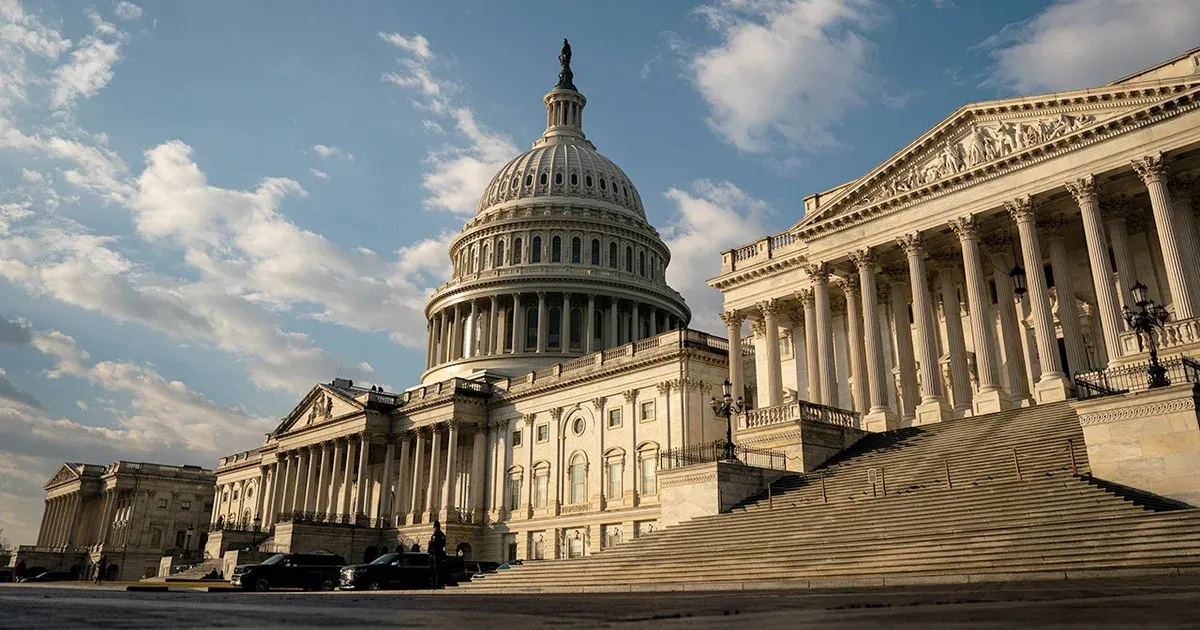
The fight for control of Congress entered its final 100 days with Democrats holding the clearer national polling signal and Republicans carrying the larger party treasury. The split creates two different kinds of leverage: Democrats can point to voter discontent and a lead on the generic House ballot, while Republicans can spend from a much deeper national cash reserve and defend narrow majorities already in hand.
The campaign checkpoint arrived on July 26, 2026, with Republicans controlling the House 218-212 and the Senate 53-47. Four vacancies reduce the current House count, and one seat belongs to an independent. On the Senate's Democratic side, two of the 47 members are independents who caucus with the party. Those margins leave little room for defections in Washington.
Every House seat and 35 Senate seats are on the ballot. To change House control, Democrats must flip six more districts than they lose. Capturing the Senate would require four net pickups. Thirty-six states will also elect governors, extending the election's consequences to redistricting, election administration and state policy.
House Polling and Turnout Point in the Same Direction
On Fox's national congressional preference question, Democratic nominees drew 53% and Republican nominees 46%. The seven-point spread was up from five points in April, and the Democratic figure was the best generic-ballot result for either party in Fox polling since 1996. A national measure does not allocate individual districts, but it establishes the broader environment in which those races will run.
The motivation numbers reinforce that signal. Sixty-eight percent of Democrats said they were extremely motivated to vote, against 57% of Republicans. The Republican result also hides a sharp internal divide: 66% of MAGA Republicans reported high motivation, compared with 41% of non-MAGA Republicans. Trump approval remained near a record low, and four in 10 voters said they wanted dramatic or revolutionary change.
Democrats still have to convert a national advantage into six net district wins. Republican redistricting gains in Florida and Texas can cushion the party against an unfavorable popular vote, and many Democratic targets sit in places Trump has carried. The House contest will therefore be decided by where support is located, not simply by the national percentage.
Issue preferences show why affordability will dominate the district campaigns. Democrats led Republicans by 22 points on income inequality, 21 on health care, 10 on inflation and nine on the economy. They also held a seven-point foreign-policy edge. Republicans led by seven on crime, while government spending and national security were separated by only three and two points, respectively. Those margins give each party a different route to persuadable voters.
Republicans Carry More Cash and a Harder Voting Record
Federal filings show a wide gap between the national committees. The RNC listed approximately $125.5 million available, while the DNC reported about $14.9 million and roughly $18 million owed. Democrats say the smaller reserve reflects earlier investment in staff, organizing, technology and state parties. Republicans still enter the closing stretch with more immediate flexibility for advertising and field support.
House Republicans also left Washington with a legislative record that Democrats will use against them. They passed a $95 billion budget blueprint tied to the Iran war and approved a $1.15 trillion defense authorization bill after combining it with the Save America Act's voting restrictions. John Thune stopped the blueprint before it reached the Senate floor, leaving Republicans another bargaining chip ahead of the September 30 funding deadline. Senate Democrats had already blocked movement on their chamber's defense bill.
Four House Republicans then joined Democrats on a symbolic war-powers resolution calling for U.S. troops to leave the Iran conflict. The vote exposed how quickly a handful of defections can overturn the speaker's plan. The voting fight also follows an appeals-court decision that kept Trump's broader mail-voting directives blocked in 23 states.
Both parties are trying to turn those votes into an affordability argument. Democrats are emphasizing grocery, fuel and health-care costs and linking them to Republican control. Republicans are defending tax cuts, border policy and investment while portraying Democratic candidates as too closely aligned with socialism. Each side is calling its program an affordability agenda, but voters are measuring the claim against prices and household budgets rather than party labels.
The House and Senate Remain Different Tests
The House begins with a six-seat target and a national ballot that currently favors Democrats. The Senate requires four gains, but those contests are fought one state at a time, with Republicans defending seats including Alaska, North Carolina, Ohio and Maine. Governor races add a third map with different candidates, coalitions and local issues, so one national mood will not produce an identical result everywhere.
The final 100 days will test which resource proves more transferable. Democrats have stronger top-line vote and motivation numbers; Republicans have cash, redistricting gains and the advantage of defending existing power. Neither side can bank those strengths yet. Democrats must turn discontent into district-level wins without assuming a national lead solves the map. Republicans must use money and favorable lines fast enough to offset a congressional record that members will now have to defend directly during the summer recess.