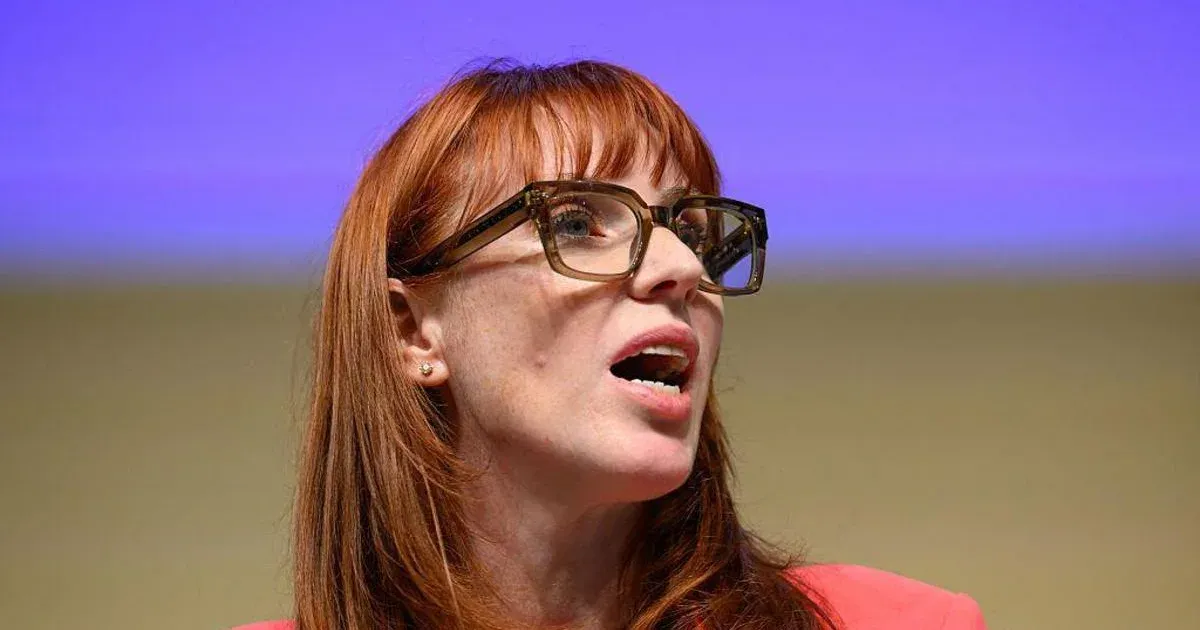
England's new government will not introduce rent controls, choosing to test whether stronger tenant protections and additional housing can ease pressure without limiting prices. Angela Rayner, the housing secretary, said Burnham's administration is not pursuing freezes or caps, despite his support for a temporary freeze when he led Greater Manchester. Speaking to the BBC on July 24, 2026, Rayner argued that legislation already in force gives renters a more workable form of protection.
The Tenant Law Changes Rules Without Setting Prices
The Renters' Rights Act took effect in May and is the government's main answer to insecurity in England's private rental sector. Rayner said it was already affecting the market. Her case is that changing the legal balance between tenants and landlords can address instability without deciding the price of individual tenancies.
The law ended fixed-term tenancies and made it substantially harder for landlords to remove tenants. It also limits rent increases to once each year and ties a proposed increase to the property's open-market rent. Those provisions apply to roughly 11 million private renters, giving the policy a reach far beyond households facing an immediate dispute.
None of those rules directly prevents market rents from rising. A tenant gains more security and a clearer timetable for increases, but the legal reference point remains the price a property could command on the open market. Rent control is itself an umbrella term: one government may freeze charges for a period, while another may cap the size of an annual increase. Rayner has rejected both approaches for England at present, so the new act changes the tenancy relationship without replacing the market benchmark.
Rayner also said controls tried in other parts of the United Kingdom had not reliably reduced rents. Landlord organizations make a related supply argument: if owners cannot raise prices sufficiently, some may withdraw homes from the rental market. The government is therefore treating the number of available properties as part of the affordability problem, not simply the amount charged for each one. Its position assumes that security rules can be enforced without driving a material share of landlords out.
Scotland and Labour Critics Keep the Cap Debate Open
Scotland provides the closest domestic comparison. Temporary controls introduced there in October 2022 expired last year, but new legislation will let ministers designate particular places as rent-control areas. The system is expected to begin by 2027, and councils could limit increases on some properties to a maximum of 6%. That model is narrower than a permanent nationwide freeze because it gives ministers and councils a role in deciding where limits apply.
Opposition to Rayner's position comes from several parts of the British left. Green Party leader Zack Polanski wants controls across England and argues that limiting rents would provide direct cost-of-living relief. Jeremy Corbyn has also called for immediate action against high private rents and linked the issue to homelessness, while London Mayor Sadiq Khan has long supported a cap. Their objection is not that the tenant law has no value; it is that greater security does not lower the price attached to a home.
Burnham's own record gives those critics a clear point of comparison. In 2023, when he was Greater Manchester's mayor, he called for private rents to be frozen until the cost-of-living crisis ended. Rayner's response is that the policy environment has changed since then because Parliament has enacted a new set of tenant rights. The government has not denied the pressure that produced Burnham's earlier proposal; it has changed the instrument it is willing to use.
That shift also exposes a political division over timing. A cap promises an immediate limit for covered tenants, whereas legal protection and added supply work through enforcement, landlord behavior and construction. The first route risks shrinking supply; the second leaves households exposed if new homes arrive slowly or open-market rents keep climbing.
Rejecting Price Caps Shifts the Burden to Housing Delivery
Rayner is retaining the goal of building 1.5 million new homes by 2029, although she acknowledged that higher construction costs have made it harder. Burnham promised a large council-house program during his campaign to replace Keir Starmer, and he has discussed changes to stamp duty and council tax without yet specifying how those reforms would work in government. Keeping the number while acknowledging the obstacles turns delivery into a measurable part of the rent-control decision.
The housing pledge sits beside Burnham's broader effort to present his administration as focused on living costs. Measures announced in his first week include an October reduction in value-added tax on household energy. From January 2027, the government also plans to restore a £2 ceiling for covered bus fares across England, with London excluded. Those policies can deliver benefits on a set date. Housing supply has a longer chain between a political promise, planning, finance, construction and an occupied home.
By ruling out rent controls, the government has removed the fastest and most controversial option from its housing program. Its alternative will be judged through two visible outcomes: whether tenants can enforce the rights Parliament has granted them and whether the promised homes are actually built. If construction falls short while rents continue to follow the open market, the absence of a cap will become harder to defend because the supply argument behind that decision will not have produced enough supply.