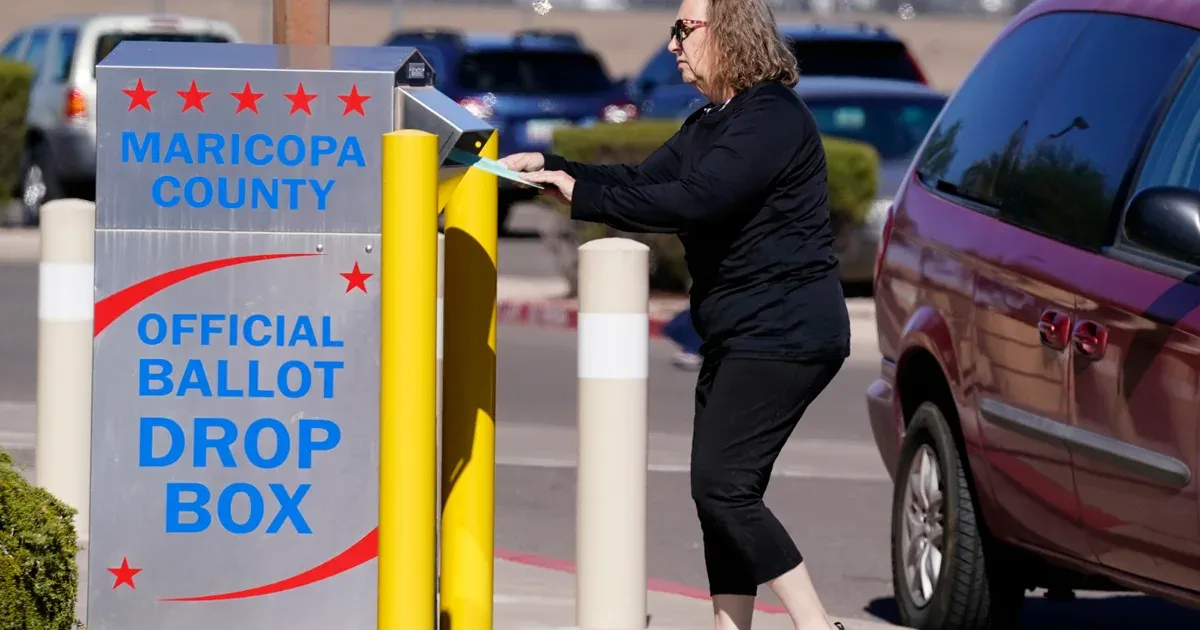
A federal appeals court has refused to let the Trump administration enforce key parts of its mail-voting executive order across a coalition of Democratic-led states. The decision leaves a lower-court injunction in force while federal agencies prepare for elections that will decide control of Congress. On July 25, 2026, judges on Boston's First U.S. Circuit turned aside the administration's request for emergency relief.
The 2-1 appellate ruling applies in 23 states and the District of Columbia, which won the earlier injunction from U.S. District Judge Indira Talwani on June 25. The states argued that the March order pushed federal agencies into powers reserved to state election administrators. The appeals panel did not settle the full lawsuit, but it declined to suspend Talwani's order while the Justice Department pursues its appeal.
The Order Put Three Federal Agencies Into State Election Work
President Donald Trump's directive instructed the Department of Homeland Security to assemble state-by-state rosters of people whose U.S. citizenship federal records had confirmed. Those lists would draw on citizenship, naturalization and other government databases. State officials would then have to assess how federal data, which the lower court described as necessarily incomplete, fit with their own voter-registration systems and deadlines.
The order also told the U.S. Postal Service to deliver ballots only to voters appearing on state-approved mail-ballot lists. USPS has proposed rules that would require states to provide names and barcodes associated with those ballots. A separate provision directed the Justice Department to prioritize investigations and prosecutions of state or local officials who send federal ballots to people deemed ineligible.
Talwani concluded that no presidential power authorized DHS to create voter-eligibility lists for state use. She also ruled that USPS had no statutory authority to impose binding regulations on mail voting. California, Massachusetts, Nevada and Washington led the protected coalition of 23 states plus the District of Columbia. The injunction operates across those plaintiff jurisdictions rather than setting a single nationwide mail-ballot rule.
The Justice Department argued that the case was premature because agencies had not completed the policies needed to carry out the order. The First Circuit rejected that position. Its majority found that states already face approaching deadlines, must coordinate with federal officials and need to explain voting procedures to election workers and the public before September and November contests. That finding permits existing rules to remain in place when administrative obligations arrive before the merits appeal can be heard.
The injunction is one part of a wider fight over federal election rules. A judge in Washington previously rejected a related Democratic challenge on timing grounds, while other courts blocked an earlier Trump order that required proof of citizenship for voter registration and restricted when mailed ballots could be counted. Trump has also pressed Congress to adopt the Save America Act, a separate package of voting restrictions. Those paths matter because legislation, agency rulemaking and executive direction face different legal limits even when they pursue similar policies.
State Preparation Costs Now Shape the Route to the Supreme Court
The ruling gives the states protection from immediate federal directives, but it does not remove the administrative work created by the dispute. Election offices must set ballot procedures, train staff, update public guidance and test systems before voting begins. A late reversal could force those offices to change instructions after preparations are under way, which is why the panel treated the pressure as current rather than speculative.
The administration can continue its First Circuit appeal and has signaled a possible emergency application to the Supreme Court. That route would place the request before justices without resolving the underlying division of election power. The Constitution assigns federal-election administration to the states, while Congress retains authority to alter some federal election rules. An executive order has to operate within that structure.
The injunction therefore turns timing into legal leverage. Every week it remains in place allows states to build their November procedures without the contested DHS lists, postal conditions or prosecution directive. Every later attempt to revive those measures would carry a larger operational cost. The administration may still seek a higher-court victory, but the calendar now favors the election systems already being prepared under the lower court's order.