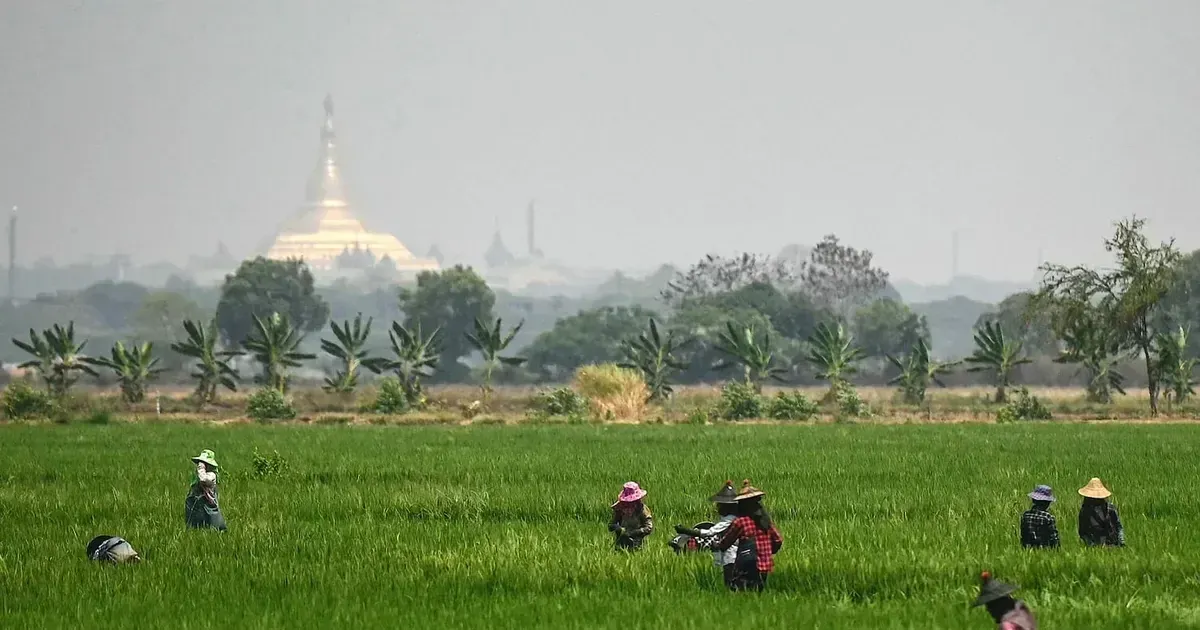
Myanmar's worsening food crisis is no longer only a domestic emergency. The warning intensified on April 7, 2026, as aid groups and regional analysts pointed to a wider pressure zone stretching beyond Myanmar's farms.
Falling rice production, disrupted transport and conflict-driven displacement are beginning to affect how Southeast Asian governments think about supply, borders and relief access. The concern is that a harvest shock inside one conflict-hit country can spill into prices, migration and food planning across neighboring states.
Myanmar Agricultural Infrastructure Disintegrates
Investment in irrigation systems has halted since the 2021 coup. Diesel shortages prevent the operation of water pumps in arid regions. Many canals built over the last two decades are now filled with silt or damaged by shelling. Foreign donors suspended technical assistance programs that previously maintained these essential networks. Satellite imagery confirms that thousands of acres of previously fertile land now sit fallow. Land mines placed in paddy fields remain a persistent threat to manual laborers.
Banking failures compound the physical destruction of the countryside. Rural credit systems that once provided low-interest loans for seeds have vanished. Farmers must now rely on predatory lenders who charge interest rates exceeding 10 percent per month. Most growers lack the collateral to secure even basic inputs. Myanmar previously exported millions of tons of rice to international markets to generate foreign currency. Those export revenues have dwindled as domestic needs take priority over trade.
Fertilizer Scarcity and Labor Shortages Hit Yields
Global price spikes for urea and potash have hit Burmese farmers harder than their regional peers. Currency depreciation makes imported fertilizer prohibitively expensive for smallholders. Yields per acre dropped 40 percent in regions where chemical inputs were once standard. Natural organic alternatives cannot meet the scale of demand required to feed 55 million people. Naypyidaw has attempted to subsidize some inputs, but the programs rarely reach conflict-affected areas.
National conscription laws enacted in early 2024 drained the agricultural workforce. Young men and women have fled to the mountains or crossed borders to avoid military service. Labor-intensive harvesting now falls to elderly residents who struggle to manage the workload. Wages for seasonal workers have doubled in some districts despite the broader economic stagnation. Mechanization remains out of reach for most because fuel prices are pegged to the volatile black market exchange rate.
Production levels in the Dry Zone have fallen below subsistence requirements for the first time in three decades.
Regional Supply Chains Under Increasing Strain
Thailand and Vietnam are feeling the wider effects of the Burmese collapse. Myanmar was once a reliable swing producer that could stabilize regional prices during shortages. Recent trade data suggests that illegal grain smuggling across the Thai border is increasing. Officials in Bangkok worry that domestic price control will fail if Burmese buyers continue to outbid local wholesalers. Regional food security is no longer a localized issue but a cross-border contagion. Thai border guards have increased patrols to prevent the unauthorized transport of rice and livestock.
A disruption in Burmese maize exports also threatens the livestock industry in China and Thailand. Maize is a primary component of animal feed across Southeast Asia. Prices for poultry and pork have moved higher in response to the tightening supply of Burmese corn. Regional trade blocs have held emergency meetings to discuss the shortfall. Vietnam has restricted its own rice exports to ensure domestic stockpiles stay at safe levels. These protectionist measures often worsen the volatility of international commodity markets.
Logistical bottlenecks at the port of Thilawa delay the entry of essential spare parts for tractors. Shipping companies avoid Burmese waters due to rising insurance premiums and security risks. Military officials recently imposed new licensing requirements on grain transporters to track food movements. These regulations add days to travel times and increase the likelihood of spoilage. Grain sits rotting in warehouses while residents in northern townships face acute shortages.
According to a report from the Food and Agriculture Organization, the situation is critical. International aid agencies face severe restrictions on their movement inside the country. Soldiers frequently block humanitarian convoys at checkpoints to vet the recipients of food aid. Bureaucratic hurdles for visa renewals and travel permits have forced several NGOs to scale back operations. Displacement camps in Kayah State report that children are surviving on a single meal of watery rice porridge per day.
Environmental factors are worsening the human-caused crisis in the region. The Mekong River has reached historically low levels due to damming and erratic rainfall patterns. Saltwater intrusion in the Mekong Delta threatens the heart of Vietnam's rice production. Reduced freshwater flow allows the sea to push deeper into the interior, killing sensitive crops. Farmers in the delta are forced to switch to shrimp farming or other less reliable livelihoods. This environmental shift occurs at the same time Myanmar's production is falling off a cliff.
Drought conditions in 2026 have shortened the growing season for several key commodities. El Niño patterns continue to disrupt the monsoon cycles that Southeast Asia depends on for irrigation. Heatwaves across the region have damaged the pollination of fruit trees and vegetables. Total losses in the regional agricultural sector are estimated to exceed $4.2 billion this year. Governments are struggling to find the fiscal space to support farmers while also managing high inflation. Public protests over food prices have broken out in several provincial capitals.
Food Security Becomes Regional Risk
Food insecurity becomes harder to contain when it is mixed with conflict, weak institutions and restricted humanitarian access. Importing more grain can soften prices, but it cannot quickly restore burned fields, lost seed stocks or displaced farm labor. That is why the crisis matters beyond Myanmar. If regional governments treat it only as a local shortage, they will miss the way food pressure travels through borders, markets and relief systems.