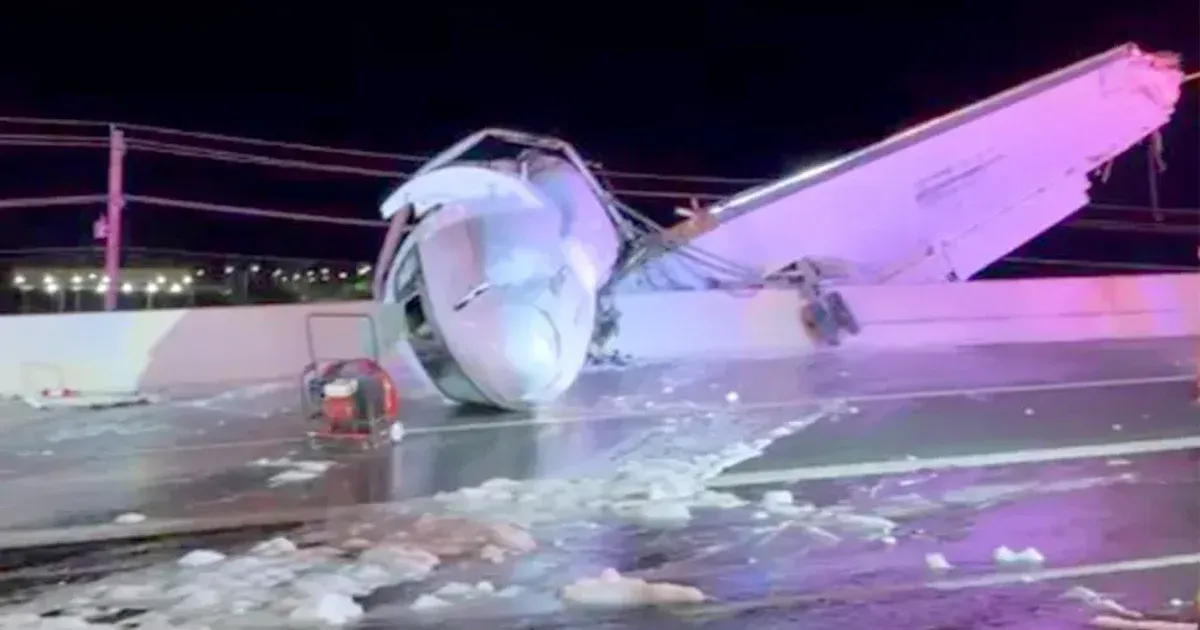
Tampa investigators arrived at a residential property where a small aircraft slammed into a private yard the previous evening. Local emergency services confirmed the pilot died at the scene of the impact. The crash was reported on April 20, 2026. Debris from the wreckage scattered across the lawn of a single-family home located in a quiet neighborhood. Witnesses described hearing a sputtering engine before the sound of metal twisting against the earth. Residents rushed to the perimeter of the property but found the wreckage engulfed in a small fire. Tampa police officers arrived within minutes to secure the perimeter and prevent bystanders from approaching the fuel-soaked soil.
Flight records indicate the aircraft departed from a nearby municipal airfield shortly before the distress began. Preliminary data suggests the pilot attempted to return to the runway but lost altitude rapidly. Florida emergency responders spent several hours late Sunday night extinguishing the fire and ensuring no residents on the ground suffered injuries. Physical evidence at the site suggests the plane struck the ground at a steep angle. Authorities have not yet released the identity of the deceased pilot pending notification of next of kin. Air traffic control logs show no distress calls were broadcast in the final moments of the flight.
First responders found no other occupants inside the cabin during the initial search. Neighbors reported the aircraft appeared to be banking sharply to the left before it disappeared behind a line of oak trees. Ground impacts in residential zones often result in severe collateral damage, yet this specific incident spared the primary structure of the house. The homeowner was inside the residence at the time but did not sustain physical harm. Federal investigators now control the site to prevent any tampering with the mechanical components of the engine.
National Transportation Safety Board officials assumed lead authority over the wreckage recovery on Monday morning.
Tampa Neighborhood Becomes Crash Site
Residents in the North Tampa area woke to the sight of yellow caution tape and heavy machinery blocking access to their street. Officers maintained a strict cordon throughout the morning of April 20, 2026, as recovery teams photographed every fragment of the fuselage. Impact marks on the turf indicate the plane narrowly missed a swimming pool and a children's play set. Local fire marshal reports indicate that the fuel tank ruptured upon contact, creating a localized hazard for the neighborhood's drainage system.
Clean-up crews deployed absorbent pads to reduce the environmental risk to the local water table. Aerial footage shows the tail section of the aircraft remained largely intact while the nose was obliterated by the force of the impact.
“An urgent investigation is underway after a pilot died when a small plane crashed in the yard of a Tampa, Florida, home,” authorities said.
Investigative protocols require the NTSB to document the position of flight controls and the state of the engine valves before moving the debris. Investigators often look for signs of bird strikes or structural fatigue in older general aviation models. This collision adds to a growing list of Florida general aviation incidents recorded over the last 24 months. Meteorological data confirmed clear skies and light winds at the time of the incident, which largely rules out weather as a primary factor in the descent. Recovery teams used a flatbed truck to transport the engine to a secure facility in Jacksonville for a detailed teardown. Investigators will spend several weeks examining the fuel lines for any signs of contamination or blockage. Concerns regarding air traffic control oversight were also highlighted in the aftermath of a fatal D.C. collision.
Records show the aircraft underwent a standard inspection less than six months ago.
Federal Aviation Authorities Secure Wreckage
Federal Aviation Administration personnel began cross-referencing the pilot's certification and medical records with the aircraft's maintenance history. General aviation safety remains a point of contention for urban planners who manage residential zones near regional airports. Florida maintains one of the highest densities of private aircraft in the country, leading to increased exposure for residential communities. Analysis of the cockpit instruments may provide clues if the electronic systems remained functional until the impact. Analysts will also review radar tracks to determine the exact speed and descent rate of the final two miles of travel. FAA records indicate the pilot held a valid private certificate with several hundred hours of logged flight time.
Specialized technicians often use borescope cameras to inspect the internal cylinders of the engine for thermal damage. A mechanical failure at low altitude leaves a pilot with almost zero time to find an appropriate emergency landing spot. Instead of a field or a wide road, the pilot faced a dense grid of homes and power lines. The absence of a Mayday call suggests the pilot focused entirely on maneuvering the failing craft away from occupied structures. Safety experts frequently cite the high workload during an engine-out scenario as a factor in missed radio communications. The wreckage will undergo a full reconstruction at a regional hangar to verify structural integrity.
Flight Path and Mechanical Failure Risks
Primary radar data from April 20, 2026, shows the aircraft's altitude dropping by 800 feet in less than thirty seconds. Such a rapid loss of height suggests a total loss of power or a critical control surface failure. Small piston engines require careful maintenance to prevent the localized overheating that leads to catastrophic seizing. Florida's humid environment also contributes to corrosion in older airframes that are not stored in climate-controlled hangars. Historical data from similar crashes in the Tampa Bay area points to fuel starvation as a recurring theme in private aviation fatalities.
Investigators will drain the remaining fuel to check for water sediment that could have stalled the engine mid-flight. Mechanical forensic teams will also check the propeller blades for evidence of rotation at the time of impact.
Ground witnesses provide a different perspective by describing the sound of the engine as intermittent or coughing. These auditory accounts often align with fuel delivery issues or ignition timing failures. Every piece of the airframe, including the rudder and ailerons, was accounted for at the crash site, which eliminates the theory of an in-flight structural breakup. The pilot's actions in the final seconds likely prevented the plane from striking the main roof of the residence. Emergency crews noted that the fire was contained to the impact crater and did not spread to the surrounding vegetation. Local utilities checked the nearby power poles for any signs of contact but found no damage to the grid.
Investigators will also need witness timelines before any mechanical theory becomes reliable.
Residential Aviation Risk
The tragedy in Tampa exposes the fatal flaw in the American model of general aviation: we allow antiquated, single-engine machines to fly over densely populated bedrooms with virtually no oversight of the risk to those on the ground. For decades, the aviation lobby has successfully argued that the freedom of the skies outweighs the safety concerns of the suburban dweller. This crash is not a fluke; it is the predictable outcome of a system that prioritizes recreational flight over urban zoning safety. When a mechanical failure occurs at 1,000 feet, the pilot is not a hero maneuvering a craft; they are a passenger in a falling brick of aluminum and fuel. Permitting these death traps to buzz over playgrounds and pools is indefensible. The argument for general aviation as a foundation of the economy is a myth continued by those who can afford the fuel. The reality is a landscape of aging Cessnas and Pipers maintained by varying degrees of competence. A total ban is necessary on flight paths that bisect residential neighborhoods for any aircraft lacking redundant engine systems. Single-engine hobby planes belong over the Everglades, not over homes whose residents never accepted the risk of a fuselage in their foyer. The status quo is an insult to every homeowner under a flight path. Ban the flights or move the airports.