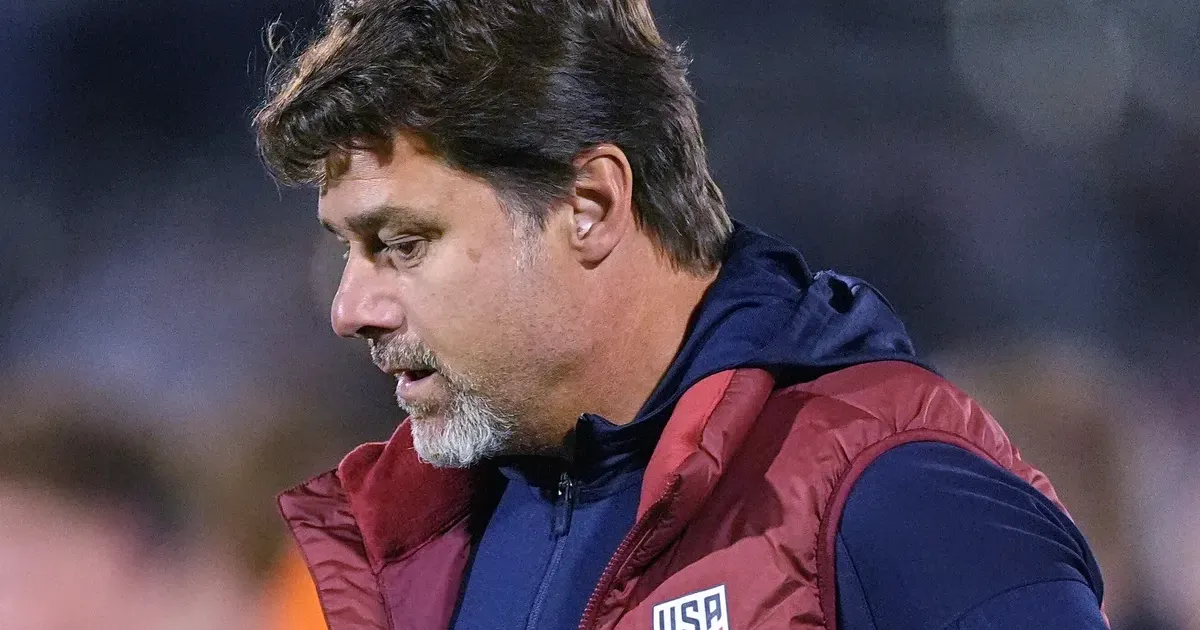
Mauricio Pochettino confronted the most notable defensive crisis of his tenure as the United States Men’s National Team prepares for a high-stakes friendly against Portugal. Saturday’s 5-2 defeat to Belgium exposed severe vulnerabilities in a backline that many expected would be settled by this stage of the World Cup preparation cycle. Defensive lapses allowed Belgian attackers to bypass the American midfield with ease, resulting in three goals conceded during a disastrous twenty-minute span in the second half. By March 31, 2026, the Belgium defeat had turned defensive organization into the main USMNT question.
Critics and analysts noted that the defensive unit appeared disconnected under pressure, lacking the fundamental communication required to track elite runners in the final third.
Pochettino declined to watch tape to confirm what he already witnessed from the touchline in Brussels.
Technical staff spent the flight to the next training camp analyzing tracking data that showed clear gaps between the center-backs and full-backs. National team supporters have expressed mounting concern that the current personnel cannot execute the high-press system the manager prefers against top-tier European competition. Belgium exploited these vertical gaps repeatedly, forcing the American goalkeepers into several desperate one-on-one situations before the final whistle blew.
USMNT Backline Struggles in Belgium Rout
Failure to maintain defensive discipline cost the squad dearly in the recent friendly. One good half of soccer cannot mask the fundamental structural failures observed throughout the match. Individual errors accounted for at least four of the Belgian goals, highlighting a lack of situational awareness that remains a primary concern for the coaching staff. International competition at this level punishes every missed assignment, and the American side failed to adjust its positioning even after the first two concessions. Fixing these structural gaps requires not merely personnel changes.
Tactical disconnection filled the defense whenever the Belgians transitioned from their own half. Mauricio Pochettino observed his players losing focus during set-piece transitions, a recurring theme that has plagued the roster for several months. Reliable sources within the camp suggest that the coaching staff is considering a shift to a five-man backline to provide more cover for the central defenders. Portugal will provide the final verdict on his immediate tactical adjustments.
Pochettino Addresses Rumors of Premier League Return
Rumors regarding a potential return to the English Premier League have complicated the narrative surrounding the national team. Several high-profile vacancies in London and Manchester have fueled speculation that the Argentine manager might depart after the 2026 tournament concludes. News of these negotiations surfaced shortly before the squad traveled to Europe, creating an unwanted distraction for players focusing on the upcoming World Cup. Pochettino addressed these reports directly by emphasizing his long-term vision for soccer in North America.
“I am open to staying in my current role, and the new training ground U.S. Soccer is set to open in Fayetteville, Ga., as well as the growth potential for soccer stateside, is a major factor in my thinking.”
Fayetteville, Ga. is the foundation of the federation’s plan to centralize its athletic operations. This multi-million dollar investment is a commitment to providing world-class facilities for every level of the national team program. Pochettino cited the facility as a primary reason for his continued interest in the American project, noting that such infrastructure is rare even among the world’s elite footballing nations. Potential for growth in the domestic market outweighs the immediate lure of a club-level return for the time being.
Fayetteville Training Ground Becomes Strategic Anchor
Economic factors and real estate development are now intertwined with the success of the national team. The U.S. Soccer Federation believes that the centralized hub in Fayetteville, Ga., will streamline scouting and player development ahead of the 2026 World Cup. Pochettino has taken an active role in the design of the technical areas, ensuring the pitches and recovery suites meet his specific standards. Investment in this facility anchors the manager to the region, providing a physical manifestation of the federation’s ambition. Soccer officials view the site as a necessary step to bridge the gap between American talent and European powerhouses.
Tuesday’s upcoming match against Portugal will test whether the team can mentally recover from their recent thrashing. Mauricio Pochettino faces the difficult task of restoring confidence in a young group of defenders who were visibly shaken by the Belgian efficiency. Portugal brings a roster filled with Champions League experience and clinical finishers who will capitalize on the same mistakes made in Brussels. Victory or even a disciplined draw would silence some of the immediate calls for radical changes to the starting eleven. Failure would likely intensify the scrutiny on Pochettino’s dual focus between his current duties and his future career prospects.
World Cup Defensive Test remains one useful lens for the next phase.
Treating a national team post as a secondary priority or a fallback option is a dangerous game for any federation. Mauricio Pochettino is currently performing a delicate balancing act, flirting with the prestige of the Premier League while simultaneously tethering himself to the financial and infrastructural security of U.S. Soccer. His public mention of the Fayetteville facility feels less like genuine enthusiasm for Georgian real estate and more like a leveraged negotiating position. If the manager is already looking toward the exit before the first World Cup whistle, the players will sense that lack of commitment in every tactical briefing.
Defensive incompetence on the scale seen against Belgium suggests a deeper rot in the technical preparation. It is not merely a matter of individual errors; it is a systemic failure to implement a cohesive defensive identity under a coach who prides himself on high-intensity organization. If Portugal repeats the Belgian onslaught, the federation must ask whether Pochettino is truly the designer of a new era or just a high-priced placeholder waiting for a better offer. Infrastructure cannot win matches. The 2026 World Cup cycle is too important to be derailed by a manager with one eye on the training ground and the other on the London job market. Results must outweigh blueprints.