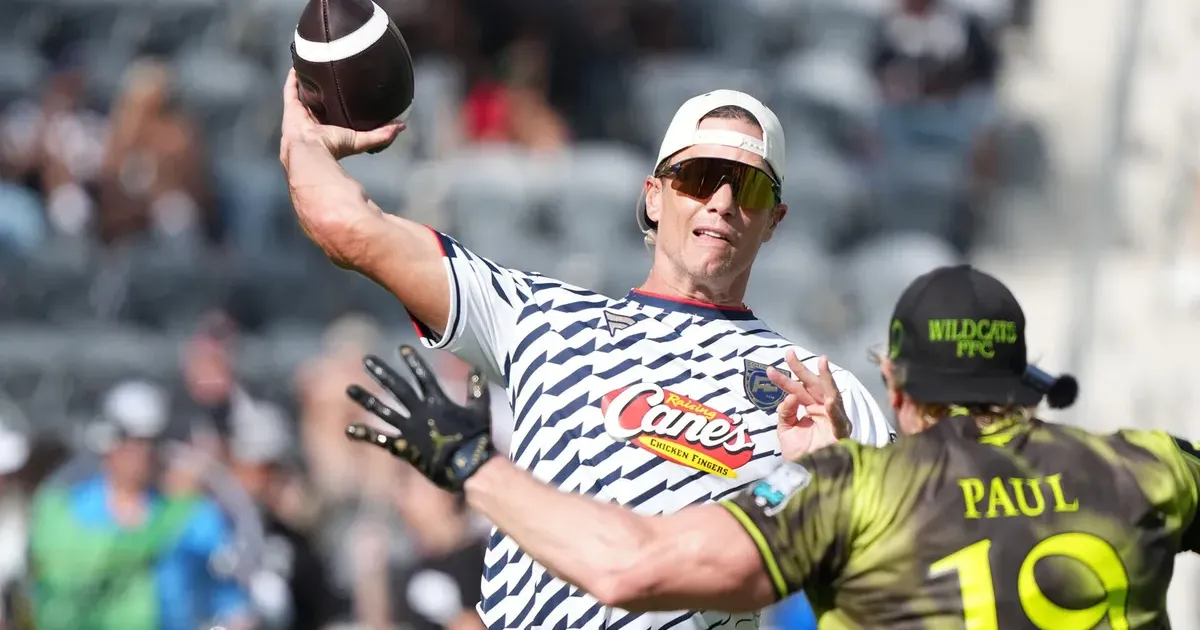
Roger Goodell and TMRW Sports executives announced a joint venture to establish a professional flag football league for men and women. Corporate leadership at the National Football League confirmed the partnership involves the technology-focused sports firm co-founded by Tiger Woods and Rory McIlroy. Financial backing for the project originates from all 32 teams within the existing professional structure. Elite names from both inside and outside the sports world have already committed capital to the venture. By March 31, 2026, the partnership had become the NFL’s clearest move toward professionalizing flag football. This startup seeks to capitalize on the growing global footprint of non-contact football disciplines.
Market research suggests that flag football participation has surged among youth demographics over the last decade. Professionalizing the sport allows the NFL to reach international markets where tackle football remains difficult to implement due to equipment costs and injury concerns. TMRW Sports will provide the digital infrastructure and venue technology required to broadcast these events to a younger, tech-savvy audience. Production schedules indicate that the league will launch its inaugural season in coordination with the 2028 Los Angeles Olympics.
Flag Football Infrastructure and TMRW Sports Technology
Data from TMRW Sports indicates that the new league will use the same high-tech environments developed for the TGL golf circuit. These venues feature enormous simulator screens, data-integrated turf, and specialized camera angles designed for social media consumption. Traditional stadiums may host some events, but the primary focus resides in urban centers with compact, purpose-built arenas. Investors expect these facilities to lower the overhead costs associated with full-scale tackle football franchises. The technology also allows for real-time gambling integration and player performance tracking.
Engineers at TMRW Sports are currently designing a specialized ball and sensor-laden flags to improve officiating accuracy. Each flag will contain microchips to determine exactly when a pull occurs relative to the player's position on the field. Such innovations aim to eliminate the subjective penalties that frequently frustrate fans of the traditional game. Speed and agility become the primary metrics of success in this format. Smaller rosters and reduced physical impact allow for a more frequent game schedule than the standard weekly NFL window.
NFL officials confirmed the new professional structure will align with the 2028 Los Angeles Olympics to maximize international exposure.
Broadcast partners have expressed serious interest in the league's hybrid digital-physical format. Streaming services and traditional networks see the shorter game times as an advantage for advertising cycles. Most flag football contests conclude within ninety minutes. That condensed timeframe fits perfectly into evening television blocks. Market analysts note that the NFL is positioning this product to compete with basketball and soccer for global viewership.
Olympic Integration and Los Angeles 2028 Timeline
International Olympic Committee members approved flag football for the upcoming summer games, creating a natural marketing platform for the new professional league. The NFL plans to use the 2028 Los Angeles Olympics as a global debut for its premier talent. While many athletes will come from the traditional tackle game, specialized flag players are already emerging from collegiate programs. Establishing the league prior to the games ensures that a professional infrastructure exists to support these athletes year-round. Training facilities for the new league will likely cluster in Southern California and Florida during the first phase of expansion.
Coordination between the Olympic organizers and the NFL ensures that venues will meet international standards. International fans who discover the sport during the Olympics will have an immediate professional product to follow afterward. The 2028 timeline also provides four years for scouting and talent development across the globe. Talent pools are expected to include track athletes, former collegiate receivers, and specialized defensive backs. Competitive parity is a core goal for the league's inaugural draft process. The new flag league operates under the broader safety mandate of the National Football League in its injury research.
European and Asian markets represent the largest growth opportunities for the league. Local clubs in countries like Germany and Japan have already established amateur flag circuits that could serve as feeder systems. The NFL intends to host international showcases during the Olympic leads-up. These events will introduce the rules and speed of the game to spectators unfamiliar with American football. Global expansion plans include permanent franchises in London and Mexico City by 2030.
NFL Owner Support and Expansion Economics
Unanimous support from the 32 franchise owners marks a shift in how the league views its intellectual property. Each NFL owner holds an equity stake in the new flag football entity. This structure prevents the internal competition that often plagues secondary football leagues. Instead of competing for fans, the flag league acts as a complementary product. Owners view this as a way to engage families who are increasingly concerned about the physical risks of tackle football. Revenue sharing models will mirror the existing NFL collective bargaining agreement.
Venture capital firms and individual celebrities have also joined the investment pool. Names from the entertainment industry and other professional sports leagues seek to leverage the NFL brand. The entry price for a flag football franchise is considerably lower than a traditional NFL team. This lower barrier to entry allows for a more diverse group of owners and stakeholders. Profitability projections rely heavily on the lower insurance premiums and medical costs associated with non-contact sports.
Labor negotiations with the players' union have already begun to define the salary cap for flag participants. Salaries will likely start at a fraction of NFL levels but will offer longevity that tackle football cannot provide. Some veteran NFL players may transition to flag football at the end of their careers. The move allows the league to keep stars in the public eye for longer periods. The player pool will remain distinct from the active NFL rosters during the regular season.
Flag Football Expansion
Why did the world's most profitable sports league wait until now to sanction a non-contact variant of its own product? The answer lies in the existential threat of declining youth participation and the looming shadow of brain trauma litigation. By partnering with TMRW Sports, the NFL is not just launching a league; it is building a hedge against the eventual decay of its core product. Flag football offers a sanitised, insurance-friendly alternative that can be exported to every corner of the globe without the logistical nightmare of pads and helmets. It is a brilliant, if cynical, rebranding of the sport for an era that values safety and speed over the gladiatorial violence of the gridiron.
The NFL is effectively cannibalizing its future to ensure its survival.
Aligning the launch with the 2028 Olympics is a calculated move to secure a state-sponsored global advertisement. TMRW Sports brings the necessary tech-gloss to make a relatively simple game look like a futuristic spectacle. However, the true test will be whether fans who crave the impact of a Sunday afternoon hit will settle for a game of tag on high-definition turf. If this venture succeeds, the traditional NFL might one day find itself as the niche, heritage version of a sport dominated by the non-contact, digitally-enhanced flag variant. It is not expansion. It is a pivot.