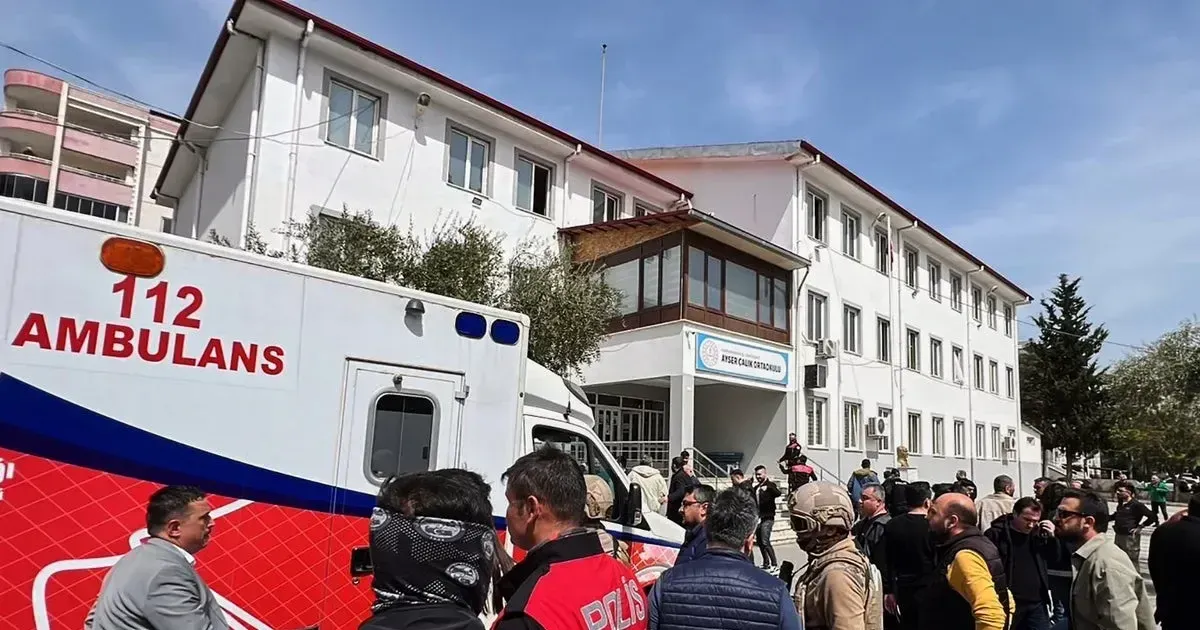
Turkey’s school-violence investigation widened into a national policing issue after a case that had already shaken families and schools. Governor Mukerrem Unluer confirmed on April 16, 2026, that firearms used in a southern Turkey massacre likely belonged to a former law enforcement officer. Investigators discovered that the student suspect accessed weapons assigned to his father, a man with a prior career in the national police force. Wednesday saw nine fatalities in this attack, while a separate incident on Tuesday left sixteen individuals injured at a high school. Ankara officials responded to the surge in violence by targeting digital communications across the country.
Fatalities Mount in Southern Turkey Attack
Southern Turkey became the site of a lethal shooting on Wednesday that claimed the lives of nine people. Local medical staff reported that several survivors are in critical condition, suggesting the death toll could climb higher. Preliminary reports indicate the shooter entered the premises during a busy transition between classes. Witnesses described a scene of chaos as the sound of small-arms fire echoed through the corridors. Governor Unluer noted that the suspect surrendered to authorities shortly after the final shots were fired.
Police records indicate the weapon recovered from the scene was a 9mm service pistol. This firearm was traced back to a retired officer who had served in the Ministry of Interior for over two decades. Regulations regarding the storage of personal and service weapons by former officers are currently under review by the provincial prosecutor. Security cameras captured the perpetrator entering the building through a side entrance that lacked active metal detection equipment.
Tuesday witnessed a separate assault at a high school where sixteen students and staff sustained injuries. Medical officials at the local trauma center confirmed that the victims suffered from both ballistic wounds and injuries sustained during the ensuing stampede. Surgeons operated on three teenagers throughout the night to remove shrapnel and stabilize internal bleeding. No fatalities occurred during the Tuesday attack, yet the proximity of these two events triggered a nationwide security alert. Education Ministry officials suspended classes in the affected districts indefinitely.
Police Crackdown on Digital Speech
Cyber-crime units in Ankara identified and ordered the arrest of eighty-three individuals on April 16, 2026. These suspects allegedly used social media platforms to express support or admiration for the perpetrators of the recent violence. Turkish law strictly prohibits the glorification of criminal acts, a statute frequently invoked during periods of national unrest. Detention orders were distributed across twelve provinces as part of a coordinated effort to suppress potential copycat incidents. Officers seized computers and mobile devices from several residences during early morning raids.
The preservation of public order requires an immediate and decisive response to those who seek to turn a national tragedy into a celebration of violence. This separate incident on Tuesday involved a high school shooting that resulted in sixteen injuries.
Interior Ministry sources claim the arrests targeted users on X and Telegram who shared images of the shootings. Some accounts allegedly attempted to circulate manifestos linked to the attackers, though the government has moved to block these documents. Prosecutors argue that online praise for such acts constitutes a direct threat to public safety and can incite further bloodshed. Civil liberties advocates, meanwhile, monitor the situation for potential overreach in the application of speech-based arrests. The Ministry of Justice has not yet released the names of the eighty-three detainees.
Digital forensic teams are currently mapping the connections between the arrested individuals. These investigators seek to determine if the suspects belong to organized radical groups or if their posts were isolated expressions of malice. One official, speaking on condition of anonymity, stated that the speed of the arrests was designed to intimidate others from engaging in similar online behavior. Data from the Turkish National Police suggests that online radicalization among youth has increased by 20% over the last fiscal year.
Firearms Proliferation and Police Accountability
Gun control debates have intensified across Turkey as details emerge regarding the weapon used in the Wednesday massacre. Current laws allow former police and military personnel to retain certain firearms with relatively few hurdles. Public safety experts contend that the lack of secure storage requirements for retired personnel creates a dangerous loophole. Statistics from the previous year show a striking rise in the use of legally registered service weapons in domestic crimes. The government faces mounting pressure to reform the Firearms Law No. 6136.
Legislative committees in the Grand National Assembly scheduled emergency sessions to discuss potential amendments. Proposed changes include mandatory psychiatric evaluations for any household member residing with a gun owner. Conservative factions within the parliament, however, express concern that such measures would unfairly penalize law-abiding security veterans. Budgetary constraints previously slowed the implementation of universal metal detectors in public schools. Local municipalities now demand central government funding to hire private security firms for campus protection.
School safety protocols in the southern provinces have long relied on localized enforcement rather than standardized national mandates. This decentralization resulted in varying levels of protection across different districts. Security audits performed in early 2026 found that nearly 40% of secondary schools lacked modern surveillance systems. Governor Unluer confirmed that the school involved in the Wednesday shooting was scheduled for a security upgrade in the coming months. Victims' families have organized rallies to demand immediate accountability from both the police and education ministries.
Legislative Response to the National Crisis
President Recep Tayyip Erdogan emphasized social cohesion and enforcement of existing laws, while signaling that more arrests could follow if violent rhetoric continued online. Cabinet discussions also included tighter emergency data-access requirements for social media platforms, a proposal likely to face privacy and implementation challenges.
Educational psychologists were sent to the affected regions to counsel students and teachers. Faculty members and unions called for visible security improvements, stricter gun controls and more mental-health support before classes fully resume.
The response now has two distinct tests: whether prosecutors can establish individual responsibility for the shootings and whether the government can improve weapon storage and school security without using the crisis to justify overly broad speech restrictions. The 83 arrests will be judged alongside the investigation into how a former officer’s firearm reached the student suspect.