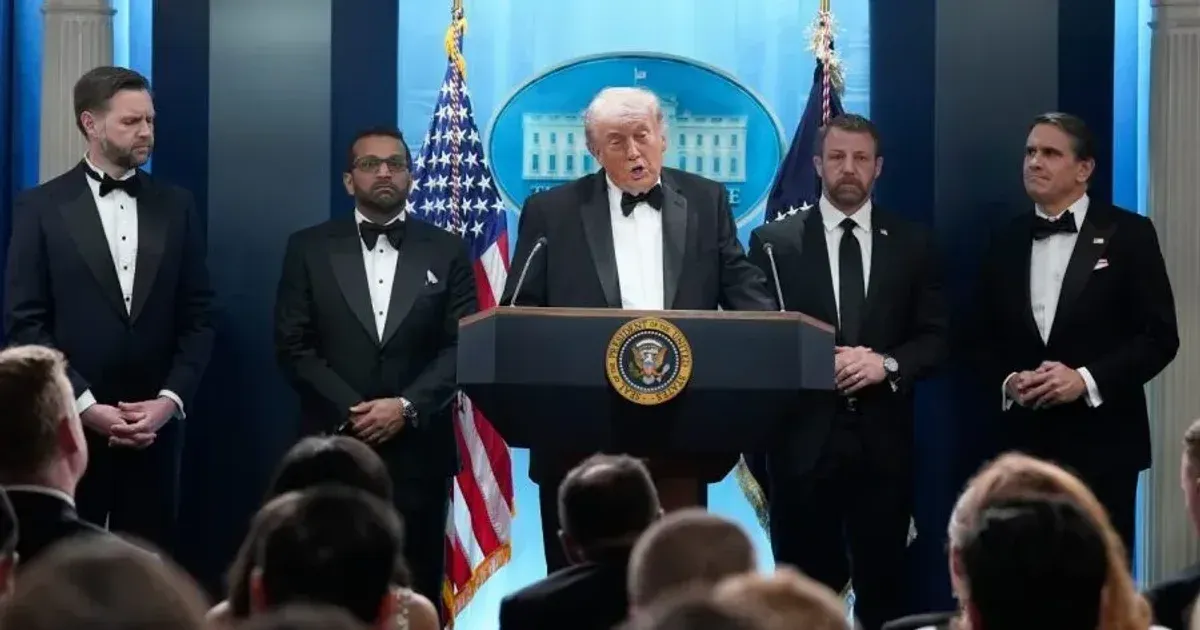
A detained hotel guest became the focus of the Washington Hilton investigation after gunfire disrupted Donald Trump’s appearance. Police and federal agents moved through a crowded venue where witnesses had only fragments of what happened. The early account depends on security video, ballistic evidence and interviews gathered in the hours after the lockdown. That uncertainty has made each official detail more consequential. Donald Trump hurried off the stage at the Washington Hilton on April 26, 2026, when gunfire erupted during the White House Correspondents' Dinner. Secret Service agents swarmed the podium within seconds of the first audible pop, forming a human shield around the speaker. Witnesses in the ballroom described a scene of sudden confusion as black-tie guests dove for the floor. Security teams moved the primary target through a service corridor to a waiting armored limousine.
Metropolitan Police Department units arrived at the scene within four minutes of the initial emergency call. Interim Chief Jeffery Carroll took command of the perimeter, coordinating with federal agents to secure every exit point. Officers discovered a suspect inside the hotel complex shortly after the evacuation began. Evidence suggests the shooter was positioned within the building rather than outside the security gates.
Police Chief Jeffery Carroll Identifies Suspect as Hotel Guest
Jeffery Carroll addressed reporters near the hotel entrance to provide a preliminary update on the situation. He noted that the suspect was not a casual intruder but a registered guest of the hotel. This status allowed the individual to bypass several layers of external security that typically filter out non-attendees. Officers found the suspect in a state that required immediate medical intervention.
"The suspect is undergoing examination at a hospital," according to Jeffery Carroll.
Investigators spent the overnight hours scouring the suspect's room for forensic evidence and a potential motive. Preliminary reports indicate the shooter had been staying at the hotel for at least two days prior to the event. Ballistics experts are currently analyzing the weapon recovered at the scene to determine its origin and caliber. Federal prosecutors are preparing charges while the individual remains under heavy guard at a secure medical facility.
Ballistics tests will determine if the weapon was smuggled past magnetometers or if it was already inside the room. Internal security logs show the suspect entered and exited the building multiple times without triggering alerts. Metropolitan Police Department detectives are interviewing hotel staff to reconstruct the suspect's movements. Surveillance footage from the hallways provides a chronological account of the minutes leading up to the gunfire.
Security Breaches at the Historical Washington Hilton Site
History often repeats itself at this specific location on Connecticut Avenue. The Washington Hilton earned a reputation for vulnerability due to the 1981 assassination attempt on Ronald Reagan. John Hinckley Jr. waited outside the same exit used by modern presidential motorcades. Six shots from a revolver changed the course of American security protocols at that time.
Reagan survived that attack, but the event left several others with life-altering injuries. Press Secretary James Brady, Secret Service agent Timothy McCarthy, and a police officer all suffered gunshot wounds during the 1981 chaos. Architecture at the Hilton features a curved facade that creates unique acoustic challenges for security details. Modern enhancements to the building have tried to reduce these risks through reinforced glass and expanded buffer zones.
Current security protocols for the White House Correspondents' Dinner require every guest to pass through federal screening. Yet, the hotel guest rooms remain a complex variable in the security equation. Guests staying on upper floors have different access points than those entering the ballroom. This discrepancy is a primary focus of the ongoing internal review by the Secret Service.
Secret Service Response and Evacuation Protocols at the Hilton
Agents used a pre-planned extraction route known as the "O-Alpha" path during the evacuation. This maneuver prioritizes speed over stealth, ensuring the president is off-site within 60 seconds of a threat detection. Motorcade vehicles were already idling in the basement garage when the first shots rang out. Radio traffic confirms that the protection detail reached the secure armored vehicle at 9:18 p.m.
Emergency responders treated several gala attendees for minor injuries sustained during the scramble for cover. No one in the ballroom was struck by direct gunfire, according to early medical reports. Paramedics established a triage center in the lobby to handle cases of shock and physical abrasions. The Secret Service confirmed that Donald Trump did not sustain any physical injuries during the incident. Communication between local police and federal agents enabled the rapid containment of the hotel. Metropolitan Police Department cruisers blocked traffic on Connecticut Avenue and Florida Avenue within minutes. Pedestrians were pushed back two blocks as tactical units moved through the guest floors. Each room was cleared individually to ensure no secondary shooters were present.
Metropolitan Police Department Investigation and Logistics
Logistics for a presidential visit to a major hotel involve months of coordination between local and federal authorities. Jeffery Carroll indicated that his department had provided over 200 officers for the evening. These officers managed the outer perimeter while federal agents handled the interior ballroom. A breakdown in communication between hotel management and security regarding guest lists is now under scrutiny. Digital records from the suspect's electronic devices are being mirrored at a federal lab for analysis. Investigators are looking for any communication with known extremist groups or evidence of premeditation. The suspect's background includes a history of residence in several Western states and no prior felony convictions. Hospital staff reported that the suspect is currently stable but not yet fit for a full interrogation. Police recovered a handgun and several boxes of ammunition from the suspect's luggage. The proximity of the room to the ballroom terrace suggests a calculated choice of lodging. Intelligence officers are checking international watchlists to see if the suspect traveled abroad in the months leading up to the shooting. Donald Trump has since returned to the White House under an intensified security posture.
Hotel Guest Access Exposes a Fatal Gap in Presidential Security
Security professionals must now explain how a paying guest bypassed the most sophisticated screening apparatus in the world. The failure at the Washington Hilton is not a failure of technology, but a failure of imagination. Authorities treated the hotel guest wing as a separate entity from the high-security ballroom, creating a loophole large enough for a shooter to exploit. Relying on magnetometers at the ballroom door is useless if the threat is already living in the room directly above the podium. Why does the Secret Service continue to permit high-profile events at a venue with such a documented history of insecurity? The Hilton's architecture is a relic of a different era, designed for aesthetics instead of defense. The incident proves that even the most hardened perimeters are porous when commercial interests like hotel occupancy are prioritized over tactical integrity. Jeffery Carroll and his federal counterparts will likely face a congressional inquiry regarding the lack of a total building sweep. The current strategy of "zoning" security is officially dead. Institutional complacency kills. If the Metropolitan Police Department cannot secure a single hotel during a planned gala, the public has every right to question their capability during a spontaneous crisis. Expect a huge overhaul of presidential travel protocols within the month. It was a catastrophic oversight.