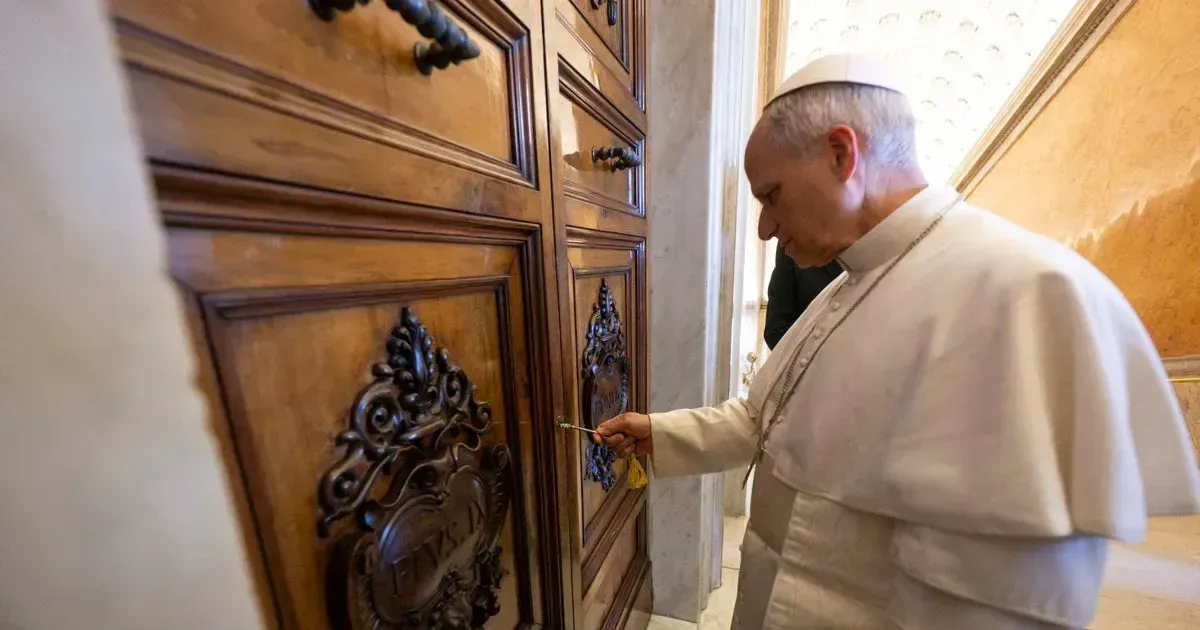
Pope Leo XIV officially moved into the papal apartment within the Apostolic Palace on March 14, marking a definitive return to traditional residence patterns for the Holy See. This move ends a thirteen-year period during which the top floor of the palace remained largely unoccupied by the reigning pontiff. Workers spent months refreshing the space, which had seen minimal use since the resignation of Benedict XVI. Every room was cleaned, restored, and modernized to accommodate the administrative needs of the current papacy. Staff members transported personal effects and a substantial personal library from his temporary quarters throughout the early morning hours. Records show that the apartment, located on the top floor of the Apostolic Palace, acts as the historic home for popes since the seventeenth century. Unlike his immediate predecessor, the current pope prioritized the use of these formal quarters for both living and daily operations. Rooms formerly shuttered now house the private chapel and the papal study overlooking St. Peter's Square. Renovations concluded last month, focusing on electrical upgrades and structural preservation.
Apostolic Palace Returns to Use
History suggests that the Third Loggia has always been the symbolic heart of the Catholic Church. Architect Domenico Fontana designed the current iteration of the palace, which has undergone numerous iterations to serve the varying tastes of different eras. Under the previous administration, the apartment was maintained as a museum piece rather than a living space. Pope Francis opted to live in the Casa Santa Marta, a decision that radically altered the appearance of the Vatican bureaucracy. But Leo XIV has decided that the dignity of the office requires a presence in the palace proper. Architects faced unique challenges during the three-month restoration project. Frescoes required delicate stabilization, and the marble flooring needed specialized polishing. Many of the antique furnishings had to be retrieved from deep storage within the Vatican archives. One particular concern involved the installation of secure digital lines without damaging the sixteenth-century masonry. Engineers used existing service conduits to run fiber optic cables through the thick stone walls. The renovation cost was not disclosed to the public. One room in particular, the private library, underwent a complete transformation to host diplomatic meetings. Gold leaf was reapplied to the ceiling moldings, and the silk wall coverings were replaced with period-accurate replicas. The primary function of the space remains residential.
Residence Choice Signals Governance Style
Moving away from the Casa Santa Marta signifies a change in how the papacy engages with the curia. Francis chose the guesthouse to avoid the isolation he felt the palace imposed on its occupants. Critics often suggested that the decentralized living arrangement created communication bottlenecks within the church hierarchy. By residing in the palace, the pope is now physically closer to the Secretariat of State and the various congregations. This proximity allows for more frequent, informal consultations with high-ranking prelates. Daily life in the guesthouse was characterized by communal meals and frequent interactions with visiting clergy. Leo XIV has signaled a preference for a more contemplative and structured environment. This change necessitates a larger permanent staff at the Apostolic Palace to handle the increased operational tempo. The Swiss Guard has already increased its presence at the Bronze Door and the San Damaso Courtyard. Moving the papal residence back to its traditional site centralizes security protocols. It also simplifies the logistics of the weekly Angelus prayer.
the move has practical implications for the Vatican staff. Elevator schedules have been reorganized to prioritize the movement of the pope and his aides. Kitchen staff from the guesthouse will no longer be responsible for the pontiff's dinner service. Instead, a dedicated household team will manage the private quarters in the palace. Security requirements dictated the timeline for the final transition of personal items. He signed the first decree from his new desk at 9:00 AM.
Vatican Logistics Shift Back
Conservative commentators have hailed the move as a sign of respect for the office. Many traditionalists felt that the refusal to live in the palace was a break with continuity that weakened the symbolic power of the papacy. They argue that the palace is not a luxury but a tool for governance and a repository of history. Within the Vatican City walls, the change is seen as a reassertion of the traditional papal identity. This restoration of custom has been met with quiet approval from the older guard of the curia.
Traditionalist blogs and publications have dedicated extensive coverage to the restoration of the apartment. They point to the re-opening of the papal windows on Sunday as an essential connection between the pope and the faithful. In particular, the use of the palace library for official photographs is seen as a return to a more formal, authoritative visual language. Some analysts believe this will help stabilize the internal culture of the Vatican after years of reformist experimentation. Supporters of the move emphasize that the palace was built for this exact purpose. The atmosphere at the Vatican remains focused on this transition.
Meanwhile, those who favored the simplicity of the Santa Marta era remain watchful. They worry that the move might signal a return to a more aloof and clericalist style of leadership. The administration has maintained that the move is purely functional. They claim the guesthouse was never intended to be a permanent residence for the head of the church. Leo XIV has already begun hosting private audiences in the renewed space. Ten bishops were received in the first two days of his residency.
Security protocols at the palace are sharply different from those at the guesthouse. The Vatican City police force, known as the Gendarmerie, had to re-evaluate the perimeter around the Third Loggia. Access to the top floor is now strictly limited to those with specific clearance. The layout provides a more controlled environment for the pope than the relatively open halls of Santa Marta. Electronic surveillance systems were upgraded as part of the winter renovation project. No unauthorized drones are permitted within the airspace of the palace.
The shift also impacts the flow of information. Documents that once traveled between two buildings now stay within the secured corridors of the Apostolic Palace. The pope can now reach his primary offices without ever stepping outdoors. The simplification is expected to improve the efficiency of the papal household. For instance, the time required to move for an unscheduled meeting has been cut in half. The office of the Master of Papal Liturgical Celebrations has also moved some equipment closer to the palace chapel.
Vatican officials confirmed that the transition was smooth. Most of the heavy lifting occurred overnight to avoid attracting unnecessary attention. A small fleet of electric vehicles was used to ferry crates of books and files across the San Damaso Courtyard. By dawn, the apartment was fully functional and ready for use. Every member of the household staff has been briefed on the new routines. Leo XIV spent his first night in the apartment on Friday. The palace lights remained on until midnight.
A Papal Address Is Also a Message
Does a bed in a palace change the soul of a pontiff? The Apostolic Palace is a machine for governance, and by moving back, the pope is signaling that he intends to use every gear of that machine. Tradition is not a burden; it is a structure. Those who complain about the return to the palace are often the same voices who wish to see the papacy reduced to a mere non-governmental organization. It is not about silk and gold; it is about the central authority of the Catholic Church.
By reclaiming the Third Loggia, Leo XIV is telling the world that the era of the apology is over and the era of the institution has returned. The windows are open again.