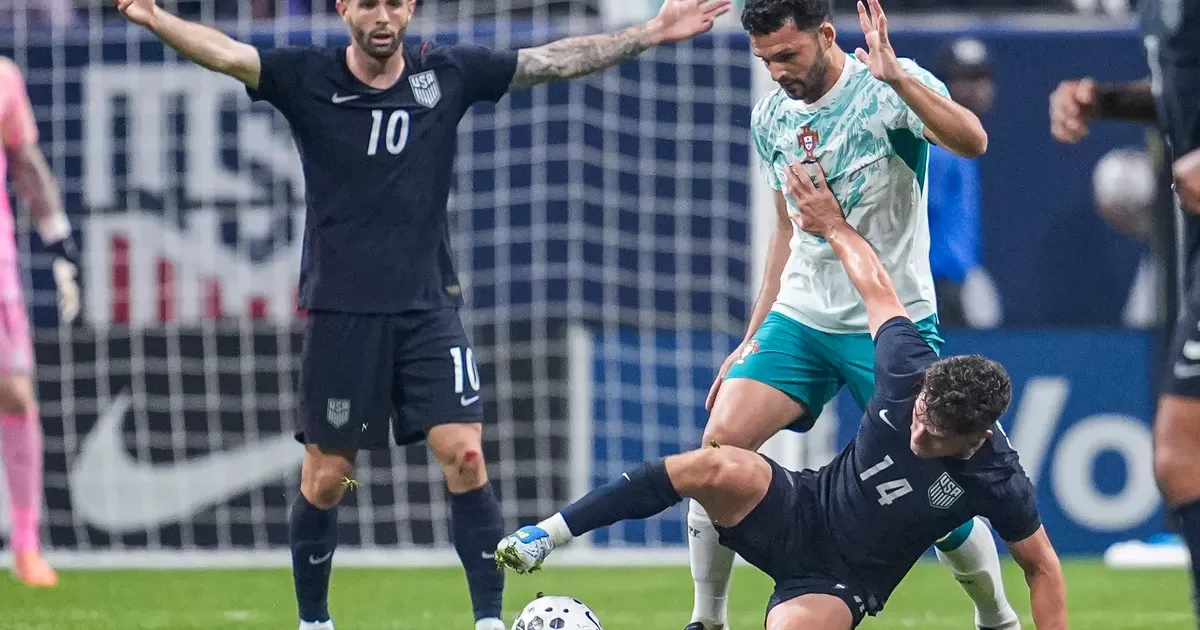
Christian Pulisic's scoring drought stretched to 14 international matches as the United States lost 2-0 to Portugal in Atlanta. The friendly at Mercedes-Benz Stadium exposed familiar problems in chance creation, buildup play and defensive spacing. For the USMNT, the April 1, 2026 result added pressure to a spring window already marked by uneven performances.
United States players entered the pitch seeking redemption for a loss suffered just two days earlier. Technical execution was still a primary hurdle as passes frequently missed their targets in the final third of the field. Christian Pulisic, often the talisman for this generation, appeared disconnected from his teammates during critical transitions. Scoring opportunities arrived sparingly, and the few chances that materialized were squandered by hesitant finishing. Observers noted that the captain lacked the explosive first step that characterized his early career.
Christian Pulisic Struggles in Mercedes-Benz Stadium
Pulisic earned a dismal 3/10 player rating from analysts who monitored his every move across the ninety-minute duration. Performance data indicates he lost possession twelve times in the first half alone. Critics pointed to his inability to beat defenders in one-on-one situations, a trait that previously defined his value to the roster. Frustration boiled over late in the match when a heavy touch allowed a Portuguese defender to clear the ball from the six-yard box. 14 matches without a goal create a psychological burden that seems to weigh on the winger during every attacking sequence.
Mercedes-Benz Stadium hosted 55,000 spectators who expected a competitive showing from the home team. Portugal silenced the crowd early with a strike that bypassed the American midfield entirely. Defensive lapses allowed the visitors to control the tempo for long stretches. One particular sequence involving a turnover at midfield led directly to the second Portuguese goal. American supporters expressed their discontent as the final whistle approached, voicing concerns about the team's direction.
International competition requires a level of composure that the current American lineup lacks. Junior members of the squad showed flashes of individual skill but failed to integrate into a cohesive unit. Christian Pulisic spent much of the match drifting into deep positions to find the ball, leaving the penalty area unoccupied. Such tactical drifting compromised the team's ability to sustain pressure on the Portuguese goal. Depth players failed to provide the necessary spark off the bench during the second half.
Portugal Outclasses USMNT in Final March Window
Portugal displayed the tactical maturity of a side prepared for a deep tournament run. Their midfield trio dictated play, using short, precise movements to manipulate the American press. Mercedes-Benz Stadium became a showcase for European ball retention strategies. Every American mistake met a swift counterattack from the Portuguese wingers. Defeat was not merely a result of bad luck; it was a consequence of systemic inferiority in possession.
Roberto Martinez oversaw a Portuguese side that never appeared flustered by American physicality. Portugal maintained a high defensive line that squeezed the space available to Pulisic and his strike partners. Discipline in the back four ensured that the United States had zero shots on target during the final twenty minutes of play. Portugal capitalized on set pieces, a traditional weakness for the American defense. Success for the visitors relied on patience and the exploitation of predictable American passing lanes.
Internal metrics for the United States suggest a decline in high-intensity sprints during the second half. Fitness levels are not the issue; rather, the mental fatigue of chasing the ball for long durations takes a toll. Christian Pulisic covered meaningful ground but often found himself isolated in wide areas. Team chemistry appears to have stagnated since the turn of the year. Portugal left Atlanta with their reputation enhanced, while the hosts were left to pick up the pieces of a fractured strategy.
The broader concern is not one missed chance but a pattern of predictable attacking routes that better opponents can scout, compress and punish with little adjustment. Portugal forced the United States wide, cut off central passing lanes and waited for rushed crosses. Without a second creator between midfield and the front line, Pulisic carried too much of the burden alone. That imbalance is the central problem the coaching staff must solve before competitive matches return. The friendly result made that adjustment urgent rather than optional.
Tactical Readout
Is the United States national team suffering from a crisis of talent or a crisis of leadership? Looking at the 2-0 defeat to Portugal, one might argue it is both. The obsession with Christian Pulisic as a messianic figure has stunted the tactical growth of the entire roster. Coaches have built a system that lives and dies by a player who has not found the back of the net in fourteen international appearances. This is not a slump, it is a structural failure of a program that refuses to evolve past its 2022 identity.