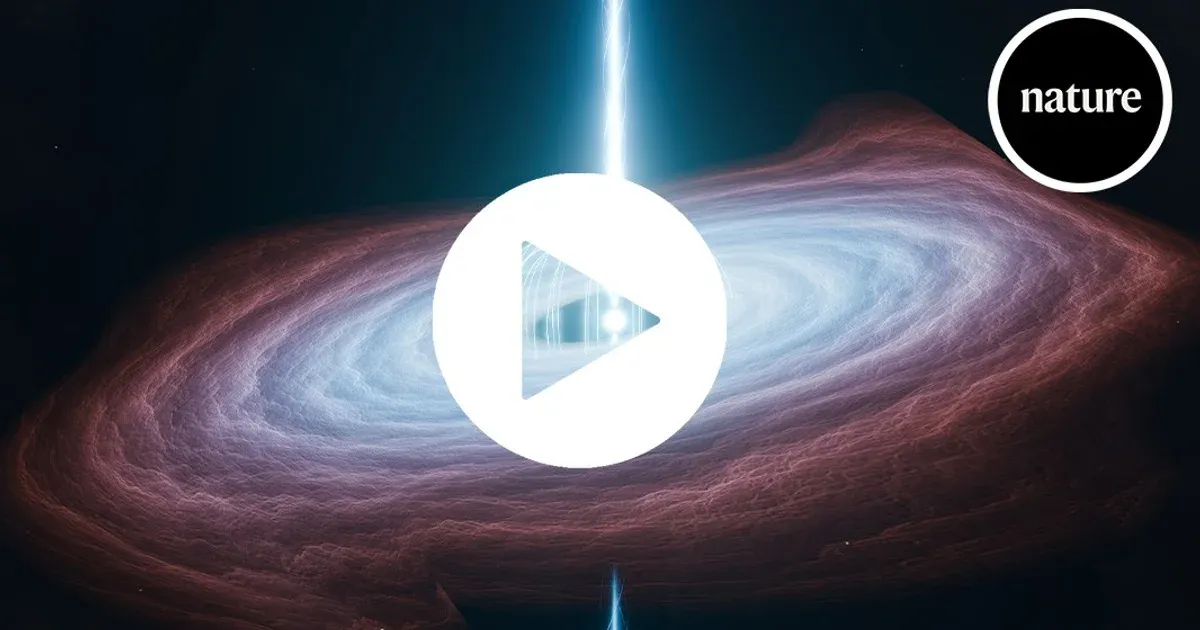
A precessing magnetar engine is giving astronomers a more precise way to explain some of the universe’s most violent explosions. The research was published on March 11, 2026, giving astronomers a clearer candidate engine for one of the brightest stellar deaths observed.
A Wobbling Engine Changes the Model
Deep in the silence of the cosmos, a dying star refuses to go quietly. Such events, known as superluminous supernovae, radiate with an intensity that defies traditional stellar physics, shining dozens of times brighter than a typical supernova. For decades, astronomers struggled to explain where this excess energy originated. Theories ranged from interaction with dense shells of gas to the collapse of exceptionally massive stars.
Yet, the data never quite fit the models, leaving a gaping hole in our understanding of the high-energy universe. Violence on this scale requires an engine of unthinkable power. Researchers publishing in Nature believe they have finally identified that engine. By analyzing a nearby Type I superluminous supernova, a team of international scientists detected a distinct wobbling signal in the light curve.
This erratic behavior has long plagued the field of astrophysics, appearing as confusing bumps and dips in the brightness of the explosion over time. Instead of dismissing these fluctuations as noise, the researchers recognized them as the signature of a precessing magnetar. Magnetars represent the most extreme magnetic environments in existence. These rapidly spinning neutron stars possess magnetic fields a quadrillion times stronger than Earth's.
When a massive star collapses, it can leave behind one of these dense remnants. If the magnetar is surrounded by an infalling accretion disk of stellar debris, the resulting interaction creates a cosmic lighthouse effect, but with a twist. The intense gravity and rotation of the magnetar do not just pull on the gas; they warp the geometry of space itself.
Frame Dragging Gives Astronomers a Clue
Gravity is never just a passive force. Einstein's general theory of relativity predicts that a massive, rotating object will actually drag the fabric of space-time along with it. This phenomenon, known as the Lense-Thirring effect or frame-dragging, is usually too subtle to notice. Around a magnetar, however, the effect becomes a dominant physical driver.
As the accretion disk of gas falls toward the magnetar, the frame-dragging effect causes the entire disk to wobble, or precess, like a spinning top that is beginning to lose speed. This magnetic powerhouse creates a gravitational well so deep it drags the very fabric of space with it. Because the disk is precessing, the energy it pumps into the supernova ejecta is not steady. It pulses and oscillates as the orientation of the disk changes relative to the observer.
Those oscillating light-curve bumps mentioned in the Nature study provide the first concrete evidence of this Lense-Thirring precession after a stellar explosion. The math finally lines up. Scientists previously suspected that magnetars could power these events, but the missing link was always the specific mechanism for energy transfer. The discovery of the wobbling signal confirms that a magnetar engine is not just sitting at the center; it is actively interacting with a disk of infalling matter.
While earlier theories suggested the brightness came from the star's outer layers hitting pre-existing gas, this new data points toward an internal, central engine driving the brilliance from the inside out. Standard supernova models assume a relatively spherical expansion of gas. Superluminous events break those rules entirely.
Cosmic Violence Keeps Humbling the Models
Humanity loves to pretend it understands the rules of the universe, yet every few years, a single star dies in a way that makes our most advanced textbooks look like coloring books. The scientific community has spent decades hiding behind the term superluminous as a catch-all for things they couldn't explain. The latest discovery regarding the Lense-Thirring effect is a welcome bit of clarity, but it also exposes the fragility of our current cosmological models. We are forced to rely on a theory from 1915 to explain data from 2026 because we have failed to produce a more thorough understanding of quantum gravity. Why are we so comfortable with the idea of space-time being dragged like a heavy rug? It suggests a universe that is far more mechanical and perhaps more volatile than the serene, orderly vacuum often depicted in popular science. The fact that a wobbling magnetic star can outshine an entire galaxy should not just be a point of academic interest. It should be a humbling reminder of our insignificance. While we argue over terrestrial borders and digital currencies, the physics of the vacuum is churning out engines of destruction that operate on a scale we can barely calculate. Science is finally catching up to the chaos, but do not mistake a new model for total mastery.