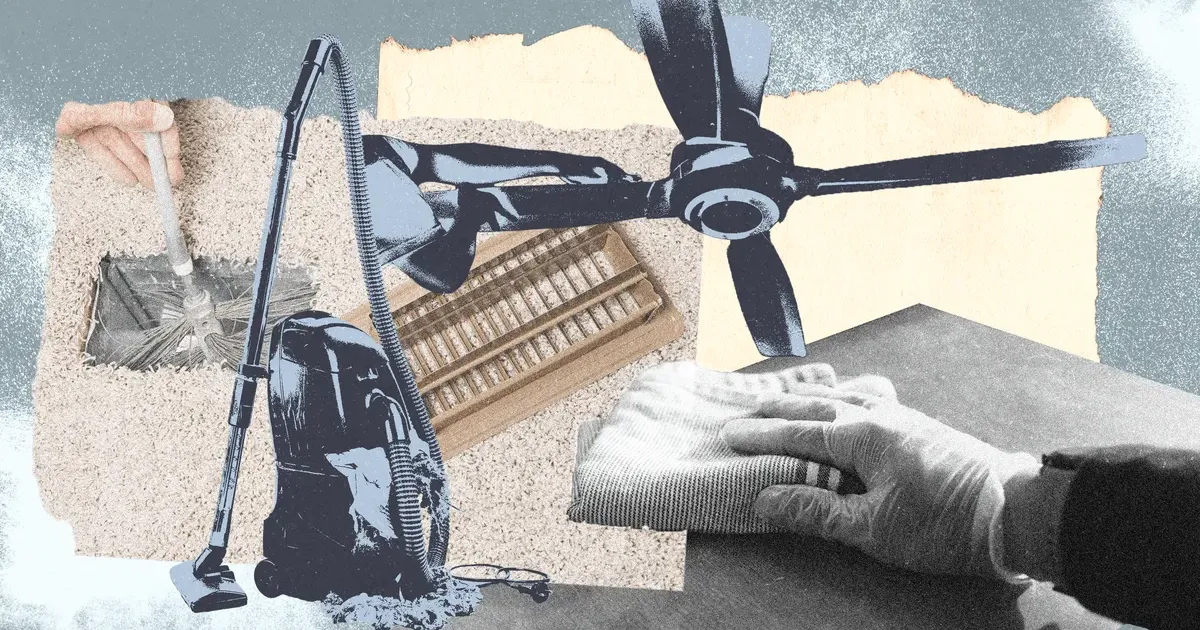
Good home maintenance is less dramatic than a once-a-year deep clean. It is the routine that stops dust, moisture, airflow problems and surface damage from building quietly in the background. A room can look clean while fine dust sits in vents, curtains, sofa seams, electronics, baseboards and ceiling-fan blades. A property can look orderly while a clogged dryer vent, failing seal or overdue filter is creating a larger repair.
Renters can use the same approach at a smaller scale. Even when major systems belong to a landlord, a record of filter dates, moisture signs, appliance problems and safety-device concerns makes maintenance conversations clearer. The standard is consistency rather than perfection: small tasks done correctly before neglect turns them into stains, odors, allergens or expensive service calls.
Dust Control Starts With Order
Microfiber cloths work better than feather dusters because they hold particles instead of throwing them back into the room. The order of work matters just as much. Ceiling fans, shelves, light fixtures, window frames and upper trim should be cleaned before baseboards and floors. Otherwise the same dust gets moved twice.
Vacuum quality matters in homes with pets, heavy fabric surfaces or asthma concerns. A machine with a HEPA filter can capture finer particles that weaker vacuums may recirculate. Soft surfaces also need attention: curtains, rugs, cushions and mattresses collect dust long after tabletops look clean. The goal is to remove particles from the home instead of relocating them, not to make cleaning fussy.
Airflow Turns Cleaning Into Maintenance
HVAC filters should be changed on schedule, not only when the system begins to struggle. A clogged filter can spread dust, reduce airflow and force heating or cooling equipment to work harder. A clogged filter turns a low-cost habit into an energy and repair issue. Vents and returns need the same attention because dust around registers, weak airflow in one room or recurring odors after startup can point to a problem deeper than surface dirt.
Airflow also affects comfort room by room. Closed vents, blocked returns, dusty fans and furniture pushed against registers can make a system feel weaker than it is. Before assuming the equipment is failing, homeowners should check whether air can move freely. Maintenance often begins with the ordinary things that nobody notices until the house feels stale.
Fabric Codes Save Furniture
Upholstery needs slower handling because fabric codes determine what products are safe. A W code allows water-based cleaners. S points to solvent-based care. SW permits either method. X usually means vacuum-only or professional handling. Ignoring those codes can leave water rings, color bleeding, stiff patches or texture damage that costs more than the original spill.
Leather needs its own routine: gentle blotting, mild products, conditioning and protection from harsh detergents or direct heat. The best first move after a spill is usually restraint. Blot, check the care label, test in a hidden area and avoid soaking the fabric. Speed matters, but panic causes as much damage as delay.
Moisture Checks Prevent Hidden Repairs
Windows, seals, gutters, drains, refrigerator coils, dryer vents and appliance filters belong on a seasonal checklist. These jobs are not cosmetic. They protect the systems that keep a home dry, safe and efficient. Exterior maintenance belongs in the same routine because outdoor problems often become indoor problems. Leaves in gutters, blocked patio drains, damaged thresholds and clogged exterior vents can trap moisture near the structure.
Trapped moisture may later appear as stains, soft trim, musty odor, peeling paint or recurring condensation. By then the repair is harder to diagnose. A quick seasonal walkaround can catch a loose seal, slow drain or dirty vent before it turns into mold risk or structural damage. Maintenance is often cheaper when it looks boring.
Records Make the Routine Work
Documentation is the habit many homeowners skip. A simple note of filter changes, vent cleaning, upholstery care, dryer-duct checks, leak checks and smoke or carbon-monoxide alarm tests helps owners, renters, landlords and property managers separate normal wear from preventable neglect. It also reduces guesswork when something fails.
A home that shines on visible surfaces but ignores safety and moisture is being cleaned, not maintained. The stronger routine is quieter: replace the filter before airflow drops, clear the gutter before water backs up, check the fabric code before spraying the sofa, test the alarms before there is a reason to wonder. The routine keeps the home easier to live in and cheaper to protect.